Best Morocco Desert Hotels for an Unforgettable Sahara Experience

Best Morocco Desert Hotels for an Unforgettable Sahara Experience

From luxury camps inside the Erg Chebbi dunes to glamping near Marrakech and kasbah hotels along the pre-Saharan route — the honest guide to Morocco’s best desert accommodation.
Updated May 2026 14-min read All tiers — standard to premium
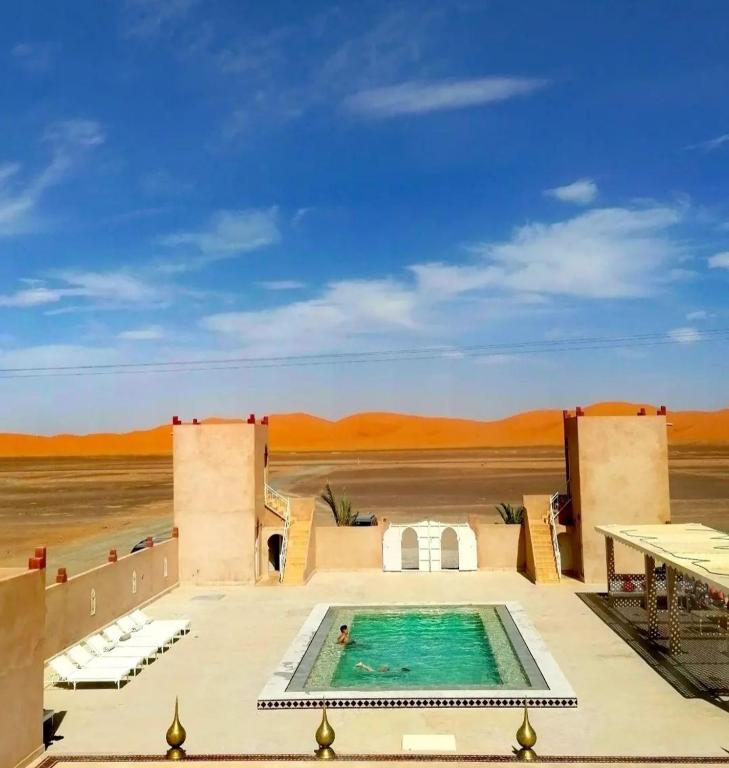
Morocco desert hotel luxury camp inside Erg Chebbi dunes at sunset Merzouga Sahara

A Morocco desert hotel is not what most people picture when they hear the word hotel. The best accommodation options in Morocco’s desert south are either luxury camps inside the dunes — private tents with en-suite bathrooms, air conditioning, and dinner under the stars — or kasbah riads along the pre-Saharan route that have been converted into boutique hotels using the same rammed-earth architecture that has been here for centuries.

This guide covers the best desert hotels Morocco offers across all locations and budget tiers. It draws on the accommodation used in Morocco Desert Tour itineraries, confirmed by direct experience of the camps and properties, and cross-referenced with TripAdvisor review records. Whether you are looking for a luxury Sahara night at the best hotels in Sahara desert Morocco has to offer, or a comfortable mid-range option on the route south, the options below are organised by location and tier.

Choosing Your Landscape — Agafay vs the Deep Sahara

The Agafay Desert — Accessibility and Stone Desert Aesthetics

The Agafay Desert is a rocky semi-arid plateau 40 km southwest of Marrakech. It is not the Sahara — no sand dunes, no 150-metre erg formations — but it is a genuine desert landscape with High Atlas views, luxury glamping camps, and the ability to return to Marrakech the same evening. For travellers on short itineraries who cannot reach Merzouga, Agafay gives a credible desert camp experience within a half-day trip from the city.

Erg Chebbi and Erg Chigaga — The Iconic Golden Dunes

Erg Chebbi near Merzouga is the benchmark for hotels in Sahara desert Morocco. The dune field rises to 150 metres, extends 28 km, and is the reason most travellers take a desert tour from Marrakech or Fes. The camps inside the dunes are the most distinctive accommodation in Morocco — private tents positioned so that the view from your entrance is dune, sky, and nothing else. Erg Chigaga near M’Hamid is more remote (60 km on piste track) and significantly less visited, better suited to multi-day camel treks and travellers specifically seeking solitude.

The Decision — Which Desert Experience Fits Your Trip

Factor Agafay (Marrakech) Erg Chebbi (Merzouga) Erg Chigaga (M’Hamid)
Distance from Marrakech40 km — 45 min560 km — 9 hrs700 km+ — 11 hrs+
TerrainRocky plateau, no dunes150m sand dunes — real Sahara60m+ dunes, remote
Camel trek30-45 min plateau ride45 min into dunesMulti-day trekking
Best forShort city break, half-dayDesert tour 3 to 5 daysRemote, multi-day immersion
Luxury optionsScarabeo Camp, Inara CampAntares Camp, Eden HotelLimited, eco-lodge style
Honest verdict: If you have time for a 3-day or longer desert tour, there is no substitute for Erg Chebbi. The Agafay experience is different in kind — a luxury evening near Marrakech rather than a Sahara immersion. Both are worth doing, but for different reasons.

Luxury Glamping in the Agafay Desert — Proximity and High Style

The Agafay luxury camp market has grown significantly since 2018. The best operations are positioned on ridge lines with Atlas Mountain views and maximum distance from the road, creating a genuine sense of remoteness despite being 40 minutes from Marrakech.

Scarabeo Camp — The Established Benchmark

Scarabeo Camp is the most established and most reviewed luxury glamping property in the Agafay Desert. Built on a ridge with direct High Atlas views including Jebel Toubkal, it has a maximum capacity of 24 guests across its private tented suites — keeping it genuinely intimate. Each tent has an en-suite bathroom, a private terrace facing the mountains, hot water, and air conditioning. The pool is positioned for the Atlas panorama. Dinner is a full Moroccan spread served in the communal dining tent. Berber music in the evening. Prices from 3,000 to 5,500 MAD per night for two.

Inara Camp — Contemporary Design and Infinity Pool

Inara Camp is a newer operation with strong reviews for tent design quality and food. The infinity pool faces the Atlas Mountains. Private bathrooms. Contemporary interior styling with traditional Moroccan textiles. Better for couples seeking a modern aesthetic than Scarabeo’s more traditional Berber tent feel. Similar pricing tier.

Mid-Range and Budget Agafay Options

Several smaller camps operate in the Agafay area at lower price points with shared facilities and simpler tent design. The key quality indicator at any budget tier in Agafay is camp position — a ridge site with Atlas views is worth significantly more than a flat road-adjacent site regardless of the tent quality. Ask the operator for GPS coordinates before booking to verify the location.

Luxury desert glamping camp Morocco Agafay private tent with Atlas Mountain views Luxury glamping in the Agafay Desert — private tented suites with High Atlas Mountain views, 40 minutes from Marrakech.

The Golden Dunes of Erg Chebbi — Merzouga’s Premier Desert Hotels

The camps inside and adjacent to the Erg Chebbi dune field represent the full spectrum of hotel Sahara desert Morocco options — from basic shared-bathroom camps to premium operations with heated pools and chef-prepared menus. The camps used in Morocco Desert Tour itineraries are confirmed across all three accommodation tiers.

Premium Antares Desert Camp Inside Erg Chebbi dunes, Merzouga

The premium standard in Morocco Desert Tour itineraries for Erg Chebbi. Private en-suite tents with air conditioning, hot water, and dune views from each entrance. The camp is positioned deep inside the dunes — no road visible from the tent. Full dinner menu, breakfast, campfire, and Berber music included. Camel trek included in all tour packages.

View on TripAdvisor
Mid-Range Dihya Luxury Desert Camp Erg Chebbi, Merzouga

Strong mid-range camp with reliable en-suite facilities and a consistent record for food quality. Good position inside the dune field. Dinner and breakfast included. Works well for small groups and couples who want the full dune experience without the premium pricing. Used in Morocco Desert Tour mid-range accommodation tier.

View on TripAdvisor
Standard Sahara Desert Luxury Camp Erg Chebbi, Merzouga

The standard tier camp in Morocco Desert Tour itineraries. Private bathrooms, hot water, air conditioning. Honest quality at a lower price point. Dinner and breakfast included. Camel trek and campfire as standard. The right choice for travellers prioritising the experience of the desert over the level of tent luxury.

View on TripAdvisor
Interior of a luxury desert camp tent Morocco Erg Chebbi private bathroom and dune view Inside a premium Erg Chebbi desert camp — private en-suite bathroom, air conditioning, and a dune view from the tent entrance.

Merzouga Hotel Options — Night Two at Erg Chebbi

On tours that include a full day in the Merzouga desert (4-day and 5-day formats), the second night at Merzouga is at a hotel rather than the camp — giving a proper bed and shower before the drive back. The confirmed options across tiers:

Premium — Riad Serai

Five-star riad in Merzouga with pool and spa. The finest hotel option in the Merzouga area. TripAdvisor

Mid-Range — Riad Chebbi

Well-reviewed mid-range riad with reliable quality, good breakfast, and Sahara views from the rooftop. TripAdvisor

Standard — Riad Dar Morocco

Clean, well-located standard riad in Merzouga village. Good price-to-quality ratio for the overnight before the Draa Valley drive. TripAdvisor

What to Look For in an Erg Chebbi Camp

The most important quality indicator for any Erg Chebbi camp is position. A camp on the road edge is fundamentally different from one positioned 30 minutes inside the dunes by camel. The view from your tent entrance — dune and sky, or road and car park — defines the experience more than any other single factor. Always ask the tour operator to confirm the camp’s GPS position or share photographs taken from inside the camp, not from promotional materials.

Beyond the Tents — Dades Valley and Pre-Saharan Kasbah Hotels

Dades Valley — Canyon-Edge Riads on the Route South

Night one on every desert tour from Marrakech is in the Dades Valley — a canyon-edge riad or hotel at around 1,500 metres altitude with the red sandstone gorge walls on one side and the palmery on the other. The accommodation here is not camp-style — it is a properly built riad or hotel with a full restaurant and Canyon views. The three confirmed options across tiers:

Premium Eden Boutique Hotel Dades Valley (Boumalne Dades)

The finest hotel option on the Dades Valley section of the desert route. Boutique property with canyon views from every room, a pool, and exceptional food. Used in Morocco Desert Tour premium accommodation tier for the first overnight. Dinner and breakfast included in tour packages.

View on TripAdvisor
Mid-Range Dar Blues Dades Valley

Well-reviewed mid-range riad in the Dades canyon with strong breakfast quality and helpful staff. Reliable choice for the mid-range accommodation tier. Good base for a morning canyon walk before the drive east to Todra Gorge. Dinner and breakfast included.

View on TripAdvisor
Standard Babylon Dades Dades Valley

Reliable standard option in the Dades Valley. Clean facilities, decent canyon views, and a consistent dinner quality. The right choice for the standard accommodation tier — good value for the overnight before Todra Gorge and the desert push.

View on TripAdvisor

Ouarzazate and the Pre-Saharan Route — Kasbah Hotels

Adobe Architecture and History — Staying in Ouarzazate

Ouarzazate — the gateway city between the High Atlas and the pre-Saharan south — has the best hotel infrastructure of any city on the desert route after Marrakech. The city has hosted film productions for 60 years and its hotel stock reflects the international clientele that brings: everything from basic guesthouses to a five-star palace hotel.

Premium — Oz Palace

Five-star desert palace hotel on the outskirts of Ouarzazate. Large pool, spa, Atlas Mountain views. The finest option in the city. Used in Morocco Desert Tour premium tier for the Ouarzazate overnight on 5-day tours. TripAdvisor

Mid-Range — Riad Dar Chamaa

Renovated riad with courtyard garden and pool. Better finish than Riad Amlal. Suitable for mid-range tier overnight in Ouarzazate. Dinner and breakfast included in tour packages. TripAdvisor

Standard — Riad Amlal

Reliable standard riad in Ouarzazate town. Clean rooms, central location near Kasbah Taourirt. The standard tier overnight for the 5-day tour format before the drive home to Marrakech. TripAdvisor

Skoura and the Route East — Amridil Kasbah Area

The Skoura palm grove 40 km east of Ouarzazate has a small selection of riad hotels in and around the famous Amridil Kasbah — one of the best-preserved fortified kasbahs in southern Morocco. Staying in Skoura rather than Ouarzazate gives a more atmospheric pre-Saharan experience: date palms, rose gardens, kasbah walls, and almost no other tourists. Used in the 5-day Marrakech to Fes desert tour itinerary as the day two overnight on the Boutaghrar route variant.

The Desert Hotel Lifestyle — Experiences That Define Your Stay

Camel Trekking to Quad Adventures — Finding Your Pace

Every quality desert hotel and camp in the Erg Chebbi area offers the sunset camel trek as standard. The trek takes 45 minutes from the camp edge or from Merzouga village — arriving at the camp in the last light of the afternoon with the dune faces turning red and orange. For guests who prefer not to ride, the 4×4 transfer to camp is always available at no extra charge. The following morning, the activity menu at most camps includes quad biking (minimum 1 hour across the outer dunes) and horse riding — both best arranged through the hotel reception on the evening of arrival.

Camel caravan heading into Sahara desert Morocco Erg Chebbi dunes sunset The sunset camel trek from the desert camp edge into Erg Chebbi — the defining experience of any Morocco desert hotel stay.

Food at the Desert Camp — What to Expect

Dinner at a desert camp is served in the communal tent — a full Moroccan spread: seven cold salads, a main tagine of lamb or chicken, Moroccan bread, and mint tea. At the premium tier (Antares, Eden, Oz Palace), the food quality is genuinely impressive — the same craft that makes Moroccan cuisine internationally respected, applied to a remote desert kitchen. At the standard tier, the food is home-cooked and consistent rather than gourmet. Lunch is not included at any camp or tour-based hotel — budget 80 to 120 MAD per person per day for lunch stops on the road.

Cultural Immersion at the Camp — Gnawa Music and Berber Stories

The best desert hotel nights include a fire and a musician. The camps near Merzouga draw musicians from Khamlia village — a community with sub-Saharan African roots that has maintained a live Gnawa music tradition for generations. The guembri (bass lute) and krakebs (metal castanets) played around a camp fire under a zero-light-pollution sky is one of the most cited experiences in reviews of Morocco desert tours. It is genuine rather than staged — the same music these communities play for themselves.

Slow Life at the Camp — Backgammon and Sunset Terraces

The hours between the camel trek arrival and dinner are the quietest and most appreciated part of the desert hotel experience. Most camps have cushioned terrace areas with tea, dried fruit, and almonds positioned for the sunset view. The temperature drops fast after sunset. Having both the warm layer from your daypack and a cup of mint tea at the moment the last sun leaves the dune tops is the specific experience that guests describe as the reason they recommend the trip.

The Journey to the Dunes — Making the Most of the Transit

Crossing the High Atlas — Stops at Ait Ben Haddou

The drive from Marrakech to the desert south crosses the High Atlas via Tizi n’Tichka pass at 2,260 metres. The descent into the pre-Saharan zone is dramatic — the landscape changes from green and forested to red and bare within a few kilometres below the pass. The first stop is Ait Ben Haddou — the UNESCO-listed ksar that has appeared in more films than any other single location in Morocco (Gladiator, Game of Thrones, The Mummy). The walk through the ksar takes about an hour with your driver-guide. No entry fee.

Private Transfers — Mercedes Vans and 4×4 Vehicles

Every Morocco Desert Tour itinerary uses a private air-conditioned vehicle for all driving — a 4×4 for groups of 2 to 3, a minivan for 4 to 8, and a minibus for larger groups. The same vehicle and driver-guide for the full duration of the tour. No shared departures, no fixed pickup points at a bus station. Pick up from your riad or hotel in Marrakech, drop off at your accommodation in Marrakech (or Fes, for one-way routes). The vehicle quality and the experience of the driver-guide are the two factors that most differentiate one Morocco desert tour from another.

Scenic Detours — Canyons, Olive Trees, and Ancient Ksour

The standard Marrakech to Merzouga route passes through the Rose Valley between Ouarzazate and the Dades Valley — date palms, rose gardens, and the occasional kasbah tower in the narrow canyon. Todra Gorge on day two is one of the most impressive single landscapes in Morocco: 300-metre limestone walls narrowing to 10 metres at the tightest point. Both stops are included in the itinerary as standard. The 5-day tour adds the Draa Valley on day four — Morocco’s longest valley, 200 km of date palm oases and kasbahs south of Ouarzazate, one of the most cinematic roads in the country.

Practical Planning for Your Sahara Hotel Stay

When to Go — Seasonal Temperatures

Best: March to May

20 to 30°C daytime, 9 to 16°C nights. Best dune colours and Atlas backdrop. Book camps 2 to 3 months ahead — peak demand period.

Best: October to November

20 to 28°C daytime, 7 to 14°C nights. Fewer tourists than spring. October afternoon light on the dunes is the best of the year.

Good: December to February

3 to 8°C nights at camp — warm gear essential. Mild sunny days. Lowest prices. Quietest camps. Exceptional stargazing.

Challenging: June to August

40 to 42°C midday. All activities shift to dawn and dusk. Air-conditioned camps essential. Lowest prices of the year.

Packing Essentials for Desert Hotel Stays

  • Rolling case for hotel nights — stays in the vehicle; take only a daypack to the desert camp.
  • Warm layer — essential for camp nights even in May and October. Down jacket or fleece minimum.
  • Sunscreen SPF 50 — the dune surface reflects UV significantly. Apply every 2 hours.
  • Light scarf or cheche — for wind on the camel trek and the morning dune walk.
  • Closed shoes — for the camel mounting area and rocky terrain. Remove for the dune interior.
  • Power bank — charging points limited in most tent camps, particularly at night.
  • Cash in dirhams — tips for camel handlers (50 to 100 MAD direct), camp musicians, and 5 days of lunches.

Supporting Local Artisans — Responsible Desert Tourism

The best Morocco desert hotels in terms of economic impact are those that are locally owned, employ local staff, source food from local suppliers, and use the camp as a platform for local musicians and craftspeople rather than importing all services from the city. Morocco Desert Tour works directly with Berber-owned and operated camps near Merzouga, with guides and camel handlers from the local community. Tipping the camel handler directly — 50 to 100 MAD at the end of the trek — is the most direct contribution you can make to the families whose tradition the experience is based on.

Finding Your Desert Dream — Summary of Recommendations

Best Agafay Hotel Near Marrakech

Scarabeo Camp — the most established luxury camp on the plateau. Ridge position with Atlas Mountain views, max 24 guests, private bathrooms, pool. Best for short city-break desert experiences.

Best Erg Chebbi Camp Merzouga Sahara

Antares Desert Camp (premium) or Dihya Luxury Desert Camp (mid-range). Both positioned inside the dunes, private en-suite, dinner included, camel trek as standard.

Best Dades Valley Hotel Route South

Eden Boutique Hotel (premium) — canyon views, pool, excellent food. Dar Blues (mid-range) — reliable quality, strong breakfast. Both included in Morocco Desert Tour itineraries.

Best Ouarzazate Hotel Pre-Saharan Gateway

Oz Palace (premium) — five-star with pool and spa. Riad Dar Chamaa (mid-range). Both used in Morocco Desert Tour itineraries for the 5-day round trip overnight in Ouarzazate.

All accommodation listed in this guide is confirmed by direct experience and cross-referenced with current TripAdvisor records. When you book a desert tour through Morocco Desert Tour, the accommodation tier is confirmed with your tour dates and group size. Contact us to request specific accommodation preferences — we accommodate requests for particular camps or hotels when availability allows.

1 Night at Erg Chebbi

3 Day Desert Tour from Marrakech

Dades Valley on night one, luxury desert camp at Erg Chebbi on night two, Marrakech return on day three. Camel trek and camp included.

See 3-day tour
2 Nights at Erg Chebbi

5 Day Desert Tour from Marrakech

Camp night two, hotel night three, full guided 4×4 excursion on day three. Ouarzazate overnight on night four. The most complete desert hotel experience.

See 5-day tour
All Desert Tours

All Marrakech Desert Tours

Browse every tour duration and route from Marrakech — all accommodation tiers available on all tours. Standard, mid-range, and premium options confirmed on enquiry.

Browse all tours

Frequently Asked Questions — Morocco Desert Hotels

What are the best desert hotels to stay at in Morocco?

+

At Erg Chebbi (Merzouga): Antares Desert Camp (premium), Dihya Luxury Desert Camp (mid-range), and Sahara Desert Luxury Camp (standard) — all inside the dunes with private en-suite tents. In the Dades Valley: Eden Boutique Hotel (premium) and Dar Blues (mid-range). In Ouarzazate: Oz Palace (premium). Near Marrakech in Agafay: Scarabeo Camp.

Where are Morocco’s most popular desert hotels located?

+

The most popular locations are: Erg Chebbi near Merzouga (560 km from Marrakech, genuine Sahara with 150-metre sand dunes); Agafay Desert 40 km from Marrakech (rocky plateau glamping); Dades Valley (canyon riads on the desert route); Ouarzazate (kasbah hotels on the road between Marrakech and the Sahara); and the remote Erg Chigaga near M’Hamid.

How can I book a hotel in the Moroccan desert?

+

The most efficient way to book is through a local tour operator who works directly with the camps — this coordinates transport, accommodation, activities, and meals in one booking. For standalone overnight stays, TripAdvisor and Booking.com cover most Merzouga and Dades Valley properties. Always confirm the camp’s GPS position before booking any Erg Chebbi camp — position inside the dunes versus on the road edge makes a significant difference to the experience.

What activities are offered near desert hotels in Morocco?

+

Activities near Morocco desert hotels include: sunset camel trek into the Erg Chebbi dunes (included in all tour-based stays), guided 4×4 excursion to a nomad family, Khamlia Gnawa village, and Dayet Srji lake, quad biking (minimum 1 hour), sandboarding, horse riding, Berber music and campfire evenings, and stargazing.

Do desert hotels in Morocco include camel treks?

+

Every camp at Erg Chebbi included in Morocco Desert Tour itineraries provides the guided sunset camel trek as a standard inclusion. The trek takes about 45 minutes into the dunes. A 4×4 transfer to the camp is always available at no extra cost for guests who prefer not to ride.

What amenities do desert hotels in Morocco offer?

+

Standard amenities: private en-suite bathroom, hot water shower, air conditioning, a proper bed, electricity for charging, dinner and breakfast included. Premium camps add a swimming pool, terrace views, heating in winter, and a dedicated guide for the evening excursion. All confirmed camps in Morocco Desert Tour itineraries have private bathrooms and air conditioning as a minimum.

What are the price ranges for Morocco desert hotels?

+

Standard Erg Chebbi camp: approximately 800 to 1,500 MAD per person per night (tour-inclusive). Mid-range: 1,500 to 2,500 MAD. Premium (Antares, Eden): 2,500 to 4,500 MAD. Agafay camps near Marrakech: 1,500 to 6,000 MAD depending on the property. All tour-based pricing includes transport, driver-guide, and activities alongside the accommodation.

Why do travellers choose to stay in desert hotels in Morocco?

+

Travellers choose Morocco desert hotels for the experience of waking inside the Sahara — the silence, the zero light pollution sky, the sunrise over the dunes from the camp terrace. The sunset camel trek, the campfire and Berber music, and the complete removal from city life are experiences a day trip cannot replicate. One night at Erg Chebbi consistently rates as the most memorable part of any Morocco itinerary.

How do desert hotels in Morocco handle sustainability?

+

The better camps use solar panels for electricity, refillable water bottles to reduce single-use plastic, and source food from local Merzouga and Dades Valley suppliers. Morocco Desert Tour works with locally-owned and operated camps that employ entirely local staff. Tipping the camel handler directly (50 to 100 MAD) sends revenue directly to the families whose tradition the experience is based on.

Book Your Morocco Desert Hotel as Part of a Private Tour

All accommodation is pre-selected, confirmed, and included. Choose your tier — standard, mid-range, or premium — and we handle the rest. Tell us your dates and group size to get full pricing within a few hours.
Weather in the Sahara Desert, Morocco: When to Go and What to Expect

Weather in the Sahara Desert Morocco — When to Go and What to Expect

Monthly temperatures, seasonal conditions, sandstorm risks, packing lists, and the honest answer to when the Moroccan Sahara is at its best for your specific trip.

Updated May 2026 14-min read Covers Erg Chebbi and Erg Chigaga
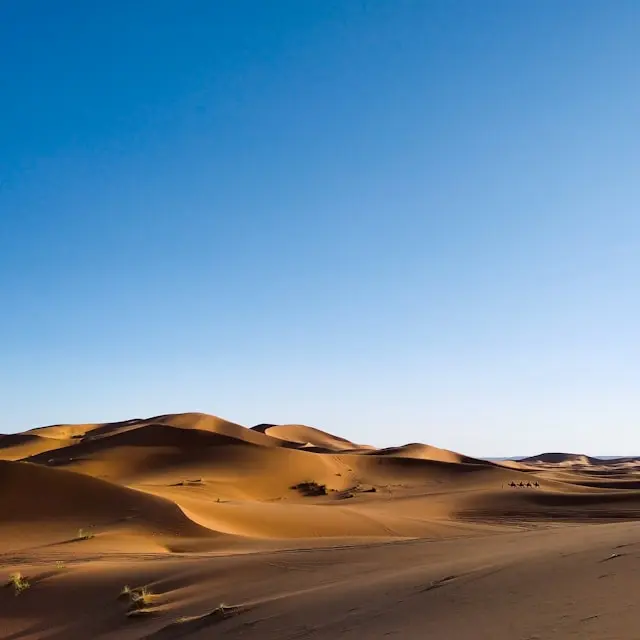
Sahara desert Morocco golden dunes at sunrise near Merzouga Erg Chebbi

The weather in the Sahara Desert Morocco is one of the most misunderstood aspects of planning a desert trip. Most people expect relentless heat. What they do not expect is a night temperature of 4 degrees Celsius at the same camp that reached 42 degrees at midday. They do not expect the Chergui wind to carry fine sand through every zip and pocket. They do not expect the complete silence and the clearest sky most of them have ever seen.

This guide covers Morocco desert weather month by month, explains the climate forces that shape it, and gives you the practical information you need to choose the right window, pack the right kit, and understand what you are dealing with when you step off the camel at camp.

Understanding the Saharan Climate — More Than Just Heat

The Diurnal Temperature Swing — Why Nights Are Freezing

The defining characteristic of Sahara Desert weather Morocco is not the maximum temperature — it is the gap between the maximum and the minimum on the same day. In October, the dunes around Merzouga reach 28 degrees Celsius at 2pm and drop to 10 degrees at 3am. In January, the midday sun warms the sand surface to 30 degrees while the air temperature falls to 3 degrees by midnight. In July, the gap is less dramatic but still significant: 42 degrees at midday, 22 degrees at 3am.

The reason is simple. Sand and bare rock have very low thermal mass — they absorb heat fast and release it fast. Without cloud cover or vegetation to retain warmth, the ground radiates its heat directly into the sky from sunset onward. The result is temperature swings of 20 to 30 degrees Celsius within a single 24-hour period that are genuinely unusual even compared to other desert environments globally.

The Rain Shadow Effect — How the Atlas Mountains Shape the Desert

The High Atlas Mountains are the primary reason the Moroccan Sahara is as dry as it is. Atlantic weather systems moving in from the west drop most of their moisture on the northern and western slopes of the Atlas. By the time that air mass crosses the mountains and descends into the pre-Saharan south, it has lost most of its water content and is compressed and warmed further by the descent. This is the classic rain shadow effect, and it is responsible for the abrupt landscape change visible on any drive from Marrakech over Tizi n’Tichka pass — green and olive-covered on the northern slope, red and bare on the southern.

Annual rainfall at Merzouga averages 30 to 50 mm — roughly the same as the driest parts of the Atacama Desert. Most of this falls in November and March in brief, intense storms that can run dry riverbeds with surprising force within minutes of the first drop.

Morocco Sahara desert landscape pre-Saharan zone south of High Atlas mountains The pre-Saharan south receives almost no rainfall — the High Atlas intercepts Atlantic moisture before it reaches Merzouga.

Humidity and Air Quality in the North African Wilderness

Relative humidity in the Merzouga desert averages 20 to 35 percent — low enough to dry skin, lips, and nasal passages within hours of arrival. Visitors acclimatised to humid European or North American conditions notice the dryness within the first afternoon. Throat irritation and nosebleeds from dry mucous membranes are common on the first night. Drinking 3 to 4 litres of water per day is the standard recommendation, and moisturiser becomes a practical necessity rather than a cosmetic one.

On most days, air quality is exceptional — visibility across the dunes can exceed 50 km in clear conditions. The exception is the Chergui wind period, when windblown dust reduces visibility to a few hundred metres and fine particles penetrate everything.

The Best Time to Visit — A Seasonal Breakdown

The table below gives the average temperature ranges for Merzouga across the year. Use it alongside the seasonal profiles below to match your travel dates to the right conditions.

Month Day Temp Night Temp Rainfall Conditions
January18°C3°C4 mmCold nights, clear, quiet
February21°C5°C5 mmCool, pleasant days
March25°C9°C6 mm★ Peak season begins
April28°C13°C5 mm★ Ideal conditions
May33°C17°C3 mmWarm, last comfortable month
June38°C21°C1 mmHeat building
July42°C23°C1 mmExtreme heat
August42°C22°C2 mmHottest month
September36°C18°C3 mmCooling, transition month
October28°C12°C4 mm★ Best light, ideal temps
November23°C7°C7 mm★ Quiet, excellent conditions
December19°C4°C5 mmCold nights, clear skies
Spring March to May
18°C to 33°C

The most popular window for desert tours. Dune colours are at their most saturated in the low March and April sun. The Dades Valley greens briefly. Atlas snow provides a backdrop. Temperatures are comfortable for camel trekking, walking, and long days outdoors. Book accommodation 2 to 3 months ahead as this is the busiest period.

★ Peak season — book early
Autumn September to November
7°C to 36°C

October and November give conditions nearly identical to spring but with fewer tourists and lower prices. The dune light in October afternoon hours is the best of the year. September is still warm — a transition month better avoided for extended daytime activity. November can bring occasional short rain.

★ Best overall conditions
Winter December to February
3°C to 21°C

Cold nights require proper warm gear — a sleeping bag liner and a down jacket for the camp nights are not optional in January. Days are mild and sunny, rarely cold. Camps are quiet. The sky is at its clearest. For photographers, the low winter sun on the dunes creates shadows that are impossible to replicate in summer. Almost no other tourists.

★ Quiet — warm gear essential
Summer June to August
22°C to 42°C

Genuinely extreme. Surface sand temperature reaches 70 degrees Celsius. Physical activity outdoors between 10am and 5pm is not recommended. All desert tours in summer shift the camel trek to dawn, the 4×4 excursion to early morning, and rely on air conditioning during midday. Lowest prices of the year. Suitable for experienced travellers who understand heat risk.

Heat warning — experienced travellers only

Regional Micro-Climates — Merzouga vs M’Hamid El Ghizlane

Erg Chebbi sand dunes at Merzouga Morocco viewed from above at golden hour Erg Chebbi’s 150-metre dunes near Merzouga — the most accessible Sahara in Morocco and the benchmark for desert weather conditions.

Erg Chebbi — Merzouga

Erg Chebbi is the primary desert destination for most Morocco desert tours — 150-metre dunes, 28 km in length, 560 km from Marrakech on paved road. At 1,100 metres altitude, it sits slightly higher than the surrounding Draa plains, which moderates the absolute maximum temperatures very slightly. It also sits at the western edge of a large flat reg (rocky desert plain) that channels easterly winds directly onto the dune face, making it more exposed to Chergui winds than the more sheltered Erg Chigaga.

Erg Chigaga — M’Hamid El Ghizlane

Erg Chigaga, 60 km south of M’Hamid on piste track, is lower altitude and further south — meaning slightly higher summer temperatures and more wind exposure. The wind at Erg Chigaga is stronger and more consistent, which creates more dynamic dune formations but also more dust. Multi-day camel treks crossing Erg Chigaga are best planned for October, November, and March — the same optimal windows as Erg Chebbi, but with a higher margin of wind risk outside these months.

The Atlas Mountains’ Influence on the Journey from Marrakech

The 2,260-metre Tizi n’Tichka pass on the road from Marrakech to Ouarzazate introduces a significant climate shift within a single day’s driving. In winter, the pass can be closed by snow while Merzouga simultaneously has 18 degrees of sunshine. Check road conditions before any December to February departure — the N9 pass closure is the most common logistical disruption to desert tours from Marrakech, and it can occur as late as March in heavy snow years.

Navigating Desert Weather Hazards

Sandstorms and Wind Gusts — Understanding the Chergui

The Chergui is a hot, dry easterly wind that blows from the Saharan interior into Morocco. It carries fine sand and dust particles, raises ambient temperatures by 5 to 10 degrees Celsius, and reduces visibility from 50 km to under 500 metres within minutes. Chergui events are most common in late April and May (the transition from spring to summer) and in August and September (late summer to early autumn). They last from a few hours to several days.

During a Chergui event, experienced desert guides direct groups to shelter — typically a camp tent or behind a dune ridge. The practical response: wrap a cheche around your face, protect your camera immediately, stay low, and wait. The storms pass as fast as they arrive. A quality desert camp will have advance warning from local community contacts and will typically adjust the camel trek timing to avoid active sandstorm conditions.

Managing High UV Index and Heat Index Exposure

The UV index at Merzouga reaches 9 to 11 (Very High to Extreme) from May through September. The combination of altitude, thin atmosphere, and dune surface reflection means UV exposure at the dune top in July is genuinely comparable to high-altitude mountain conditions. Sunscreen SPF 50 applied every 90 to 120 minutes is the minimum. A sun hat, UV-protective long sleeves, and sunglasses with UV400 protection are not optional extras in summer. The heat index — the combination of actual temperature and any residual humidity — makes late June to August afternoons feel 3 to 5 degrees hotter than the thermometer reads.

Dust, Dander, and Air Quality for Sensitive Groups

Desert dust particles are very fine — 2 to 10 microns — and remain suspended in the air for hours after wind activity. Visitors with asthma, hay fever, or other respiratory sensitivities should carry their regular medication and a N95 face mask for any day with visible dust haze. The camp itself provides a clean environment indoors, but the camel trek and any outdoor time during or after a Chergui can aggravate sensitive airways significantly. Discuss any respiratory conditions with the tour operator before departure.

Flash Floods and Occasional Precipitation

Rain in the Moroccan Sahara is rare but memorable when it happens. The brief November and March storms that deliver most of the year’s 30 to 50 mm of rainfall can send dry riverbeds (wadis) running with fast, opaque flood water within minutes. The risk is not from rain falling at the camp — it is from rain falling 20 km away on a higher plateau draining rapidly through the wadi network. Desert guides know which wadi crossings to avoid after rain. The piste roads used for 4×4 excursions can be impassable for 12 to 48 hours after heavy rain events.

Aligning Your Trip with Cultural Festivals and Events

The International Nomads Festival — M’Hamid

The Taragalte Festival (International Nomads Festival) takes place at M’Hamid El Ghizlane in November, typically in the first or second week. It combines traditional Saharan music from across the North and West African region with camel parades, a desert market, and nomadic tent exhibitions. November conditions at M’Hamid are comfortable — daytime temperatures of 22 to 25 degrees Celsius, clear skies, and cool evenings. Accommodation in M’Hamid village and the surrounding desert camps books out weeks in advance for the festival period.

The Rose Festival and Almond Blossom Festival

The Rose Festival at M’Gouna in the Dades Valley takes place in late April or early May, timed to the harvest of the Damask rose fields that line the canyon. This coincides perfectly with the ideal spring desert weather window — Merzouga in late April, then the rose harvest in the Dades Valley, then Ait Ben Haddou on the return to Marrakech gives a natural three-stop circuit. The Almond Blossom Festival near Tafraoute in the Anti-Atlas runs in February — early enough that the Atlas can still have snow, creating a striking landscape contrast for the road journey.

Gnawa World Music Festival and Regional Events

The Gnawa World Music Festival at Essaouira runs in June. The timing is deliberately placed in summer when Essaouira’s consistent Atlantic wind keeps temperatures at 22 to 25 degrees Celsius even as Merzouga bakes at 42 degrees. For a combined Sahara and Atlantic coast itinerary, combining an early June desert visit (before peak heat) with the festival is a viable structure if you are comfortable with 35 to 38 degree desert temperatures.

Travelling During Ramadan

Ramadan falls at a different Gregorian calendar date each year (approximately 11 days earlier each year). When it falls in spring or autumn — the peak desert weather windows — it changes the rhythm of the trip significantly. Restaurants are closed during daylight hours, the camp dinner time moves to after sunset (iftar), and the camp atmosphere is more communal and celebratory in the evening. The desert tour itself operates normally. If you are offered iftar at a nomad family tent or a desert camp during Ramadan, accept it — the evening meal is more generous and the social dimension more open than at any other time of year.

Desert Activities — How Weather Dictates Your Itinerary

Camel trekking in Morocco Sahara desert at sunset golden dunes Erg Chebbi The sunset camel trek into Erg Chebbi is timed for the hour before the sun drops — the best light and the end of the day’s heat regardless of season.

Camel Trekking — Finding the Window Between Heat and Cold

The standard camel trek timing is deliberately placed at 4 to 5pm for a sunset arrival at camp. This window avoids the peak midday heat while catching the best dune light. In October and March, this timing is perfect — 25 degrees Celsius, light wind, golden dunes. In July, 4pm is still 38 degrees Celsius and direct sun exposure over 45 minutes on the camel is genuinely demanding. Summer treks shift to 5:30 or 6pm and are shorter in duration. In December, the 4pm start is fine in terms of temperature but sunset comes fast — by 5:30pm it is dark and cold.

Stargazing — Why Visibility Peaks in the Dry Season

The Sahara at Merzouga has zero light pollution. The Milky Way is visible to the naked eye on any clear night. The best stargazing conditions are October through February — the longer nights, lower humidity, and reduced atmospheric dust all contribute. A new moon phase combined with a clear October night at Erg Chebbi gives a sky that most visitors describe as the most memorable they have ever seen. Download a star map app before departure (offline). The camp guide can identify the brightest formations in Darija, which adds a cultural dimension to the experience.

Wildlife Spotting — Best Times for Fennec Foxes and Desert Gazelles

Fennec foxes are nocturnal and most active in the two hours after sunset and the two hours before sunrise. Autumn and spring, when temperatures are moderate, give the best conditions for sitting outside the tent and watching them. Desert hedgehogs, sand cats, and the smaller gecko species are also primarily nocturnal. Dorcas gazelles — the small desert antelope common in the pre-Saharan zone — are best spotted in early morning at the dune edge. Flamingos visit Dayet Srji lake near Merzouga from January through April in years with sufficient winter rainfall.

Photography — Protecting Gear from Sand and Extreme Temperatures

Fine desert sand infiltrates every unsealed gap in a camera body within an hour of active wind. The practical protection: keep your camera in a sealed ziplock bag inside a hard case when not shooting; use a UV filter on every lens; blow, do not wipe, any sand from the lens surface; and avoid changing lenses in the open during any wind. For extreme temperature transitions (stepping from an air-conditioned vehicle into 42-degree desert air), allow the camera to acclimatise in a partially opened bag to prevent condensation on the sensor. The best light for dune photography is the 20 minutes before and after sunrise, and the 30 minutes before sunset — both times when the air is cooler and the shadows on the dune faces are at maximum depth.

The Essential Saharan Packing List for All Seasons

Morocco desert traveller wearing traditional cheche headscarf Sahara wind protection The cheche — a traditional Tuareg/Amazigh woven headscarf — protects against sun, wind, and sand in any season.

The Art of Layering for 40-Degree Temperature Fluctuations

A base layer of moisture-wicking synthetic or merino wool is the foundation in any season. Over that, a light long-sleeve shirt handles daytime sun and wind. The critical third layer — a packable down jacket or fleece — handles the evening drop. In January, add a fourth layer: a proper mid-weight insulated jacket for the camp night. The principle is the same year-round: you will be too hot for the heavy layer at 2pm and genuinely cold without it at 2am. Both garments need to be in the daypack you take to the camp, not in the rolling case you leave in the vehicle.

Sun Protection Beyond SPF — The Traditional Cheche

A cheche is a 2 to 4-metre length of lightweight woven fabric worn wrapped around the head and face. Used by Tuareg and Amazigh nomads for millennia, it is the most effective single piece of desert protection available. It blocks direct sun on the neck, ears, and face; it filters windblown sand; and it provides surprising warmth on cold desert mornings. Sold at most Merzouga shops for 30 to 80 MAD. Learning a basic wrap takes about 5 minutes with the help of a camp guide. It outperforms any commercial hat or balaclava at all three functions simultaneously.

Footwear for Sand Dunes and Rocky Hamada

The dune surface at Erg Chebbi is soft sand — bare feet once you are in the dune interior, but you need closed shoes to walk from the vehicle to the mounting point and for any rocky terrain on the approach. A pair of comfortable trail runners or low hiking shoes handles all desert terrain adequately. Sandals work on the soft sand but give no protection at the rocky dune base and no support on the camel mounting steps. In summer, never walk on exposed sand in bare feet between 10am and 5pm — the surface temperature exceeds 70 degrees Celsius and can cause burns within seconds.

Hydration and Health — Fighting Dryness

  • Water — 3 to 4 litres per person per day minimum; more in summer. The camp provides bottled water.
  • Lip balm with SPF — the desert air dries lips within hours; cracking starts by day two without protection.
  • Saline nasal spray — prevents the dry-air nosebleeds common on the first desert night.
  • Moisturiser — apply to exposed skin morning and evening; at 20% humidity the skin loses moisture continuously.
  • Electrolyte sachets — more useful than plain water in summer; replenish salt lost through sweating.
  • Throat lozenges — the dry air and any dust exposure causes a persistent dry throat within the first day.

Practical Resources for Weather Tracking

How to Use a 10-Day Forecast for Remote Desert Regions

Standard weather apps (AccuWeather, Weather.com) give reasonable 10-day temperature forecasts for Merzouga. The wind forecast is less reliable beyond 5 days — use Windy.com for wind speed and direction at specific altitudes, which gives a better indication of sandstorm risk than general weather apps. The temperature forecasts are typically accurate within 2 degrees Celsius for Merzouga 5 days ahead. Download the forecast before departure and save it offline — there is no mobile signal at the desert camp.

Monitoring Wind Speed Before Heading into the Dunes

A sustained wind speed above 30 km/h at dune level makes camel trekking significantly less comfortable and photography conditions poor. A sustained speed above 50 km/h constitutes a sandstorm condition and tour operators will typically postpone dune activities. Windy.com set to the 10-metre surface wind layer gives the most accurate local prediction for the Merzouga basin. Check the 6am forecast on the morning of your arrival day — if the afternoon wind is flagged above 35 km/h, discuss timing adjustment with your driver-guide.

The Importance of Local Guides in Reading Weather Patterns

Merzouga-born guides read weather signs that do not appear in any forecast app. The colour and angle of the morning sky over the Algerian border, the behaviour of the camp animals, the smell of the air at dawn — these are indicators of incoming Chergui conditions that local knowledge recognises 6 to 12 hours before a storm arrives. This is one of the practical arguments for private tours with locally-born guides rather than generic organised packages: the guide’s weather knowledge is hyperlocal and comes from daily experience in the specific desert basin you are crossing.

Final Verdict — Choosing Your Ideal Saharan Window

Best for Photography October

Exceptional light, low wind, the dune shadows are at their deepest in the low autumn sun. Clear skies for stargazing. Flamingos possible at Dayet Srji.

Best for Cultural Immersion November

Taragalte Nomads Festival at M’Hamid. Quiet camps. Rose harvest in the Dades Valley ends in May but date palm harvest continues. Local communities present and accessible.

Best for Budget Travellers January

Lowest prices of the year. Almost no other tourists. Cold nights — bring proper warm gear. Days are mild and sunny. The dune light in January morning is genuinely special.

Best Overall Balance April

Warm comfortable days, cool evenings, no extreme heat risk, rose harvest in the Dades Valley, green Atlas views on the approach. The most complete overall desert experience.

Best for Stargazing December

Longest nights of the year, zero humidity, minimal dust. A new moon night in December at Erg Chebbi is the clearest sky in Morocco.

Avoid if Heat-Sensitive July / Aug

42 to 45 degrees Celsius midday. Activity restricted to dawn and dusk. Suitable for experienced desert travellers with correct preparation only.

Whatever month you travel, the desert tours from Marrakech adapt to seasonal conditions. The camel trek timing, 4×4 excursion schedule, and camp activities all adjust to the weather window you are travelling in. Contact us with your travel dates and we will confirm current conditions and the recommended itinerary structure for your specific window.

3 Days from Marrakech

3 Day Desert Tour from Marrakech

Ait Ben Haddou, Dades Valley, sunset camel trek at Erg Chebbi, luxury desert camp. The standard southern Morocco route.

See 3-day tour
5 Days — Full Desert Day

5 Day Desert Tour from Marrakech

Adds a full desert day on day three — 4×4 excursion to nomad family, Khamlia Gnawa village, and Dayet Srji lake. The best format for any weather window.

See 5-day tour
One Way to Fes

Marrakech to Fes Desert Tour

Same route, ending in Fes instead of returning to Marrakech. Available in 3, 4, and 5 days. No repeated roads.

See Marrakech to Fes

Frequently Asked Questions — Weather in the Sahara Desert Morocco

How does the climate of Morocco change throughout the year?

+

Morocco spans four climate zones. The Atlantic coast has mild Mediterranean-influenced weather year-round. The interior plains around Marrakech are hot in summer and cool in winter. The High Atlas has an alpine climate with snow from November to April. The pre-Saharan south — including Merzouga and Erg Chebbi — has an extreme continental desert climate with very hot summers (40 to 45°C), mild springs and autumns (18 to 28°C), and cold winters with nights below 5°C. Rainfall in the desert south is almost nonexistent.

What is the typical weather in the Sahara Desert region of Morocco?

+

The Moroccan Sahara is characterised by extreme heat in summer, large daily temperature swings year-round (20 to 30°C between midday and midnight), very low humidity (20 to 35%), almost zero annual rainfall, and occasional strong easterly winds. Spring and autumn are the most comfortable periods, with daytime temperatures of 20 to 30°C and nights of 10 to 15°C.

What are the average temperatures and rainfall in Morocco’s Sahara?

+

At Merzouga: January high 18°C, low 3°C. April high 28°C, low 13°C. July high 42°C, low 23°C. October high 28°C, low 12°C. Annual rainfall is approximately 30 to 50 mm — most falling in brief November and March storms. The desert camp can experience no rain for months at a time.

How does Morocco Sahara desert weather change throughout the year?

+

Spring (March to May): ideal conditions, 20 to 30°C, peak tourist season. Summer (June to August): extreme heat of 40 to 45°C, activity limited to dawn and dusk. Autumn (September to November): similar to spring, best dune light, fewer tourists. Winter (December to February): cold nights of 3 to 8°C at camp, mild sunny days of 18 to 22°C, almost no tourists.

When is the best time to visit the Sahara Desert in Morocco?

+

October and November, and March and April, are the best months. These windows give daytime temperatures of 20 to 30°C, clear skies, low wind, and excellent dune photography light. October is slightly less crowded than spring. Winter (December to February) is excellent for solitude and photography but requires warm gear for cold nights. Avoid July and August if you are sensitive to heat.

What precautions should travellers take for Sahara Desert weather?

+

Carry 3 to 4 litres of water per day minimum. Apply sunscreen SPF 50 every 90 to 120 minutes. Use a cheche headscarf for sun and wind protection. Wear closed shoes — sand reaches 70°C surface temperature in summer. Carry a warm layer for evenings even in July. Download offline maps and weather forecasts before entering the desert. Always travel with a local guide who can read weather and navigate sandstorm conditions.

How does Sahara weather affect wildlife and vegetation in Morocco?

+

Desert wildlife is adapted to extreme temperature swings. Fennec foxes, sand cats, and vipers are nocturnal to avoid daytime heat and are most active in the two hours after sunset. Desert vegetation is most visible in spring after winter rains. The Dayet Srji lake near Merzouga fills after winter rain (January to April) and attracts flamingos and migratory birds when it holds water.

How does the nighttime temperature drop affect daily life in the Sahara?

+

The extreme diurnal swing — up to 30°C between midday and midnight — shapes the entire rhythm of desert life. Desert camps require heating in winter and air conditioning in summer. Cooking, activity, and travel times adjust seasonally. For visitors, the drop means a warm layer is essential even in July. The desert at 3am in summer feels genuinely cold after a 42-degree afternoon.

Plan Your Morocco Desert Tour Around the Best Weather

Tell us your travel dates and we will confirm current conditions, recommend the best itinerary structure for your window, and send full pricing within a few hours. No deposit required to enquire.

Ouarzazate & Ait Benhaddou Morocco — Complete Travel Guide

Ouarzazate & Ait Benhaddou Morocco — Complete Travel Guide

The gateway to the Sahara — UNESCO kasbahs, Hollywood film sets, the Rose Valley, Skoura’s palm grove, and the Draa Valley. Everything you need to plan your visit.

Updated May 2026 12-min read Day 1 of every desert tour south

The Gateway to the Sahara — Why Ouarzazate Belongs on Your Morocco Itinerary

Ouarzazate Morocco is where the High Atlas ends and the pre-Saharan south begins. The city sits at 1,160 metres on the southern slope of the Atlas range — below the pass, above the desert edge. The climate changes noticeably as you descend from Tizi n’Tichka. The vegetation goes from green and forested to pale and spare. The rock changes from grey limestone to red and orange sandstone. The sky opens up. By the time you reach Ouarzazate the landscape around you is nothing like what you left behind in Marrakech two hours ago.

The city is not glamorous. The centre is a loose arrangement of wide boulevards, administrative buildings, and a few hotel blocks — a planned outpost built under the French protectorate as a military and administrative post. What makes Ouarzazate worth stopping for is what surrounds it: Ait Benhaddou Morocco 30 km north, the Skoura palm grove 40 km east, Kasbah Telouet 50 km up the Ounila Valley, and the Draa Valley extending south for 200 km through a succession of date palm oases. Ouarzazate is the hub from which all of these spoke out.

Understanding the Landscape — From the High Atlas to the Desert Edge

The pre-Saharan zone around Ouarzazate sits in the rain shadow of the High Atlas. The mountains intercept Atlantic weather systems from the west, leaving the southern side significantly drier than Marrakech. Annual rainfall in Ouarzazate averages 130 mm — compared to 240 mm in Marrakech and 700 mm in Chefchaouen. The result is a landscape where date palms, tamarisk, and acacia replace the olive and almond trees of the north. The pink and orange kasbahs visible across the entire region are built from pisé — rammed earth made from the same clay that colours the hills around them.

Planning Your Journey — Best Routes from Marrakech

Crossing Tizi n’Tichka Pass

The standard route from Marrakech to Ouarzazate crosses the High Atlas via Tizi n’Tichka pass at 2,260 metres — the highest paved road in Morocco. The N9 climbs from the Marrakech plain through a series of switchbacks that take about 90 minutes to reach the pass from the city. At the top, the view north across the Haouz plain is clear on a good morning, and south toward the Draa pre-Saharan landscape opens up immediately on the descent. The full Marrakech to Ouarzazate drive takes about 3 hours including a stop at the pass. In winter (December through February), the pass can be closed by snow — check conditions before departure if you are travelling between November and March.

N9 via Tizi n’Tichka 3 hours · 205 km · Standard route

The main road south from Marrakech. Paved throughout. Switchbacks above Aït Ourir. Pass at 2,260 m. The most direct route to Ouarzazate and the one used by all desert tours.

Ounila Valley Alternative 4 to 4.5 hours · Slower · Via Telouet

Leaves the N9 at Aït Ourir, follows the Ounila Valley through Kasbah Telouet and the gorges below it, rejoining the N9 near Ait Ben Haddou. Unpaved in sections — requires a 4×4 or high clearance. Worth the detour for Telouet Kasbah alone.

Supratours / CTM Bus 3.5 to 4 hours · From Marrakech

Supratours and CTM buses run daily from Marrakech to Ouarzazate. Air-conditioned, reliable, affordable (around 80 to 100 MAD). Limited luggage space. No stop at Ait Ben Haddou — a grand taxi from Ouarzazate is needed to reach the ksar.

Ait Benhaddou — The UNESCO World Heritage Ksar

Ait Ben Haddou is 30 km northwest of Ouarzazate on the N9 — a detour of about 30 minutes from the main Marrakech to Ouarzazate road that every driver knows and every desert tour includes. The ksar sits on a rocky outcrop above the Mellah river on the old trans-Saharan caravan route. It is one of the most visually complete surviving examples of southern Moroccan earthen architecture, and one of the most recognised buildings in North Africa — partly because of the UNESCO designation and partly because it appears in more films than any other single location in Morocco.

01 The Ksar — Trade Route and Architecture No Entry Fee

A ksar is a fortified village — a collection of earthen towers, storage rooms, living quarters, and communal spaces enclosed within defensive walls. Ait Ben Haddou’s ksar is built in the traditional pisé technique — rammed clay earth reinforced with straw, shaped into walls and towers up to 8 metres high. The material is renewable and self-repairing but requires maintenance after heavy rain. The towers have decorative geometric patterns at the top — each family’s design is distinctive. Six families still live permanently inside the ksar.

02 The Cinematic Connection Film Location

Ait Ben Haddou has been used as a film location since the 1960s. Lawrence of Arabia (1962) was the first major international production to use it. Since then: Gladiator (2000), The Mummy (1999), Kingdom of Heaven (2005), Babel (2006), Game of Thrones (Yunkai, Series 3), Syriana, and several dozen European productions. The scale of the ksar, the earthen colour, and the dry air that allows year-round filming have made it the most repeatedly used location in Moroccan film history. Your driver-guide can point out which walls and gates appeared in specific scenes.

03 Visiting the Ksar — What to Know Allow 1 hour

Entry to the ksar is free — no ticket, no gate. Cross the Mellah river on the footbridge at the base of the site and walk up through the main lanes to the communal granary at the top. The full circuit takes about 45 minutes at a relaxed pace. The resident families sell handicrafts and food at stalls inside the lanes. Day-trip groups from Marrakech arrive between 10am and 2pm — arrive before 9am or after 3pm for a quieter experience. Your driver-guide leads the walk and provides architectural context. No licensed local guide is required at Ait Ben Haddou specifically.

Ouarzazate — The Hollywood of Africa

Atlas Film Studios

Atlas Film Studios is 5 km west of central Ouarzazate on the road toward Ait Ben Haddou. It is one of the largest film studio complexes in the world — the outdoor sets cover an area of several hectares and include intact reconstructions of ancient Egyptian interiors, Roman streets, and desert fortress environments. The production credits include Gladiator, The Mummy, Lawrence of Arabia, Game of Thrones, and Kingdom of Heaven, among many others. Guided tours run in the morning and give access to standing outdoor sets. Entry around 50 to 80 MAD. The experience is more interesting if you are familiar with the productions filmed here — knowing that the sand at your feet is the same sand that Russel Crowe was fighting on adds a layer that cold stonework alone does not provide.

Kasbah Taourirt

Kasbah Taourirt is the main historical attraction inside Ouarzazate itself — the former palace of the Glaoui clan, the feudal lords who controlled the pre-Saharan south until Moroccan independence in 1956. The kasbah is partly inhabited by local families and partly converted to a museum and guided tour circuit. The interior tour covers the reception rooms, the harem quarters, and the upper terraces with views over the town and the surrounding plain. The carved plasterwork and painted cedarwood ceilings show the same craft tradition as the Fes madrasas but applied to a domestic and political rather than religious context. Entry around 20 MAD. Allow 45 minutes.

Note: Standing MDT content rules specify no mention of Kasbah Taourirt as a stop within tour page itineraries. It is mentioned here as a standalone attraction for visitors spending time in Ouarzazate independently. Desert tour itineraries from Marrakech use Ait Ben Haddou as the day one kasbah stop.

CLA Studios and the Cinema Museum

CLA Studios — a smaller facility east of central Ouarzazate — houses the Ouarzazate Cinema Museum, which documents the city’s film history with costumes, props, and production photographs from major international productions. Less impressive than the Atlas Studios outdoor sets but a worthwhile 30-minute addition for film enthusiasts. Entry around 30 MAD.

Beyond the Main Road — Hidden Gems Near Ouarzazate

Kasbah Telouet 50 km via Ounila Valley · 4×4 recommended

The former palace of Thami el Glaoui, the “Lord of the Atlas,” built in the early 20th century and abandoned after independence in 1956. The exterior is crumbling — the pisé towers slowly dissolving without maintenance — but the reception rooms inside retain extraordinary carved plasterwork and painted cedar ceilings from Fes craftsmen brought south to decorate the residence. The Ounila Valley road to Telouet is partly unpaved and requires a 4×4 in wet conditions. Worth the detour for the combination of the kasbah and the dramatic gorge road below it.

Skoura & Amridil Kasbah 40 km east · Paved road

Skoura Morocco is the “Valley of a Thousand Kasbahs” — a palm grove oasis 40 km east of Ouarzazate on the N10 toward the Dades Valley. Amridil Kasbah is the centrepiece: one of the best-preserved fortified kasbahs in the south, still partially inhabited, surrounded by date palms and rose gardens. A driver-guide walk through the kasbah and the palm oasis takes about 45 minutes. Skoura features prominently in the 5-day Marrakech to Fes tour as a dedicated day two stop. Most 3 and 4-day tours pass through Skoura as a brief stop on the road east.

Fint Oasis 10 km south · Track road

A small oasis village in a canyon 10 km south of Ouarzazate. The canyon is palm-fringed with a seasonal river running through a Berber community that has lived here for generations. Quiet, entirely un-touristy, and a 45-minute walk from one end to the other. A good stop if your schedule allows a short detour before the drive east to the Dades Valley or south toward the Draa.

Draa Valley South from Ouarzazate · 200 km to M’Hamid

The Draa Valley runs south from Ouarzazate for 200 km through a succession of date palm oases, kasbahs, and pre-Saharan villages following the Draa River. The drive from Agdz to M’Hamid is one of the finest road journeys in Morocco. Key stops: Tamnougalt Kasbah (best-preserved in the valley), the Tinfou dunes, and Erg Chigaga at the far end (accessible by 4×4 piste). The Draa Valley is separate from the main Marrakech to Fes desert route — it is a standalone south from Ouarzazate rather than a pass-through.

Cultural Immersion — Ait Benhaddou and the South

Supporting Local Women — the Tawesna Association

The Tawesna Association near Ait Ben Haddou is a women’s cooperative producing traditional Amazigh textiles — the geometric flat-weave rugs and the embroidered household items of the pre-Saharan south. A visit to the cooperative includes a demonstration of the weaving process and an opportunity to buy at production prices rather than tourist-shop prices. The revenue supports families in the surrounding villages. Ask your driver-guide about stopping — most know the cooperative and can arrange a brief visit as part of the Ait Ben Haddou stop.

Amazigh Identity in the Pre-Saharan South

The communities around Ouarzazate and Ait Ben Haddou are predominantly Tachelhit-speaking Amazigh (southern Berber) — the same cultural group that populates the High Atlas and the Souss Valley. Their craft traditions (the geometric rug patterns, the pisé architecture, the silver jewellery), food culture (slow-cooked lamb, dates, argan oil from the south), and relationship to the landscape are distinct from the Arabic-speaking communities of the Moroccan interior. The kasbahs are not remnants of a tourist industry — they are the functional building tradition of a region that has lived in semi-arid conditions for centuries, and the families that still inhabit them are the direct descendants of the communities that built them.

Shopping in Ouarzazate

The most worthwhile shopping in the Ouarzazate area is at fixed-price cooperatives rather than the tourist shops on the main boulevard. The Akhnif Glaoui Carpet Cooperative near Kasbah Taourirt sells the distinctive Akhnif cape — a specific black and orange geometric textile worn by Amazigh women in the south as a ceremonial garment, and now produced for interior decoration. Prices are fixed and the production is genuine. Rose water and dried roses from the M’Gouna valley (in season April to May) are also available in the Ouarzazate market at significantly lower prices than in Marrakech.

Three Days That Pass Through Ouarzazate and Ait Benhaddou

Every desert tour from Marrakech passes through Ouarzazate and Ait Ben Haddou on day one. The 3-day tour is the most common format — it covers both sites in the first afternoon and continues east to the Dades Valley and Erg Chebbi before returning to Marrakech on day three. Below is the standard 3-day route with what you actually see and do at each stop.

Day 1 | Marrakech → Tizi n’Tichka → Ait Ben Haddou → Ouarzazate → Dades Valley approx. 380 km · 7 hrs driving

Early start from Marrakech (7am) and south on the N9 through the High Atlas. Tizi n’Tichka pass at 2,260 metres — brief stop for the view and photographs at the summit. Continue south to Ait Ben Haddou (lunch at a restaurant at the ksar base). Full walk through the ksar with the driver-guide: towers, lanes, granary at the top, view over the Mellah river. Continue 30 km to Ouarzazate for a brief stop at Kasbah Taourirt (45 minutes). Drive east to Skoura palm grove — short stop at Amridil Kasbah. Continue to the Dades Valley for overnight. Dinner and breakfast included.

Day 2 | Dades Valley → Todra Gorge → Erfoud → Merzouga (Erg Chebbi) approx. 220 km · 5 hrs driving

Morning in the Dades canyon before 11am when the light is best. Drive east to Todra Gorge — walk the base between 300-metre limestone walls, 10 metres wide at the tightest point. Continue south across the pre-Saharan plain to Erfoud and south to Merzouga. Arrive at the dunes by 5pm for the sunset camel trek (45 minutes into the Erg Chebbi dunes). Overnight at the luxury desert camp — dinner, campfire, Berber music, and a sky with no light pollution. Breakfast included.

Day 3 | Merzouga → Ziz Valley → Middle Atlas → Marrakech (or Fes) approx. 560 km · 9 hrs (return) or Fes drop-off

Sunrise at the dunes. Breakfast at the camp. Drive north through Erfoud and into the Ziz Valley — date palm oasis running north to Midelt. Middle Atlas cedar forest near Azrou (Barbary macaques in the trees). Return to Marrakech via Khenifra and Beni Mellal (long day — 9 hours). Or continue north to Fes via Ifrane for a Marrakech to Fes one-way route. Both options available on the 3-day tour.

For travellers who want more time in Ouarzazate and the surrounding area, the 5-day Marrakech to Fes tour overnights in Ouarzazate on day one (allowing Kasbah Taourirt in the evening and Fint Oasis in the morning), spends day two in Skoura and the Rose Valley, and arrives at Merzouga on day three. That pacing gives the pre-Saharan zone the time it deserves without rushing.

Where to Stay — Ouarzazate and Ait Benhaddou

Standard Riad Amlal — Ouarzazate

Reliable standard option inside Ouarzazate town. Clean rooms, decent breakfast, central location near Kasbah Taourirt. Good base for an independent overnight. TripAdvisor

Mid-Range Riad Dar Chamaa — Ouarzazate

Renovated riad with a courtyard garden and pool. Better quality finish than Riad Amlal with a more atmospheric setting. Suitable for the overnight on longer desert tour itineraries. TripAdvisor

Premium Oz Palace — Ouarzazate

Five-star desert palace hotel on the outskirts of Ouarzazate with Atlas Mountain views, a large pool, and spa facilities. The finest option in the city. Included in the premium accommodation tier on longer desert tours. TripAdvisor

At Ait Ben Haddou Guesthouses at the Ksar

Several small guesthouses operate inside and at the base of the ksar. Staying overnight at Ait Ben Haddou gives access to the site in the early morning before day-trip groups arrive — the best time for photography and quiet exploration. Ask your tour operator about overnight options at the ksar.

Practical Travel Tips for the Ouarzazate Region

Best Time to Visit

March to May

22 to 30°C. Rose harvest in M’Gouna (late April). Best overall conditions. Spring wildflowers on the Ounila Valley road to Telouet.

October to November

Similar temperatures to spring. Fewer tourists than April. Date harvest in the Draa Valley oases. Excellent desert light in October.

December to February

Mild days (15 to 22°C), cold evenings. Tizi n’Tichka pass occasionally closed by snow — confirm before departure. Ouarzazate itself stays accessible.

July to August

40 to 45°C at midday. Possible but uncomfortable for extended outdoor visits at Ait Ben Haddou and the kasbahs. Film studios still accessible (air-conditioned interior sections).

Dining in the South — Authentic Berber Cuisine

The most reliable restaurants near Ait Ben Haddou are the simple establishments at the base of the ksar — wood-fired tagines, Moroccan salads, and bread for around 80 to 120 MAD per person. In Ouarzazate, the restaurants on the main boulevard serve a similar set menu at similar prices. The quality difference between a restaurant at Ait Ben Haddou and one in Ouarzazate is minimal — the setting at the ksar base is better. The best meal in the region on a desert tour is at the Dades Valley gîte the first night — home-cooked by the gîte owner using local ingredients rather than a restaurant supply chain.

Packing for the Region

  • Sunscreen SPF 50 — the pre-Saharan sun at Ait Ben Haddou is strong from 10am. The walk through the ksar at midday is exposed.
  • Comfortable walking shoes — the ksar lanes are rough stone and compacted earth. Sandals are workable; heels are not.
  • Light scarf — wind and dust on the piste roads south of Ouarzazate. Useful at Ait Ben Haddou on windy afternoons.
  • Camera with a UV filter — the dust in the pre-Saharan zone is fine and persistent. A filter protects the lens element.
  • Cash in dirhams — ATMs in Ouarzazate town. Nothing at Ait Ben Haddou and very little east of Skoura until Boumalne Dades.

Ouarzazate and Ait Benhaddou on a Desert Tour

Ouarzazate and Ait Ben Haddou are on day one of every desert tour from Marrakech that goes south. They are not add-ons or detours — they are integral stops on the route that connects Marrakech to the Erg Chebbi dunes and the Sahara. The desert tours from Marrakech include a full driver-guide walk at Ait Ben Haddou on day one and a stop at Ouarzazate before continuing east.

Day 1 Stop
3 Day Desert Tour from Marrakech

Ait Ben Haddou and Ouarzazate on day one, Dades Valley and desert camp on days two and three. The standard route that includes both sites.

See 3-day tour
Ouarzazate Overnight
5 Day Marrakech to Fes Tour

Overnights in Ouarzazate on day one, adds Skoura and the Rose Valley as a full day two, then the desert and Fes. More time in the pre-Saharan south.

See 5-day tour
All Options
Browse All Desert Tours from Marrakech

Every tour that crosses the High Atlas and passes through Ait Ben Haddou and Ouarzazate — all durations, all routes.

Browse all tours

Frequently Asked Questions — Ouarzazate and Ait Benhaddou Morocco

What are the main attractions in Ouarzazate and Ait Benhaddou?

+

Ait Ben Haddou (UNESCO ksar and film location), Kasbah Taourirt in Ouarzazate, Atlas Film Studios (Gladiator, Game of Thrones), Amridil Kasbah in Skoura, Kasbah Telouet in the Ounila Valley, and the Draa Valley palm oasis south of Ouarzazate. The pre-Saharan landscape itself — the transition zone between the High Atlas and the desert — is the overarching draw.

Why is Ait Benhaddou famous in Morocco?

+

Ait Ben Haddou is famous for three reasons: it is one of the finest surviving examples of southern Moroccan ksar architecture (UNESCO World Heritage since 1987), it sits on the ancient trans-Saharan caravan route, and it is the most-used film location in Morocco — appearing in Gladiator, Lawrence of Arabia, Game of Thrones, The Mummy, Babel, and dozens of other international productions.

How do I get from Ouarzazate to Ait Benhaddou?

+

Ait Ben Haddou is 30 km northwest of Ouarzazate on the N9 — about 30 minutes by car. No direct public bus runs between the two. A grand taxi from Ouarzazate costs around 100 to 150 MAD for the vehicle. Most visitors see Ait Ben Haddou as part of a desert tour from Marrakech rather than as a separate trip from Ouarzazate.

What is the best time to visit Ouarzazate and Ait Benhaddou?

+

March to May and October to November. Spring averages 22 to 30°C — warm but comfortable. The rose harvest in M’Gouna peaks in late April. Autumn gives similar conditions with fewer tourists. July and August reach 40 to 45°C — possible but uncomfortable for extended outdoor visits. December to February is mild during the day but the Tizi n’Tichka pass can close in heavy snow.

How has Ouarzazate been used in film and media?

+

Major productions filmed in Ouarzazate and at Ait Ben Haddou include Gladiator (2000), The Mummy (1999), Lawrence of Arabia (1962), Game of Thrones (Yunkai), Kingdom of Heaven (2005), Babel (2006), The Living Daylights (1987), and Syriana (2005). Atlas Film Studios — one of the largest outdoor film studio complexes in the world — is the primary production facility. The combination of reliable dry weather, varied landscapes, and low cost has made Ouarzazate the preferred Morocco film location for 60 years.

What cultural experiences can I have in Ait Benhaddou?

+

A driver-guide walk through the ksar explaining the pisé architecture, the defensive design, and the family towers. Six families still live permanently inside the ksar. The base market sells produce to local communities as well as tourists. The Tawesna Association women’s cooperative near the site produces traditional Amazigh textiles. No entry fee is charged to enter the ksar.

Which guided tours are recommended for Ouarzazate and Ait Benhaddou?

+

The best way to see both sites is as part of a private desert tour from Marrakech with a driver-guide who knows them well. The 3-day desert tour covers Ait Ben Haddou on day one with a full ksar walk. The 5-day Marrakech to Fes tour adds an Ouarzazate overnight and a full Skoura and Rose Valley day. No separate licensed guide is required at Ait Ben Haddou — the driver-guide handles the site walk.

What accommodation is available near Ouarzazate and Ait Benhaddou?

+

In Ouarzazate: Riad Amlal (standard), Riad Dar Chamaa (mid-range), Oz Palace (premium). At Ait Ben Haddou: small guesthouses at the base of the ksar — staying overnight gives early morning access before day-trip groups arrive. Most desert tours overnight in Ouarzazate (on 5-day tours) or Dades Valley (on 3 and 4-day tours), with Ait Ben Haddou as an afternoon visit.

Visit Ait Ben Haddou and Ouarzazate on Your Desert Tour

Every desert tour from Marrakech crosses Tizi n’Tichka and stops at Ait Ben Haddou on day one. Private vehicle, English-speaking driver-guide, and a full ksar walk included.

Chefchaouen — The Blue City Morocco: Complete Travel Guide

Chefchaouen — The Blue City Morocco: Complete Travel Guide

Everything you need to know about visiting the Blue City of Morocco — why it is blue, what to see, where to eat, the best riads, hiking, photography, and how to get there.

Updated May 2026 14-min read Overnight: 1 to 2 nights recommended

Discovering the Blue Pearl — An Introduction to Chefchaouen

The Aesthetic Allure of the Rif Mountains

The blue city Morocco is set in a valley in the Rif Mountains at around 600 metres altitude, an hour south of Tetouan and three hours from both Fes and Tangier. The town was founded in 1471 as a fortress against Portuguese raids from the coast. It remained largely closed to outside visitors until the Spanish protectorate in 1920 — Europeans who entered before then did so at considerable personal risk. The insularity that isolation created left the medina intact, the dialect distinct, and the architecture coherent in a way that more accessible cities gradually lost over the 20th century.

The Rif Mountains give the city a particular quality of light — the hills around the valley catch morning mist in autumn and winter, the evenings are cool year-round by Moroccan standards, and the spring wildflowers on the surrounding slopes make April and May the most visually layered months to visit. The blue of the medina and the green of the surrounding hills in spring is the specific image that made Chefchaouen blue city Morocco famous internationally.

Why Is Chefchaouen Blue? History and Myth

The honest answer is that the origin of the blue is not definitively settled and several explanations are probably all partially true. The explanation most commonly cited by guides in the medina connects the colour to the Jewish community that settled in Chefchaouen after the expulsion from Al-Andalus in 1492. Blue has specific significance in Jewish tradition — the colour tekhelet appears in the Torah as a sacred colour — and Jewish communities in Morocco and North Africa historically used blue in their homes and synagogues.

A second explanation is practical: the indigo plant compounds used in early blue paint have insect-repellent properties, which was meaningful in a dense mountain town with summer humidity. A third is commercial: the blue intensified as an explicit tourist identity from the 1980s onward as photographs of the city circulated internationally. Shopkeepers began painting walls, steps, and pots blue deliberately to attract visitors. The current saturation of blue is almost certainly a combination of all three forces applied at different moments in the city’s history.

Essential Logistics — Getting to the Blue City

Arriving from Tangier, Fes, or Casablanca

From Transport Duration Notes
TangierCTM bus or grand taxi3 hoursMost direct connection from the north. Grand taxi via Tetouan is faster for small groups.
FesCTM bus or Supratours3.5 hoursDirect bus via the N13 through Ouezzane. Most popular connection for Morocco circuit travellers.
CasablancaCTM bus5 hoursDirect but long. Flying to Tangier (1 hour) and bussing south is sometimes faster overall.
TetouanGrand taxi1.5 hoursCheapest connection from the north. Grand taxis depart when full from Tetouan’s central taxi rank.
MarrakechCTM bus (change at Fes)8 to 10 hoursLong journey. Flying or taking the Al Boraq train to Casablanca then north is faster for most people.

CTM Bus and Supratours Networks

CTM (the main intercity bus company in Morocco) runs direct routes to Chefchaouen from Fes, Casablanca, Rabat, and Tangier. Supratours, which operates in partnership with ONCF trains, also covers Chefchaouen on some routes. Both companies are air-conditioned and reliable — book online at ctm.ma at least 24 to 48 hours ahead for weekend travel, particularly in the April to June and September to October peak periods when buses fill well in advance.

Grand Taxis vs Petit Taxis

Grand taxis (shared Mercedes saloon cars) are the main transport between towns and cities in the Rif region. They depart when full (typically 6 passengers) from designated taxi ranks and cost slightly more than the bus per seat but operate without a schedule. For Chefchaouen from Tetouan, a grand taxi costs around 40 to 50 MAD per seat. Petit taxis operate only within a city boundary — they cannot take you between cities. On arrival at the Chefchaouen bus station (Gare Routiere), the medina is about 15 minutes walk downhill or a 10-minute petit taxi ride for around 20 MAD.

What to Expect at the Gare Routiere

The Chefchaouen bus station is at the top of the town, above the medina. On arrival expect approaches from unofficial guides and “helpers” who will offer to show you to your riad for a fee. These are not licensed guides — decline politely and follow the map to your riad directly. All reputable riads in Chefchaouen are reachable in 15 to 25 minutes on foot from the bus station. Most will provide a walking map or meet you at a designated gate if you message on WhatsApp before arrival.

The History and Heritage of Chefchaouen’s Medina

The Reconquista and the Andalusian Legacy

Chefchaouen was founded in 1471 by Ali ibn Rashid of the Banu Rashid dynasty as a fortress to resist the expanding Portuguese presence on the Moroccan coast. After the fall of Granada in 1492, waves of Muslim and Jewish refugees arrived from Andalusia — bringing with them the architecture, music, textile traditions, food culture, and spoken dialect of Al-Andalus. The Andalusian quarter of the medina (the area around the main mosque and the kasbah) still shows this heritage in the proportions of the buildings, the tilework on the doorways, and the whitewash-and-blue colour scheme that echoes the towns of southern Spain.

Jewish Refugees and the Origins of the Blue Facades

The Jewish community that settled in Chefchaouen after 1492 — and later in waves through the 16th and 17th centuries — brought the tradition of painting buildings with blue pigment. The specific compound (tekhelet, derived from a sea snail) was used in religious contexts in the Torah and had become a colour associated with divine protection and sacredness. Jewish homes in Chefchaouen were painted blue as both a religious marker and, eventually, a neighbourhood identity. The Mellah (Jewish quarter) of the medina retains building styles distinct from the surrounding Muslim quarter — taller, with balconies and internal light wells — though the Jewish population emigrated almost entirely to Israel and France after 1948.

The Spanish Protectorate and Modern Influence

Spain’s protectorate over the northern zone of Morocco (1912 to 1956) brought Spanish administration, language, and architectural influence to Chefchaouen. The town that Spanish forces entered in 1920 had been closed to outsiders for nearly 450 years. The new town (Ville Nouvelle) built outside the medina walls follows a Spanish colonial pattern — a central plaza, whitewashed buildings, Spanish-language signage. Older residents of the town still speak Spanish as a first European language alongside Darija. The cafes on Place Uta el-Hammam serve Spanish-style coffee alongside Moroccan mint tea.

Navigating the Blue Medina — Top Sights and Hidden Alleys

01. Place Uta el-Hammam — The Main Square

The social centre of the medina. The Great Mosque with its distinctive octagonal minaret stands on the north side. The kasbah on the west side. The cafes and orange juice stands on the east and south. The square is most alive in the morning when the market stalls set up, and in the evening when the town comes out after dinner. The roof terraces of the cafes around the square are the best vantage point for photographs of the minaret and the kasbah gate from above.

02. Kasbah Museum and the Portuguese Tower

The kasbah — the former fortress that predates the medina — has been converted into a small ethnographic museum with traditional costumes, musical instruments, and a garden courtyard. The Portuguese Tower inside the kasbah walls was used as a prison in the 18th century. Entry is around 10 MAD. The garden is the quietest spot in the medina during peak visiting hours. Combine it with a walk along the kasbah ramparts for the best overview of the medina roofscape.

03. Ras el-Ma — The Mountain Spring

Ras el-Ma (“head of the water”) is a natural spring above the northeast corner of the medina where the Oued Ras el-Ma river emerges from the Rif hillside. Local women wash laundry in the channels below the spring — a practical use of the water that has been continuous for centuries. The path from the medina to Ras el-Ma takes 10 minutes through increasingly residential lanes and gives a view of the city that most tourists miss. It is also the starting point for the hike toward the Spanish mosque and beyond into Talassemtane National Park.

04. Rainbow Stairs and Blue Alley Photography

The staircase on Rue Tarara — painted with multicoloured stripes — is the most photographed single spot in Chefchaouen and consequently the most crowded between 10am and 4pm. Go before 8am for an empty frame. The alley between the kasbah and the mosque that runs roughly north-south catches the morning light from the east at a sharp angle that creates the shadow-line photographs that define Chefchaouen’s international image. Both spots are best in the first hour after sunrise.

Ethical Photography in the Medina

The medina is a living residential neighbourhood, not a set. The women washing at Ras el-Ma, the children playing in the alleyways, and the shopkeepers on the main souk street are people living their lives rather than props. Photographing people directly — particularly women — without asking permission is considered intrusive. If someone objects to being photographed, accept the objection without argument. A small tip (10 to 20 MAD) is expected if you photograph a craftsperson at work. The blue walls, doors, and steps are entirely available for photography without any social complexity — focus there for street photography without human subjects.

Beyond the Blue Walls — Outdoor Adventure and Hiking

Spanish Mosque (Bouzafer) 20 minutes · Easy · Panoramic View

The unmissable short hike from the medina. The ruined Spanish mosque on the hill above the city gives a full panoramic view over the medina roofscape and the Rif valleys beyond. Best at sunset when the blue medina lights up against the darkening hills. The path starts at the northeast corner of the medina near Ras el-Ma — follow the obvious trail uphill. No guide needed.

Akchour Waterfalls 45 km from Chefchaouen · Full Day · Moderate

The best day trip from Chefchaouen. Grand taxi to Akchour village (around 25 MAD per seat), then a 2-hour trail through the Oued Laou gorge to the lower falls (30 metres) and the upper falls (100 metres). God’s Bridge — a natural rock arch over the river — is 20 minutes beyond the lower falls. The trail is well-marked and does not require a guide. Go before May or in September when the river is at good flow.

Talassemtane National Park Multi-day · Strenuous · Guide Required

The national park borders the medina to the south and east. Jebel Lakraa (2,159 m) is the main peak — a 2-day trek with a night at the refuge on the plateau. The cedar and fir forests of the park are habitat for Barbary macaques. Multi-day treks through the park connect to the Rif villages of Afertane and Ain Tissimane. Guides available through the kasbah museum or the Chefchaouen Association of Mountain Guides.

Kef Toghobeit Cave 4 km from Chefchaouen · Half Day · Easy to Moderate

A limestone cave system 4 km from the medina with stalactites and underground pools. The cave network has several chambers accessible without technical equipment. A local guide is recommended for navigation inside. The approach walk through the Oued Laou valley is pleasant in itself — combine with a swimming stop at the river pools in summer.

A Taste of Chaouen — Culinary Highlights

Hyper-Local Specialities

Fromage de Chèvre

Fresh goat cheese made in the surrounding Rif villages and sold in small rounds in the medina market. Eaten with bread, honey, and olive oil for breakfast. Available at the early morning market near the main square.

Zaazaa Smoothie

A local Chefchaouen creation — a thick blend of fruit, nuts, honey, and argan oil served cold in the cafes around Place Uta el-Hammam. No standard recipe; each cafe has its own version. Around 20 to 30 MAD.

Goat Tagine

Slow-cooked goat with preserved lemon and Rif mountain herbs. The local version of the Moroccan tagine uses goat rather than lamb — the flavour is stronger and leaner. Best at the riad restaurants in the medina.

Harira and Snail Soup

Harira (tomato and chickpea soup with herbs) is served at the street stalls around the main square from midday. Snail soup (babbouche) is available at the evening stalls — mildly spiced, with small land snails. Around 5 to 10 MAD a bowl.

Cafe Restaurant Sofia

Consistently the best-reviewed restaurant on the main square. Full Moroccan menu with a reliable tagine and a rooftop view of the kasbah gate. Prices around 80 to 150 MAD for a main course. Arrive early for a rooftop table.

Beldi Bab Ssour

Traditional Moroccan set-menu restaurant near the medina southern gate. Fixed price for the full salad, tagine, and tea format. Used by locals as well as tourists — a reliable quality indicator.

Shopping and Artistry in the Souks

Local Artisan Cooperatives

Chefchaouen has a weaving tradition specific to the Jebala Amazigh communities of the Rif Mountains. The wool blankets (handira) woven on traditional looms are heavier, coarser, and more geometric than the High Atlas Beni Ourain rugs — they serve a functional purpose in a mountain climate that requires warmth. Several cooperatives in and around the medina sell handira at production prices. The Cooperative Femmes de Chefchaouen near the kasbah is entirely run by Jebala women and sells at set (non-negotiable) prices.

What to Buy — Unique Finds

  • Jebala sun hats — the wide-brimmed straw hats worn by mountain farmers in the Rif, available in the souk. Practical and genuinely local, unlike the more tourist-facing handicrafts.
  • Indigo powder and natural dyes — sold in the spice section of the souk. The same indigo used historically for the blue paint. A bag costs around 20 to 40 MAD.
  • Handira blankets — the local geometric wool blankets. Heavier than High Atlas rugs and better suited to northern climates. Fixed prices at the cooperative, negotiable at souk stalls.
  • Argan oil — available throughout Morocco but the Rif versions sometimes incorporate wild mountain herbs. Buy from a cooperative with visible production rather than a tourist shop.
  • Leather goods — simpler and cheaper than the Marrakech leather souk equivalents. The tannery in the medina is smaller than Fes but produces genuine work.

The Art of Bargaining in Chefchaouen

Prices in Chefchaouen’s medina are generally lower than Marrakech for equivalent goods. The starting price from a merchant is typically 2 to 3 times the final acceptable price. Counter with 40 to 50 percent of the opening price and settle in the middle. Walk away slowly if no agreement — sellers often call you back with a lower price. Fixed-price cooperatives are available for anyone who finds negotiating unpleasant. Never feel obligated to buy after accepting a demonstration or a glass of tea — it is a sales technique, not a contract.

Culture and Etiquette — Travel Tips for the Rif Region

Understanding Jebala and Amazigh Identity

The population of Chefchaouen and the surrounding Rif region are predominantly Jebala Amazigh — a distinct cultural group within Morocco with their own dialect of Darija (incorporating more Spanish and Amazigh vocabulary than the Marrakech version), their own textile patterns, food traditions, and relationship with the land. The Rif Mountains have a long history of political independence from the central Moroccan state — the Rif Republic declared by Abd el-Krim between 1921 and 1926 is a source of local pride. Acknowledging the Jebala identity rather than treating Chefchaouen as generically Moroccan is noticed and appreciated.

Navigating the Cannabis Culture of the Rif

The Rif Mountains around Ketama (150 km east of Chefchaouen) are the largest cannabis-producing region in the world. Cannabis is technically illegal in Morocco but openly available in Chefchaouen. Offers will come — from shopkeepers, from street contacts, and occasionally from official-looking people attempting to set up a fine-and-bribe transaction. The practical guidance: do not buy, do not carry, and do not accept any offer that comes from a stranger in a public space. The “tourist arrested for drugs and then released for a fine” scam is well-documented in Chefchaouen. The cannabis culture does not require any engagement from a visitor to the city.

Religious Observances

The Great Mosque on Place Uta el-Hammam is active — the call to prayer five times daily is audible across the entire medina. The mosque interior is not accessible to non-Muslim visitors. Friday prayer (around 12:30pm) brings the main square to a temporary standstill as the mosque fills and the surrounding streets quiet. Dress modestly in the medina — shoulders and knees covered is the standard for both men and women. The hammams in the medina are gender-separated and operate on specific hours for men and women.

Language — Arabic, French, and Spanish

Chefchaouen is one of the few cities in Morocco where Spanish is genuinely useful day to day — older residents often speak it as a first European language, and many medina businesses operate in Spanish before French. English is spoken at most tourist-facing businesses. Darija phrases (salam alaikum on entering a shop, shukran for thank you, la shukran for a polite refusal) are appreciated. A few words of Spanish (gracias, buenos dias) also go down well with older locals.

Where to Stay — Riads and Boutique Hotels

Luxury Lina Ryad and Spa

One of the finest riads in Chefchaouen. Terrace views over the medina, spa facilities, and a rooftop pool. The most consistently reviewed luxury option in the city. Book directly at least 2 to 3 weeks ahead for spring and autumn.

Luxury Dar Echchaouen

Premium riad in the upper medina with strong Atlas and medina views from the terrace. Fewer rooms than Lina Ryad, more intimate atmosphere. Staff-to-guest ratio is excellent. Included in desert tour itineraries as the Chefchaouen overnight option.

Mid-Range Casa Perleta

Spanish-Moroccan design riad in the heart of the blue medina. Reliable mid-range option with good breakfast and helpful staff. One of the most visited riads in the city for its accessible location and consistent quality.

Mid-Range Dar Meziana

Traditional riad atmosphere with a rooftop terrace. Breakfast included. Walking distance from Place Uta el-Hammam. Good price-to-experience ratio for visitors spending one to two nights.

Budget Pension Souika / Casa Amina

Basic guesthouses in the medina with shared facilities and simple breakfast. From around 150 to 250 MAD per person. Clean, well-located, and sufficient for travellers prioritising access to the medina over room quality.

Important: Riads in the Chefchaouen medina do not have addresses reachable by standard GPS. When you book, the riad sends you WhatsApp instructions and often arranges to meet you at a medina gate. Message your riad on WhatsApp before arrival with your bus arrival time — they will send someone to guide you in.

Practical Information for a Seamless Trip

Currency, Wi-Fi, and Connectivity

The Moroccan dirham is the only currency accepted in the medina. ATMs are available in the Ville Nouvelle (new town) outside the medina walls — withdraw enough before entering the medina, as most shops and restaurants are cash only. Wi-Fi is available in most riads and in the cafes on the main square. Mobile data (4G) works reliably in the town itself and on the road to Akchour. Inside Talassemtane National Park coverage drops significantly above 1,500 metres.

Packing Essentials

  • Comfortable walking shoes — the medina alleys are cobbled, steep, and frequently wet in the morning. Flat-soled shoes with grip are better than sandals or trainers with smooth soles.
  • Layers — Chefchaouen at 600 metres is significantly cooler than Marrakech or Fes. Evenings require a jacket year-round. Winters (December to February) require a proper warm layer.
  • Modest clothing — shoulders and knees covered in the medina, particularly near the mosque and the hammam. A light scarf doubles as sun cover and a modesty layer.
  • Power bank — charging points in budget guesthouses are sometimes limited to shared sockets in the corridor.
  • A small daypack for Akchour — the waterfall hike is 4 to 5 hours round trip. Carry 1.5 to 2 litres of water, snacks, and sun protection.

Safety and Health

Chefchaouen is one of the safest cities in Morocco for tourists. The main practical risks are the cannabis-related scam (described above), getting disoriented in the medina lanes (download offline maps before arrival — Maps.me has good medina coverage), and hydration on the Akchour hike in summer. The town does not have a hospital — the nearest is in Tetouan (1.5 hours). For pharmacies, several operate in the Ville Nouvelle and one is usually open near the main square.

Suggested Itineraries — Chefchaouen and Beyond

One Day in Chefchaouen — City Plan

7:00 am Early morning walk through the medina lanes before any other visitors arrive. The blue alley near the kasbah and the Rue Tarara staircase are empty at this hour. Photographs with no crowds.
8:30 am Breakfast at a cafe on Place Uta el-Hammam — fresh goat cheese, bread, and honey with mint tea or a Zaazaa smoothie. Watch the square come alive as the market stalls set up.
10:00 am Kasbah museum and garden (30 to 45 minutes). Portuguese Tower. Walk the ramparts for the rooftop view of the medina.
11:30 am Souk exploration — Jebala hats, indigo powder, handira blankets, argan oil. Visit the women’s cooperative near the kasbah for fixed-price artisan goods.
1:00 pm Lunch at Cafe Restaurant Sofia or Beldi Bab Ssour. Goat tagine or a full Moroccan set menu. Rest during the midday heat if visiting in summer.
3:00 pm Walk to Ras el-Ma spring (15 minutes from the medina). Continue on the uphill path toward the Spanish mosque (20 minutes more). Arrive in time for the late afternoon light on the medina below.
6:30 pm Sunset from the Spanish mosque viewpoint. The blue medina in the last light with the Rif hills behind it is the definitive Chefchaouen photograph.
8:00 pm Dinner at a riad restaurant. Harira soup to start. Goat tagine or chicken pastilla. Mint tea. The square has Gnawa musicians most evenings in spring and summer.

Two Days — Add Akchour Waterfalls

Day one as above. Day two: depart by grand taxi to Akchour by 9am (25 MAD per seat, 45 km). Trail to lower falls (2 hours), God’s Bridge (20 minutes more), upper falls if energy allows (1.5 hours more). Return to Chefchaouen by mid-afternoon. The waterfall hike is the single best day trip from Chefchaouen and the combination of medina and mountain gives the visit a genuine physical dimension that most Morocco itineraries lack.

Chefchaouen as Part of a Morocco Tour

Chefchaouen sits naturally on the route between Tangier and Fes — or between the Sahara desert and the northern coast. It fits into a full Morocco circuit without any detour. The most logical connections are north to Tangier or south to Fes, with the desert route continuing from Fes to Marrakech.

7 Days — South to North
7 Days Marrakech to Casablanca

Marrakech north through the desert, Fes, Chefchaouen, Meknes, and Casablanca. Chefchaouen included as an overnight stop on day five.

See Marrakech to Casablanca
7 Days — Full Circuit
7 Days Morocco from Casablanca to Marrakech

Casablanca north to Rabat, Chefchaouen, Fes, then south through the Sahara to Marrakech. Chefchaouen included on day two or three.

See Casablanca to Marrakech
5 Days
Marrakech to Tangier — 5 Days

The same north-south route in 5 days — shorter stops at Chefchaouen and Fes, faster pace. Ends in Tangier for a ferry to Spain or a flight home.

See 5-day tour

Frequently Asked Questions — Chefchaouen Blue City Morocco

What is Chefchaouen and why is it called the Blue City?

+

Chefchaouen is a city in the Rif Mountains of northern Morocco, founded in 1471, and known as Morocco’s Blue City because its medina buildings, steps, doors, and pots are painted in shades of blue and white. The blue tradition is connected to the Jewish community that settled here after 1492, the practical insect-repelling properties of indigo paint, and a deliberate tourist identity that intensified from the 1980s onward.

What is the history behind Chefchaouen’s blue buildings?

+

The blue connects to the Jewish community that arrived after the 1492 expulsion from Spain — blue has divine and protective significance in Jewish tradition. Indigo compounds in the paint also have practical insect-repellent properties. From the 1980s onward, the blue was reinforced as a deliberate tourist identity. All three factors probably contributed at different points in the city’s history.

What are the must-see attractions in Chefchaouen?

+

Place Uta el-Hammam (main square), the kasbah museum and garden, Ras el-Ma mountain spring, the Spanish mosque hike for the panoramic medina view, the blue alleys early in the morning, and the Akchour Waterfalls as a day trip 45 km away. The medina itself — walking without a specific destination before 9am — is the main attraction.

What cultural experiences can visitors enjoy in Chefchaouen?

+

The Thursday souk, the women’s weaving cooperative near the kasbah, the hammam experience, the goat cheese market, morning call to prayer from the Great Mosque, and the Jebala Amazigh craft traditions that are distinct from Marrakech or Fes. Chefchaouen has a cultural identity rooted in the Rif Mountains rather than in the imperial city tradition of the south.

What is the food like in Chefchaouen?

+

Local specialities are fresh goat cheese (fromage de chèvre), goat tagine with Rif herbs, Zaazaa smoothie (a local fruit and nut blend), and harira soup. Cafe Restaurant Sofia is the most consistently recommended restaurant. The orange juice and mint tea stands on the main square are the best breakfast value in the city.

Which neighbourhoods are best for photography in Chefchaouen?

+

The blue alley near the kasbah (morning light from the east), the Rue Tarara rainbow staircase (before 8am for an empty frame), the Ras el-Ma spring area, and the Spanish mosque viewpoint above the city. All photography spots are best before 9am or after 5pm when the day-trip crowds are absent or dispersing.

How do I get to Chefchaouen and when is the best time to visit?

+

CTM bus from Fes (3.5 hours), Tangier (3 hours), or Casablanca (5 hours). Grand taxi from Tetouan (1.5 hours). No train connection. Best time to visit: April to June and September to October — 18 to 25°C, clear skies. July and August are busy with Moroccan domestic tourists. December and January are quiet, green, and cold at night.

How can I plan a day trip itinerary within Chefchaouen?

+

Start at 7am in the blue lanes before crowds arrive. Breakfast on the main square at 8:30am. Kasbah museum at 10am. Souk exploration at 11:30am. Lunch at 1pm. Walk to Ras el-Ma and the Spanish mosque at 3pm. Sunset from the Spanish mosque at 6:30pm. Dinner at a riad restaurant at 8pm. One full day covers the medina well. Two days allows the Akchour Waterfalls day trip.

Is Chefchaouen worth a visit?

+

Yes, unequivocally. The medina is genuinely beautiful, the pace is calmer than Marrakech or Fes, and the hiking options (Spanish mosque, Akchour Waterfalls, Talassemtane National Park) give the visit a physical dimension most Moroccan cities lack. Most visitors who come for one night wish they had stayed two. The blue paint is real and pervasive — the entire medina, not just a photogenic corner of it.

Visit Chefchaouen on Your Morocco Tour

The 7-day Tangier to Marrakech tour overnights in Chefchaouen on night one — the full blue city experience as part of the complete Morocco circuit south to the Sahara.

Agafay Desert Morocco — Complete Guide to Planning Your Desert Escape

Agafay Desert Morocco — Complete Guide to Planning Your Desert Escape

The rocky plateau 40 minutes from Marrakech — what it is, how it compares to the Sahara, the best camps, every activity, when to go, and the honest verdict on whether it is worth your time.

Updated May 2026 14-min read 40 minutes from Marrakech

Why the Agafay Desert Is Marrakech’s Most Accessible Desert Experience

Managing Expectations — A Stone Desert vs the Sahara

The Agafay Desert Morocco is not the Sahara. That is the first thing to state directly, because the way the experience is marketed — luxury tented camps, camel rides, desert sunsets — suggests a sand dune landscape that does not exist here. What Agafay actually has is different and in its own way more interesting: a vast rocky plateau at 600 metres altitude, the High Atlas rising to over 4,000 metres behind it, a reservoir glinting in the south, and enough open sky to feel genuinely remote 40 minutes from a city of one million people.

The terrain is bare limestone and compacted earth. No dunes, no palms, no oases. The word “desert” is used loosely — technically this is a semi-arid plateau that receives more rainfall than the Sahara and is green briefly in winter. But the experience of sitting on a ridge at Scarabeo Camp watching the Atlas turn pink in the last light of the afternoon is real regardless of the geological classification.

The Appeal of Proximity — Why Travellers Choose Agafay

The Agafay Morocco plateau is 40 km from Marrakech — 40 to 50 minutes by road. For travellers with two or three nights in the city who cannot reach the Sahara (560 km and a 9-hour drive south), Agafay gives a desert camp experience that is both genuine and logistically achievable in an afternoon. The sunset dinner format — arrive at 4pm, camel ride, dinner with live music, back in Marrakech by 10pm — fits inside a city break without sacrificing a full day of travel.

For travellers who specifically want the Sahara, Agafay does not replace it. For travellers who want a luxurious desert atmosphere without building a multi-day itinerary around it, Agafay is precisely what is needed.

Location and Landscape — The Moonscape at the Foot of the Atlas

Understanding the Geology of the Stone Desert

The Agafay plateau is part of the Haouz plain — a broad flat lowland that extends south and west of Marrakech. The plateau edge rises slightly above the surrounding plain and is underlaid with grey limestone, schist, and compacted clay soils. Without the vegetation cover of wetter climates, the surface erodes into a striking bare landscape of undulating pale earth with occasional rocky outcrops. In winter and early spring, the plateau edge greens briefly with grass and wild herbs. From May through October it reverts to the pale ochre of baked earth.

Atlas Views and Mount Toubkal as Backdrop

The defining visual feature of Agafay is the High Atlas range on the southern and eastern horizon. Jebel Toubkal at 4,167 metres — the highest peak in North Africa — is visible from the plateau on clear days, its summit snow-covered from October through May. The contrast between the bare plateau foreground and the snow-capped Atlas peaks behind it is at its most dramatic at sunset when the mountains turn orange and then deep red. This is what the best Agafay camp positions are chosen for — a ridge or slope facing the Atlas with an unobstructed view across the plateau to the mountains.

Lalla Takerkoust — The Reservoir at the Desert’s Edge

The Lalla Takerkoust reservoir sits at the southern edge of the Agafay plateau — a 7 km long dam built in 1935 to supply Marrakech. It is visible from the higher camp positions as a thin silver line against the plateau. The lake edge is used for kayaking and pedalos in the warmer months and is a popular weekend destination for Marrakech families. The combination of the reservoir, the rocky plateau, and the Atlas behind gives Agafay its distinctive three-layer landscape: water, stone, snow.

Logistics — Getting to the Agafay Desert from Marrakech

Distance and Travel Time from Jemaa el-Fna

The Agafay plateau is 40 km from the Jemaa el-Fnaa in Marrakech — 40 to 50 minutes on the N8 southwest toward Tahanaout, then a turn onto the plateau road toward the camps. The road is surfaced throughout. The final section to some camps is a rough track — check with your camp whether a standard car is adequate or whether a 4×4 is recommended for their specific access road.

Transport Options

Private Transfer

Arranged through your riad or tour operator. Door-to-door service. Most reliable and most comfortable. Return transfer at an agreed time.

Day Trip Package

Marrakech operators sell Agafay day trip packages with return transfer, activities, and dinner included. Around 600 to 1,200 MAD per person.

Grand Taxi

Negotiated from Marrakech to the Agafay area for around 200 to 300 MAD. Give the driver GPS coordinates of your camp — general directions are not sufficient.

Self-Drive

Straightforward on the N8. Download the camp’s GPS coordinates before departure. The camp access tracks vary from easy gravel to rough piste.

Booking — Guided Tours vs Independent

The camp experience at Agafay works better booked in advance rather than arrived at independently. Most quality camps have limited capacity (20 to 30 guests) and fill on weekends and public holidays. Book directly through the camp or through a Marrakech operator who works with specific verified camps — avoid large aggregator platforms that take 30 to 40 percent of the revenue and cannot guarantee which camp you actually end up at.

Agafay vs Sahara — Which Desert Experience Is Right for You?

Factor Agafay Desert Erg Chebbi (Sahara)
Distance from Marrakech40 km — 40 to 50 minutes560 km — 9 hours
TerrainRocky plateau, compacted earth, no dunes150-metre sand dunes, true Sahara
Camel ride30 to 45 minutes across the plateau45 minutes into the dunes at sunset
Camp positionRidge or slope with Atlas viewsInside the dunes — no road visible
Nights neededHalf day or 1 nightMinimum 1 night; 2 nights better
Day trip possible?Yes — half day works wellNo — minimum 3-day tour from Marrakech
Best forShort city breaks, luxury sunset dinner, familiesFull desert immersion, dune photography, camel trekking
Atlas viewsExcellent — Atlas is the backdropNone — flat Saharan horizon in all directions
Honest verdict: If you have two days to spare from Marrakech, the 3-day desert tour to Erg Chebbi is the better experience by a significant margin. If you have one afternoon or one evening and cannot travel further, Agafay is a genuine and worthwhile alternative. The two are not competing for the same traveller — they are different experiences at different distances.

Top Activities — Adventures in the Agafay

Quad Biking and 4×4 Excursions

Quad biking on the Agafay plateau is the most popular activity. The terrain is well-suited — open, flat sections with enough variation to be interesting without being technically difficult. Sessions run 1 to 2 hours. The dust during summer and on windy days is significant — cover your face with the scarf you brought. Most day trip operators include a 1-hour quad session as standard; longer sessions can be arranged through the camp. Book in advance during peak months (March to May, October to November) when demand exceeds availability at the better camps.

Quad Biking

1 to 2 hours across the rocky plateau. Best in the early morning or late afternoon when dust and heat are manageable.

Camel Rides

30 to 45 minutes with Atlas Mountain backdrop. Shorter than the Erg Chebbi version but photogenic. 4×4 alternative available.

Horse Riding

1 to 2-hour sessions across the plateau and along the reservoir edge. Arrange through your camp on arrival.

Hot Air Balloon

Dawn flight over the plateau and Atlas foothills. 60 to 90 minutes. From around 1,900 MAD per person. Book 48 hours ahead.

Hiking and Walks

Guided walks across the plateau with Atlas views. 1 to 3 hours depending on distance. Arrange through the camp.

Stargazing

The plateau has minimal light pollution. Clear winter nights give Milky Way views. Camp guides can identify constellations.

Hot Air Balloon Flights

Hot air balloon flights over the Agafay plateau and the surrounding Atlas foothills depart before dawn from the plateau edge. The flight lasts 60 to 90 minutes and gives aerial views of the plateau, the Lalla Takerkoust reservoir, the palmery north of Marrakech, and the Atlas range on a clear morning. Operators including Ciel d’Afrique run regular Agafay balloon departures from around 1,900 MAD per person. Book at least 48 hours in advance — weather-dependent and frequently sold out during spring and autumn.

The Dining Experience — Flavours of the Desert

Luxury Desert Dining — Tagines, Couscous, and Salads

Dinner at an Agafay desert camp is served in the communal dining tent — a full Moroccan spread of cold salads (seven is traditional at a formal meal), a main tagine of lamb or chicken, Moroccan bread, and mint tea. The quality at a well-run luxury camp is genuinely good. The same cooks produce the same menu every evening for a maximum of 20 to 30 guests — consistency comes from repetition, not from scale. Vegetarian and vegan options are available at most camps with advance notice.

Fire Shows, Gnawa Music, and Berber Musicians

Most Agafay camps include an entertainment component with the dinner — a fire show, a Gnawa music performance (guembri and krakebs), or a Berber musician on the bendir drum. The quality varies from a single musician playing background music to a full three-person performance that continues through the evening. The better camps book local musicians from communities in the surrounding area — the same performers who play at Marrakech weddings and festivals, not specifically a tourist product. Ask when booking what the entertainment format is.

Sunset Aperitifs and Tea Ceremonies

The hour before dinner is the best hour at any Agafay camp — the light on the Atlas changes from white to gold to orange in the 30 minutes before the sun drops behind the plateau edge. Most camps set up a terrace or cushion area with mint tea, dried fruit, and almonds for this window. The temperature drops quickly after sunset — bring a layer, not for warmth exactly, but for the contrast with the warm afternoon. The transition from heat to cool at dusk is one of the sensory signatures of the Agafay evening.

Staying Overnight — Luxury Glamping and Eco-Lodges

The Glamping Aesthetic — Berber-Style Tents with Modern Comforts

The Agafay camp aesthetic is rooted in the Berber tent tradition — low canvas structures with interior wooden frames, woven carpets on the floor, and embroidered cushions on the beds. The luxury version adds an en-suite bathroom (flush toilet, hot water shower), a proper mattress, and electricity for phone charging. The premium version adds air conditioning, a private terrace, and an infinity pool for the camp overall. The tent exterior varies by camp — some use traditional Moroccan fabric patterns, some use a neutral canvas that disappears into the landscape.

Scarabeo Camp Premium · Max 24 Guests

The most established luxury camp on the Agafay plateau. Ridge position with direct Atlas views. Private en-suite tents, pool, and terrace positioned for sunset. Prices from 3,000 to 5,000 MAD per night for two depending on season. Book directly well in advance for weekends.

Inara Camp Luxury · Infinity Pool

Newer operation with strong reviews for food quality and tent design. Private bathrooms, infinity pool with Atlas panorama, and a more contemporary design approach than Scarabeo. Good for couples and groups seeking a modern glamping aesthetic.

Mid-Range and Budget Camps Varies · From 800 MAD

Several smaller camps operate at lower price points with shared bathrooms, simpler tents, and fewer amenities. The key quality indicator at any tier is camp position — a ridge site with Atlas views is worth paying more for than a flat road-adjacent site regardless of the tent quality.

Eco-Friendly Lodges and Sustainability

A small number of Agafay camps have moved toward solar power, composting toilets, and locally sourced food as part of an explicit sustainability commitment. Dar Maïa near the plateau edge uses solar panels and rainwater collection. These options are fewer and not always the most visible, but worth researching if environmental impact matters to your booking decision. Ask the camp directly what their water source is and whether they use single-use plastic — the answers tell you a great deal about the operation’s priorities.

Infinity Pools and Stargazing Terraces

The premium Agafay camps have swimming pools — heated in winter, at ambient temperature in summer. The pool at Scarabeo Camp is positioned with an Atlas view — one of the more photogenic pools in Morocco by any measure. Stargazing from the camp terrace is genuinely good in winter months — the plateau has minimal light pollution and the Milky Way is visible on clear moonless nights. The best stargazing window is October to February when there is no moon phase conflict with the main touring season.

Cultural Immersion — Connecting with Berber Hospitality

Visiting Local Berber Villages

The villages on and around the Agafay plateau are small Berber (Amazigh) communities — farmers and herders who have been on this land for generations and who now supplement their income through tourism. A guided walk that passes through a plateau village, stops at a local family home for mint tea, and continues to a viewpoint gives a more human context to the landscape than a quad bike circuit alone. Ask your camp about guided cultural walks when booking — the better camps arrange these regularly.

Supporting Local Cooperatives — Argan Oil and Crafts

Several argan oil cooperatives operate within day trip range of the Agafay plateau on the road south toward the Anti-Atlas. A stop at a women’s cooperative gives both the chance to buy genuine cold-pressed argan oil at production price and direct economic support to the women who run them. The cooperative model was developed specifically to ensure argan oil production revenue reaches rural Amazigh women rather than being absorbed by male-dominated trading networks. A 500 MAD purchase of cooking-grade argan oil at a cooperative is worth more to that community than the same amount spent at a Marrakech riad boutique.

Planning Your Agafay Itinerary — Three Formats

Half Day Sunset and Dinner Excursion — Back in Marrakech by 10pm

Depart Marrakech at 3:30pm. Arrive at camp by 4:30pm. One-hour camel ride or quad biking session. Sunset aperitifs on the camp terrace. Full Moroccan dinner with live music. Return transfer to Marrakech at 9:30 to 10pm. Total: 6 to 7 hours. The most popular format and the one that works best for city breaks without a dedicated extra night.

Full Day Full Activity Day with Lunch and Sunset

Depart Marrakech at 10am. Arrive at camp by 11am. Morning quad biking or horse riding session. Lunch at the camp (additional cost at most operations). Afternoon guided walk or free time at the pool. Sunset camel ride. Dinner. Return to Marrakech after dinner or stay overnight. Full day gives you time for 2 to 3 activities rather than the single activity of the half-day format.

Overnight Desert Silence — Sunrise and Morning Activities

Arrive afternoon. Full evening programme as above. Overnight in a private tent. Wake before dawn for the sunrise over the Atlas — the best light of the entire stay. Morning hot air balloon flight (pre-booked) or guided walk before breakfast. Return to Marrakech by 11am. The overnight format is the right choice if you want the stargazing and sunrise, which the half-day format misses entirely.

Practical Tips for Your Agafay Desert Escape

What to Pack

  • Layers — a fleece or light down jacket is essential October through April. The plateau temperature drops 5 to 8°C after sunset.
  • Sunscreen SPF 50 and sunglasses — the plateau surface reflects UV and the wind during quad biking is drying.
  • Light scarf — for the camel ride wind and as a face cover during quad biking on dusty days.
  • Closed shoes — for quad biking and camel mounting. Sandals are inadequate for the rocky terrain on guided walks.
  • Power bank — charging points are available in premium camps but not guaranteed in all tents. Charge your phone before departure.
  • Cash in dirhams — tips for camel handlers and camp staff, plus any activities not included in the tour price. Most camps do not accept cards for incidental purchases.

Climate and Seasonal Variations

The Agafay plateau sits at 600 metres and is 5 to 8°C cooler than central Marrakech at the same time of day. The best visiting months are October through April. The worst are July and August — temperatures reach 35 to 40°C on the plateau at midday, quad biking in the afternoon is uncomfortable, and the sunset dinner format is the only part of the day that is genuinely pleasant. Spring (March to May) gives the clearest Atlas views and the greenest plateau edge. Winter (December through February) is the best for stargazing and the coolest for all activities except swimming.

Connectivity and Safety

Mobile data coverage on the plateau is generally 3G to 4G — sufficient for WhatsApp communication with your camp and driver but not for streaming. Download offline maps before departure. The camp will have WhatsApp contact for your driver. The plateau is 40 km from Marrakech’s hospitals — a twisted ankle or a minor quad biking incident is manageable; anything serious requires a 40-minute transfer to the city. The camp will have a first aid kit. Save the camp’s GPS coordinates and the tour operator’s phone number in your phone before departure.

Ethical Travel and Sustainability in Agafay

Animal Welfare — Camels in Agafay

The camels used for Agafay rides are working animals maintained by local Berber families. Indicators of a well-managed operation: camels in good body condition (upright hump, clear eyes, no visible sores), properly padded saddles, rides limited to 30 to 45 minutes, and a handler who walks alongside throughout rather than riding a second animal. If the camel appears underweight or distressed, or if the saddle is poorly fitted, decline the ride. A reputable camp will have no issue with your assessment.

Water Conservation

The Agafay plateau is in a semi-arid zone where water is a genuine resource constraint. Use the shower at the camp rather than a full bath if both are available. Bring a refillable bottle rather than buying single-use plastic water at the camp — better-run operations provide refillable water. The infinity pool at premium camps uses a significant volume of water; staying at a camp that treats this as part of their sustainability balance is a meaningful choice.

Being a Responsible Tourist

Practical responsibility in Agafay: take all litter back with you from the plateau (including food packaging from activities), tip camp staff directly rather than assuming it is included (20 to 50 MAD per person for dinner service is expected), ask permission before photographing camp workers or village residents, and book through operators that work directly with locally-owned camps rather than large aggregators that extract revenue from the community.

Day Trips from Marrakech — Agafay and Beyond

The Agafay Desert is the closest desert experience to Marrakech, but the city has several other excellent day trip options that can be combined with or substituted for an Agafay visit depending on your interests.

Agafay Desert 40 km · 40 min

Rocky plateau, luxury camps, camel rides, quad biking, Atlas views. Half-day sunset dinner or full overnight.

You are here
Ourika Valley 60 km · 1.5 hrs

High Atlas foothills, Berber villages, Setti Fatma waterfalls. Best in spring when the hills are green. Saturday market in the lower valley.

See Ourika Valley day trip
Imlil & High Atlas 60 km · 1.5 hrs

Trekking basecamp for Jebel Toubkal. Full day walks above Imlil to Tizi n’Mzik pass with High Atlas panoramas.

See Imlil day trip
Ouzoud Waterfalls 150 km · 2.5 hrs

Morocco’s tallest waterfall at 110 metres. Canyon trail, Barbary macaques in the fig trees, and a boat ride to the falls base.

See Ouzoud day trip
Ait Ben Haddou & Tichka 105 km · 2 hrs

Cross the High Atlas at 2,260 metres and descend to the UNESCO kasbah of Ait Ben Haddou. Also the first day of every desert tour south.

See desert tour
Essaouira 175 km · 2.5 hrs

Atlantic walled port city with UNESCO medina, blue fishing boats, sea ramparts, and the best fish market in Morocco.

See Essaouira day trip

Is the Agafay Desert Worth It?

Final Verdict — Who Should Visit

The Agafay Desert is worth visiting for: travellers in Marrakech for 2 to 4 nights who cannot make the 9-hour drive to the Sahara; couples looking for a luxury sunset dinner with Atlas views within 40 minutes of the city; families with children who want a camel ride and desert camp experience without a multi-day journey; photographers targeting the Atlas backdrop in late afternoon light; and anyone who wants the overnight tent experience with hot water and a pool within an hour of Marrakech.

The Agafay Desert is not the right choice for: travellers who want real sand dunes (go to Erg Chebbi); travellers who have already done the Sahara and are looking for something genuinely different (the camp format is the same); or travellers on a tight budget who want the most experience per dirham (the Sahara tour, per night, delivers significantly more landscape for similar pricing).

Capturing the Magic — From Milky Way to Morning Atlas

The two photography moments that justify the Agafay visit are the sunset with the Atlas turning red behind the camp terrace (best from October through May when the mountains have snow), and the winter starfield over the plateau on a moonless night (December through February). Both require an overnight stay. Both are difficult to replicate anywhere else within 40 minutes of a major Moroccan city. If those are your targets, Agafay delivers them reliably. If your target is 150-metre sand dunes at sunset, book the Sahara desert tour instead.

Frequently Asked Questions — Agafay Desert Morocco

What is the Agafay Desert in Morocco and where is it located?

+

The Agafay Desert is a rocky semi-arid plateau approximately 40 km southwest of Marrakech in the Haouz plain, at around 600 metres altitude. It is not a sand desert — the terrain is bare limestone and compacted earth. The High Atlas Mountains form the dramatic backdrop to the south and east. The Lalla Takerkoust reservoir borders the plateau to the south.

How does the Agafay Desert differ from the Sahara?

+

Agafay is a rocky plateau 40 km from Marrakech with no sand dunes. The Sahara at Erg Chebbi is a 150-metre sand dune field 560 km southeast of Marrakech. Agafay gives a luxury desert camp experience within a day trip. The Sahara gives the full dune experience, camel trekking into the dunes, and an overnight in the world’s largest hot desert. They are genuinely different experiences.

What are the main activities in the Agafay Desert?

+

Quad biking (1 to 2 hours), sunset camel rides, horse riding, hot air balloon flights at dawn, guided nature walks, sunset dinners with live Berber music, and overnight stargazing. Most luxury camps offer a full activity menu bookable on arrival or in advance.

Which tours offer the most authentic Agafay experiences?

+

Tours that combine a late afternoon departure from Marrakech, a camel ride or quad session, a sunset dinner with live Gnawa or Berber music, and either a return by 10pm or an overnight stay. Book through a Marrakech-based operator that works directly with Agafay camps rather than a large aggregator. Tours that include a Berber village visit add genuine cultural depth.

What types of accommodation are available in the Agafay Desert?

+

Accommodation ranges from budget shared-bathroom camps to luxury glamping with private en-suite tents, infinity pools, and Atlas views. Scarabeo Camp is the most established luxury option — max 24 guests, ridge position, private bathrooms, pool. Inara Camp is a strong alternative. The camp position (ridge vs road-adjacent) matters as much as tent quality at any price point.

How can travellers get to the Agafay Desert from Marrakech?

+

40 km on the N8 southwest — 40 to 50 minutes by private transfer or taxi. No public bus. Options: private transfer through your riad (most reliable), a day trip package from a Marrakech operator (includes return transfer and activities), or a grand taxi to the area (200 to 300 MAD — give the driver the camp’s GPS coordinates).

When is the best time to visit the Agafay Desert?

+

October to April is the most comfortable period — daytime temperatures 15 to 25°C, clear Atlas views. December to February is best for stargazing. Spring (March to May) gives the clearest Atlas views and the occasional green tinge on the plateau edge. July and August midday temperatures reach 35 to 40°C — the sunset dinner format works but extended daytime activities are uncomfortable.

What should visitors pack for the Agafay Desert?

+

Layers (fleece or light down for evenings October through April), sunscreen SPF 50, sunglasses, a light scarf (wind on quad biking and camel rides), closed shoes for activities, a power bank, and cash in dirhams for tips and incidental purchases. Leave your main bag in the vehicle — a small daypack handles everything you need at the camp.

How can visitors respect the environment and local communities?

+

Take all litter back from the plateau, use refillable water bottles where provided, book through operators that work with locally-owned camps, tip camp staff directly (20 to 50 MAD per person for dinner service), and ask permission before photographing workers or local residents. Supporting argan oil cooperatives near the plateau keeps revenue in Amazigh communities.

How safe is the Agafay Desert to visit?

+

Safe. 40 km from Marrakech on a well-maintained road. Reputable camps maintain emergency contacts and communication with the city. Main risks: heat-related (stay hydrated in summer), uneven terrain on quad bikes (wear the provided helmet), and navigating to the camp at night without GPS coordinates. No significant crime concern. Save the camp’s GPS location and your operator’s number before departure.

Plan Your Agafay Desert Escape from Marrakech

Half-day sunset dinner, full-day activities, or overnight glamping under the Atlas Mountains — all arranged from your Marrakech riad with private transfer included.

Atlas Mountains Morocco — Hiking & Map Guide

Atlas Mountains Morocco — Hiking & Map Guide

The High Atlas, Middle Atlas, and Anti-Atlas — trails, peaks, villages, and the practical details you need before you leave Marrakech or Fes for the mountains.

Updated May 2026 14-min read Covers all three Atlas ranges

The Atlas Mountains run diagonally across Morocco for 2,500 km, creating the single most significant geographic barrier in the country. They determine the weather on either side of them, supply the rivers that sustain the Saharan oases, and contain the full range of Moroccan landscapes in one continuous system: cedar forests in the Middle Atlas, 4,000-metre peaks in the High Atlas, granite gorges in the Anti-Atlas, and Saharan approaches in the pre-Saharan foothills.

For visitors, the Atlas offers something the imperial cities and the Sahara do not: genuine mountain walking in Amazigh Berber villages where tourism arrived late and quietly. This guide covers all three ranges — the atlas mountains morocco map overview, the main trails and peaks, the best day trips from Marrakech, the connection to the desert routes south, and the practical details of getting there and being properly prepared.

Navigating the Atlas — Understanding the Three Ranges

Key Map Layers — Trails, Villages, and Transport Routes

The map of Morocco atlas mountains divides into three distinct systems. The High Atlas is the central spine — running southwest from the Souss Valley near Agadir to the Algerian border northeast of Midelt, with Jebel Toubkal at 4,167 metres its highest point. The Middle Atlas sits north of the High Atlas, between Fes, Meknès, and the Moulouya River — characterised by cedar forests, lakes, and Barbary macaques. The Anti-Atlas extends south and west of the High Atlas, a lower, older, more arid range of granite and schist that transitions into the pre-Saharan zone.

4,167 m Jebel Toubkal

Highest peak in North Africa. 2-day standard ascent from Imlil.

4,068 m Jebel Mgoun

Second highest. Central High Atlas above the Dades Valley. 4 to 6-day traverse.

3,737 m Jebel Ayachi

Eastern High Atlas near Midelt. Less visited. Multi-day trek from Midelt village.

3,304 m Djebel Siroua

Volcanic Anti-Atlas peak. The bridge between the High Atlas and the Sahara.

2,260 m Tizi n’Tichka

Highest paved road pass in Morocco. Main route between Marrakech and Ouarzazate.

2,600 m Oukaïmeden

Morocco’s main ski resort. Active from December to March depending on snowfall.

Planning Your Route — Distances and Elevation

The scale of the Atlas is the first thing to calibrate. Marrakech to the Imlil trailhead (for Toubkal) is 60 km — 1.5 hours by road via Asni. Marrakech to Tizi n’Tichka pass is 105 km — 2 hours on the N9. Marrakech to the Ourika Valley is 60 km. None of these are long drives, but the road condition and gradient change significantly once you leave the valley floor. Allow more time than Google Maps suggests — the switchback roads above 1,500 metres are slower than their distance implies.

For hiking in the atlas mountains morocco, the key elevation numbers to know: Imlil village is at 1,740 metres. The Toubkal Refuge (night one base) is at 3,207 metres. The Toubkal summit is 4,167 metres. The total elevation gain from Imlil to the summit is 2,427 metres over two days — a serious but non-technical mountain objective for fit hikers.

Mobile Maps and GPS for Remote Areas

Download offline maps before entering the mountains. Mobile data coverage above 2,000 metres is unreliable — sufficient for WhatsApp messages in clear weather, insufficient for real-time navigation. Maps.me has good offline coverage of Toubkal National Park and the main Imlil trails. Gaia GPS has the most complete trail database for the High Atlas and can import GPX routes downloaded from AllTrails or Wikiloc before departure. The IGN 1:50,000 topographic maps — available at the Bureau des Guides in Imlil — are the most detailed paper option and worth carrying as backup.

The High Atlas — Scaling the Roof of North Africa

High Atlas Peaks to 4,167 m · Marrakech Base

The High Atlas is the dominant range and the primary destination for trekkers in Morocco. The terrain is varied: dry limestone ridges at lower altitudes, cedar and juniper forest on the middle slopes, bare scree and snow above 3,000 metres. Amazigh Berber villages — built into the hillsides, constructed from the same stone as the landscape around them — are spaced roughly a day’s walk apart on the main trekking routes.

The range is accessed most easily from Marrakech via the road to Asni and Imlil. The Tizi n’Tichka pass (2,260 m) on the N9 gives road access to the southern slope and connects Marrakech to Ouarzazate and the desert south. The Tizi n’Test pass (2,100 m) on the R203 west of Marrakech is a more remote and scenic alternative.

Jebel Toubkal — Route to the Highest Peak

Toubkal National Park Morocco covers 380 km² of the western High Atlas centred on Jebel Toubkal. The standard 2-day ascent is Morocco’s most completed multi-day trek:

  • Day 1 — Imlil to Toubkal Refuge (1,740 m to 3,207 m, 5 to 6 hours). The trail follows the Mizane Valley through the village of Aroumd, then climbs through the Amsouzart Valley to the refuge. The last hour is steep scree. The refuge sleeps around 60 people in dormitories — book ahead in spring (April to June) when it fills fast.
  • Day 2 — Refuge to Summit and Descent (3,207 m to 4,167 m, 3 to 4 hours up, 2.5 down). The summit ridge is loose scree in summer. Crampons and ice axes are required October to June when snow and ice cover the upper slopes. Descend the same route or via the Tizi n’Ouanoums alternative for variety. Full descent to Imlil takes 4 to 5 hours from the refuge.

In summer (July to September) the ascent is non-technical but strenuous. In spring and autumn, expect mixed snow conditions above 3,500 metres. In winter, Toubkal is a full alpine mountaineering objective requiring crampons, ice axe, and experience. The Bureau des Guides in Imlil is the mandatory booking point for licensed mountain guides — using a guide is legally required in winter and practically essential year-round for safety.

Imlil Village — The Essential Basecamp

Imlil village Morocco is the gateway for all High Atlas trekking. At 1,740 metres, 60 km from Marrakech via Asni, it is the last point with road access before the mountain trails begin. The village has around 20 small guesthouses (gîtes), a handful of cafes, a mule market, and the Bureau des Guides — the official booking point for licensed guides and mule support for multi-day treks. A licensed guide for the Toubkal ascent costs approximately 600 to 800 MAD per day. Mule hire for equipment on the approach to the refuge costs around 250 to 350 MAD per day per mule.

Getting to Imlil: shared grand taxi from Marrakech’s Bab er Rob taxi station to Asni (around 35 MAD per seat), then a second taxi from Asni to Imlil (around 15 MAD per seat). Private transfer from Marrakech to Imlil costs around 300 to 400 MAD. The road from Asni to Imlil is paved but narrow and winding — the journey from Asni takes about 30 minutes.

Tizi n’Mzik Pass — A Day Hike with Panoramic Views

Tizi n’Mzik (2,489 m) is the most accessible high-altitude pass from Imlil for a single day’s walking. The circuit — Imlil up the east side of the valley to the pass, down the west side to Tizi Oussem village, and back via the valley floor — takes 5 to 6 hours and covers around 15 km with 750 metres of elevation gain. The views from the pass across the Toubkal massif and back toward the Haouz plain and Marrakech are among the finest single-day panoramas in the High Atlas. No guide required for this route in good conditions — download the GPX before departure.

The Central High Atlas — Aït Bouguemez Valley

The Aït Bouguemez Valley (“Happy Valley”) sits at around 2,000 metres in the Central High Atlas, 200 km east of Marrakech and rarely visited by travellers who do not specifically seek it out. The valley is an amphitheatre of terraced fields, walnut trees, and flat-roofed stone villages surrounding a flat valley floor used for communal farming. The community-run gîte system is one of the best in Morocco — clean, hospitable, and locally owned. The valley is the starting point for the multi-day Mgoun traverse (Jebel Mgoun, 4,068 m) — 4 to 6 days through high passes and remote gorges to emerge in the Dades Valley.

The Middle Atlas — Cedar Forests and Alpine Landscapes

Middle Atlas Cedar Forests · Fes and Meknès Base

The Middle Atlas is the gentler, greener counterpart to the High Atlas. The range peaks at around 3,350 metres (Jebel Bou Iblane) and is characterised by cedar and oak forests, freshwater lakes, and rolling plateau landscapes that look more like the Scottish Highlands than the typical Morocco of tourist imagination. The Barbary macaque — the only wild primate in Africa north of the Sahara — lives in the cedar forests here in communities of 10 to 40 animals.

The main Middle Atlas towns — Ifrane, Azrou, Khenifra — are all accessible from Fes and Meknès by road. Day trips from Fes into the cedar forest around Azrou take 1.5 to 2 hours each way. The Ouzoud Waterfalls, while technically at the edge of the Middle Atlas, are accessed from Marrakech via Beni Mellal.

Ifrane National Park — Barbary Macaques and Woodland Trails

Ifrane National Park covers 125,000 hectares of cedar, holm oak, and juniper forest in the heart of the Middle Atlas. The town of Ifrane itself — built by the French protectorate as a mountain resort and still looking uncannily like a Swiss alpine village at 1,650 metres — sits in the centre of the park. The cedar forest around Azrou (25 km south of Ifrane) is the most reliable location for Barbary macaque encounters. The macaques are habituated to visitors and approachable — but feeding them is discouraged and reduces their ability to forage independently.

Ouzoud Waterfalls — Morocco’s Tallest Falls

Ouzoud Falls are 110 metres high and drop into a green canyon 150 km northeast of Marrakech via Beni Mellal. The trail from the car park descends through olive groves to the base of the falls, where a permanent rainbow forms in the spray and Barbary macaques move through the fig trees above the pool. Allow 2 to 3 hours for the descent and return, longer if you take one of the boats for the close-up view of the falls from the river. The falls are at their most powerful in spring (March to May) after the Atlas snowmelt.

Sefrou and the Middle Atlas Foothills

Sefrou, 30 km south of Fes, is the starting point for walks into the lower Middle Atlas foothills. The town’s medina is smaller and less visited than Fes — entirely manageable without a guide — and has a walled Jewish quarter and a river canyon running beneath the medina wall. The Cherry Festival in June celebrates the local cherry harvest. The road south of Sefrou climbs quickly into cedar forest country and connects to the Imouzzer du Kandar plateau — a walking and mountain biking area within 45 minutes of Fes.

The Anti-Atlas — Granite Gorges and Prehistoric Landscapes

Anti-Atlas Granite · Pre-Saharan · Agadir Base

The Anti-Atlas is the oldest and most geologically distinct of the three ranges — Precambrian granite and schist thrust up by tectonic forces that predate the Atlas formation. The terrain is dramatic in a different way from the High Atlas: lower (peaks rarely exceed 2,800 metres), drier, and dominated by granite boulders, prehistoric rock carvings, and the transition zone between the mountains and the pre-Saharan landscape of the Draa Valley.

Tafraoute in the Ameln Valley is the main tourism hub. Djebel Siroua in the northeast is the volcanic bridge between the High and Anti-Atlas. The range is accessible from Agadir (2 to 3 hours to Tafraoute) or from the desert south via Tafraout and the Tizi n’Bachkoum pass.

Tafraoute — Ameln Valley and Painted Rocks

Tafraoute sits in the pink granite Ameln Valley at 1,000 metres — a valley of almond orchards, Amazigh villages built into the granite outcrops, and a landscape that changes colour completely in the late afternoon when the rock turns ochre and then deep red. The Belgian artist Jean Verame painted a collection of boulders in the valley in vivid colours in 1984 — the “Painted Rocks” remain a minor curiosity. The main attraction is the walking: the circuit of the valley floor through Oumesnat and the other villages is 15 to 20 km and can be done without a guide using the 1:50,000 IGN map.

Djebel Siroua — The Volcanic Bridge to the Sahara

Djebel Siroua (3,304 m) is a dormant volcanic peak between the High Atlas and the Anti-Atlas — the landscape is unlike anything else in Morocco. Black basalt lava fields, volcanic rock formations, high plateau grazing land, and Amazigh nomadic families who still move their herds seasonally between the lowlands and the high pastures. The 6-day Siroua circuit from Taliouine or the 10-day traverse from Ouarzazate to Taroudant via Siroua are the main trekking objectives — both require a guide and mule support and are best arranged through the Bureau des Guides in Imlil or through Taroudant-based operators.

The Draa Valley — Kasbahs and Palm Groves

The Draa Valley extends south from Ouarzazate for 200 km to the town of M’Hamid, following the Draa River through a succession of date palm oases, mud-brick kasbahs, and pre-Saharan villages. The Anti-Atlas hills flank the valley to the west. The drive down the Draa Valley from Agdz to M’Hamid is one of the finest road journeys in Morocco — stop at Tamnougalt Kasbah (one of the best-preserved in the valley), the Tinfou Dunes (small dune field 15 km north of M’Hamid), and Erg Chigaga at the end of the piste south of M’Hamid for the full Saharan experience.

Village Life — Cultural Waypoints in the Atlas

The Berber Gîte — Mountain Guesthouses

The gîte system is the accommodation infrastructure of the Atlas Mountains. A gîte is a simple Amazigh guesthouse — usually a family home with one or two rooms set aside for trekkers, a communal eating area, and a basic bathroom. The food is home-cooked and served communally: a salad course, a tagine or couscous, Moroccan bread, and mint tea. Gîte prices typically run 150 to 200 MAD per person per night including dinner and breakfast. In the Aït Bouguemez Valley and around Imlil, the gîte quality has improved significantly since 2010 — solar panels for hot water and upgraded bathrooms are now standard in most.

Weekly Souks and Amazigh Hospitality

Each High Atlas village has a weekly souk on a fixed day — a market where surrounding communities gather to buy, sell, and socialise. The day varies by village: Tuesday in Asni, Saturday in Ourika Valley, Wednesday in Aït Ourir. These markets are not tourist events — they sell produce, livestock, household goods, and clothing to the local population. Attending one with a guide or a gîte host who can introduce you in Tachelhit (the Amazigh language of the south) is one of the more authentic Atlas experiences available without going significantly off the main trekking routes.

Kasbahs of the Ounila Valley

The Ounila Valley runs south from Ait Ben Haddou toward the Telouet Kasbah (the former palace of the Glaoui feudal lord, partially collapsed but still impressive) and connects the High Atlas to the pre-Saharan south. The drive from Ait Ben Haddou up the Ounila Valley is unpaved in sections and requires a 4×4 or a confident driver in a high-clearance vehicle. The kasbahs along the valley — Aït Benhaddou at the end, Telouet 20 km up the valley — represent the most complete surviving example of Berber feudal architecture in Morocco.

Day Trips from Marrakech and Fes into the Atlas

Ourika Valley 60 km · 1.5 hrs

High Atlas foothills day trip from Marrakech. Berber villages, Setti Fatma waterfalls, and the Saturday market. Best in spring when the hills are green.

See Ourika Valley day trip
Imlil & Toubkal Foothills 60 km · 1.5 hrs

Village walks above Imlil with High Atlas views. Day walk to Tizi n’Mzik pass (2,489 m) or a gentler circuit through Aroumd village. No technical climbing required.

See Imlil day trip
Ouzoud Waterfalls 150 km · 2.5 hrs

Morocco’s tallest waterfall at 110 metres. Canyon trail, Barbary macaques, and a boat ride to the base of the falls. Full day from Marrakech via Beni Mellal.

See Ouzoud day trip
Rif Mountains & Chefchaouen Day trip from Fes · 120 km

The blue city of the Rif Mountains, 2 hours from Fes. Medina walk, Spanish mosque hike, and the mountain atmosphere of the northern range. Best as an overnight.

See Fes area tours
Middle Atlas — Azrou & Ifrane Day trip from Fes · 60 km

Cedar forest, Barbary macaques at Azrou, and the alpine town of Ifrane (1,650 m). The contrast with the Fes medina is total. Combine with Meknès and Volubilis for a full day.

See Meknès and Middle Atlas
Tizi n’Tichka & Ait Ben Haddou 105 km · 2 hrs

Cross the High Atlas at 2,260 metres and descend to the UNESCO kasbah of Ait Ben Haddou. The first stage of every desert tour from Marrakech — or a standalone day trip.

See full desert tour

Seasonal Guide — When to Explore Each Atlas Range

Winter in the Atlas — Skiing and Snowshoeing

Oukaïmeden ski resort opens from December to March with 7 ski runs, a chairlift reaching 3,258 metres, and an entirely Moroccan crowd (few international tourists find their way here). Ski hire on site costs around 150 to 200 MAD per day. The resort is 74 km from Marrakech — day trips are possible but an overnight at the resort or in Oukaïmeden village is better. Jebel Toubkal in winter is a serious alpine mountaineering objective. Snowshoeing on the lower approaches (below 3,000 m) is possible from December without technical equipment.

Spring — Apr to Jun
Best for High Atlas trekking. Snow retreating above 3,500 m. Green valleys. Rose harvest in Dades. Some mud on lower trails in April.
Summer — Jul to Sep
Non-technical Toubkal ascent. Cool at altitude. Very hot in the desert south. Atlas escape from Marrakech heat. Busy at the Toubkal Refuge.
Autumn — Oct to Nov
Second best season. Quieter than spring. Mixed snow above 3,500 m from October. Best desert light for tours combining Atlas and Sahara.
Winter — Dec to Mar
Skiing at Oukaïmeden. Toubkal requires crampons and experience. Middle Atlas cedar forests are beautiful in snow. Cold nights everywhere.

Summer Refuges — High-Altitude Escapes from Marrakech Heat

Marrakech in July and August regularly reaches 40 to 45°C. The High Atlas above 2,000 metres is 15 to 20°C cooler. Day trips to the Ourika Valley or Imlil give genuine relief from the city heat. The Toubkal summit in July (around 20°C at the top) is one of the most surreal contrasts in Morocco — a cool, windy, snowy peak reached from a city below that is baking. The Middle Atlas is similarly cool — Ifrane at 1,650 metres is a popular weekend destination for Moroccan families from Fes and Casablanca specifically because of the temperature difference.

Gear and Preparation for Atlas Trails

Essential Kit

  • Hiking boots — proper ankle-support boots for the scree above 3,000 m. Trail runners work on lower routes but not on the Toubkal summit approach.
  • Layers — temperature drops 6 to 8°C per 1,000 m of elevation. A down jacket and waterproof shell are necessary above 3,000 m even in summer.
  • Headlamp — summit starts at 4am from the refuge to reach the top before the afternoon clouds build.
  • Trekking poles — essential for the descent from Toubkal on loose scree. Most guides can loan a pair but quality varies.
  • 2 to 3 litres water capacity — springs are available on the Toubkal approach but not reliable above the refuge. The refuge sells bottled water.
  • Sunscreen SPF 50 — UV intensity at 4,000 m is significantly higher than at sea level. Snow reflection doubles exposure on spring ascents.
  • Crampons and ice axe (winter only) — available for hire in Imlil from October to April.

The Bureau des Guides in Imlil

The Bureau des Guides at Imlil is the official booking point for licensed mountain guides in Toubkal National Park. Licensed guides complete a formal training programme through the Ministry of Tourism and charge regulated rates (600 to 800 MAD per day for Toubkal, higher for multi-day traverses). Booking through the bureau guarantees your guide is licensed, insured, and qualified. Unofficial “guides” who approach trekkers on the road from Asni or at the Imlil car park are not licensed — avoid them. Mule hire for equipment is also arranged through the bureau.

Safety and Mountain Rescue

Morocco has a mountain rescue service — the Gendarmerie Royale handles most mountain emergencies in the High Atlas. The emergency number for mountain rescue in Morocco is 177 (Gendarmerie) or 150 (general emergency). The Toubkal Refuge has a first aid kit and maintains radio contact with the valley. Register your planned route with your gîte host or the bureau before a multi-day trek. Leave your planned route, expected return time, and emergency contact with someone in the valley. Mountain rescue in the High Atlas can take 4 to 8 hours in remote areas — self-sufficiency is the baseline assumption.

Atlas Mountains for Families and Solo Travellers

Family-Friendly Routes — Low-Intensity Walks and Mule Trekking

The Ourika Valley is the most accessible Atlas option for families with young children — paved road all the way, gentle walking on the valley floor, and the Setti Fatma waterfalls as a destination that holds attention for all ages. For older children (10 and above), the walk from Imlil to Aroumd village and back is a 3 to 4-hour moderate walk with Atlas views and mule encounters. Mule trekking — where luggage and tired children are carried by mule and the group walks at their own pace — is available throughout the High Atlas and is a genuinely enjoyable format for family trekking.

Budgeting Your Atlas Adventure

Grand Taxi to Asni

From Bab er Rob in Marrakech: around 35 MAD per seat in a shared grand taxi. Private taxi: around 200 MAD.

Asni to Imlil

Shared grand taxi from Asni market square: around 15 MAD per seat. Private: around 80 to 100 MAD.

Licensed Guide (Toubkal)

600 to 800 MAD per day from the Bureau des Guides. Mandatory in winter, strongly recommended year-round.

Gîte Accommodation

150 to 200 MAD per person per night including dinner and breakfast. Toubkal Refuge: around 130 MAD per person dormitory only.

Mule Hire

250 to 350 MAD per mule per day for equipment carry on the Toubkal approach.

Tip for Guide / Muleteer

50 to 100 MAD per day per person in the group is expected and appreciated. Pay directly to the guide, not through an agency.

Respecting Local Customs in the Atlas

The High Atlas villages are predominantly Amazigh Berber communities with their own distinct cultural norms. Practical rules: ask permission before photographing people (a small tip of 10 to 20 MAD is expected if you photograph individuals or family groups), dress modestly when walking through villages (shoulders covered, no shorts in inhabited areas), accept the first glass of mint tea when offered in a gîte or village home, and learn three or four words of Tachelhit (the local Amazigh language) — a greeting of azul (hello) is noticed and appreciated far more than any amount of French.

Mapping Your Moroccan Adventure — Atlas to Sahara

The Atlas Mountains and the Sahara desert are on the same road. The route that crosses Tizi n’Tichka (2,260 m) south from Marrakech descends through Ait Ben Haddou to Ouarzazate and continues east to the Dades Valley, Todra Gorge, and Merzouga. A desert tour from Marrakech that includes the Atlas crossing covers both landscapes in sequence — the highest road pass in Morocco on day one, the Sahara dunes on day two. No separate trip required.

Atlas + Sahara
3 Day Desert Tour from Marrakech

Cross Tizi n’Tichka, walk Ait Ben Haddou, sunset camel trek at Erg Chebbi, luxury desert camp. The Atlas is day one. The Sahara is day two.

See 3-day tour
One Way to Fes
Marrakech to Fes Desert Tour

Crosses the Atlas on day one, covers the full canyon country and Sahara, and arrives in Fes via the Middle Atlas cedar forest and Ziz Valley. Available in 3, 4, and 5 days.

See Marrakech to Fes
All Options
All Desert Tours from Marrakech

Every tour that crosses the Atlas — all durations, all routes, all group sizes.

Browse all tours

Frequently Asked Questions — Atlas Mountains Morocco

What part of Morocco are the Atlas Mountains in?

+

The Atlas Mountains run diagonally across Morocco from the southwest to the northeast. The High Atlas (containing Jebel Toubkal, the highest peak in North Africa at 4,167 m) runs across the centre of the country south of Marrakech. The Middle Atlas sits northeast of the High Atlas between Fes and the High Atlas foothills. The Anti-Atlas runs southwest of the High Atlas toward the pre-Saharan zone and the Draa Valley.

What is the closest city to the Atlas Mountains in Morocco?

+

Marrakech is the closest major city to the High Atlas — the foothills begin 30 km south, and Imlil (the Toubkal trekking basecamp) is 60 km away. Fes is the closest major city to the Middle Atlas. For most trekkers, Marrakech is the practical base due to its direct flights from Europe and proximity to High Atlas trailheads.

Where are the main peaks of the Atlas Mountains in Morocco?

+

Jebel Toubkal (4,167 m) south of Marrakech — highest in North Africa. Jebel Mgoun (4,068 m) — Central High Atlas above the Dades Valley. Jebel Ayachi (3,737 m) — eastern High Atlas near Midelt. Djebel Siroua (3,304 m) — volcanic Anti-Atlas massif. Toubkal National Park contains most of the High Atlas peaks above 4,000 metres.

Can I find a detailed map of the Atlas Mountains in Morocco?

+

The best hiking maps for the Atlas are the IGN 1:50,000 topographic series — available at the Bureau des Guides in Imlil and specialist map shops in Marrakech. For digital navigation, Maps.me has good offline coverage of Toubkal National Park. Gaia GPS has the most complete trail database. Download any map offline before entering the mountains — mobile data coverage is unreliable above 2,000 metres.

How do the Atlas Mountains affect Morocco’s geography?

+

The Atlas acts as a barrier that intercepts Atlantic weather systems, creating a wet northern slope and a dry rain-shadow zone to the south — directly responsible for the pre-Saharan landscapes of the Draa and Dades valleys and the Sahara. The mountains also supply the rivers that sustain the oases and kasbahs of the southern half of the country. Without the Atlas, the Sahara would extend significantly further north.

What is the climate like in the Atlas Mountains?

+

The High Atlas has a semi-continental alpine climate. Below 2,000 m: warm and dry. From 2,000 to 3,000 m: temperate summers (15 to 25°C), cold winters with snow from November to April. Above 3,000 m: alpine conditions year-round, overnight temperatures below -15°C in January. Spring (April to June) and autumn (September to November) are the best seasons for all Atlas ranges.

How difficult is the Jebel Toubkal hike?

+

The standard 2-day ascent is a strenuous mountain walk — not technical climbing in summer (June to September), but requiring good fitness and appropriate footwear. Day one: Imlil to the Toubkal Refuge (3,207 m), 5 to 6 hours. Day two: summit (4,167 m) and descent to Imlil. In winter and spring, crampons and ice axes are required. Use a licensed guide from the Bureau des Guides in Imlil — mandatory in winter, strongly recommended year-round.

Is the Ourika Valley worth visiting as a day trip from Marrakech?

+

Yes. The Ourika Valley is 60 km from Marrakech — 1.5 hours by road — with Berber villages, the Setti Fatma waterfalls, and a Saturday souk. Best in spring (March to May) when the hills are green. The combination of accessible terrain and genuine Atlas atmosphere makes it the most practical High Atlas day trip from Marrakech for visitors without trekking experience or equipment.

Cross the Atlas on Your Way to the Sahara

Every desert tour from Marrakech crosses the High Atlas via Tizi n’Tichka and Ait Ben Haddou. The mountains are day one. The Sahara is day two. Private vehicle, English-speaking guide, luxury desert camp included.

Fun Facts About Morocco — Culture, History, and Hidden Gems

Fun Facts About Morocco — Culture, History, and Hidden Gems

The world’s oldest university, a ski resort in the Sahara, goats that climb trees, the first country to recognise the USA, and 40 more facts about Morocco that most visitors never find out.

Updated May 2026 12-min read 41 facts across 7 categories
859 AD Oldest University

Al-Qarawiyyin in Fes — oldest continuously operating university in the world.

14 km Nearest to Europe

The Strait of Gibraltar. Morocco is the nearest African country to Europe by sea.

1777 First to Recognise the USA

Morocco recognised American independence before any European power.

4,167 m Jebel Toubkal

Highest peak in North Africa. Accessible from Marrakech in two days.

70% World’s Argan Oil

Morocco produces 70 percent of the world’s supply from a single endemic tree species.

3 UNESCO Sites

Fes medina, Marrakech medina, Ait Ben Haddou, Tetouan medina, and more — Morocco has 9 UNESCO World Heritage Sites.

The Crossroads of Civilizations — History and Architecture

The World’s Oldest University — Al-Qarawiyyin in Fes

Al-Qarawiyyin was founded in 859 AD by Fatima al-Fihri, a woman from a wealthy Tunisian family who had settled in Fes. It is recognised by UNESCO and the Guinness Book of Records as the oldest continuously operating university in the world — predating Oxford by over 300 years and Bologna by nearly 250. Theology, grammar, rhetoric, and eventually mathematics and astronomy were taught here when most of Europe was in the early medieval period. The attached mosque is one of the largest in Morocco. Non-Muslim visitors cannot enter the prayer hall, but the entrance gates and the library courtyard (restored and occasionally open) are accessible.

The Four Imperial Cities — Morocco’s Historic Capitals

Morocco has four imperial cities — each served as the capital of the country at different points in history. Fes was the first, founded in the 9th century. Marrakech gave the country its name — the word Morocco derives from the Berber name for Marrakech (Amur n Akush, “land of God”). Meknes was built by the 17th century sultan Moulay Ismail who modelled it on Versailles, with royal stables that held 12,000 horses. Rabat is the current capital, a planned French protectorate city on the Atlantic coast with a UNESCO-listed medina and one of the country’s finest archaeological museums.

Roman Footprints — The Ruins of Volubilis

Volubilis, 30 km north of Meknes, is the best-preserved Roman archaeological site in North Africa. The city was established in the 3rd century BC, reached its peak under Roman rule in the 2nd century AD, and was abandoned after the Arab conquest of the 7th century. What remains is extraordinary: intact floor mosaics depicting mythological scenes, a triumphal arch built in 217 AD to honour the emperor Caracalla, a basilica with columns still standing, and the layout of the entire city visible from the hill above. The site sits in open farmland with the Rif Mountains as a backdrop.

Why Riads Face Inward

The traditional Moroccan riad is built around a central courtyard — fountain, garden, four rooms arranged symmetrically around the open centre — with blank walls facing the street. The design is intentional: the central courtyard creates a private world that conceals family wealth and activity from the public lane outside. In a city where urban density was the norm for a thousand years, the inward-facing house was both practical privacy and a philosophical statement about the boundary between public and private life. The fountain in the courtyard creates evaporative cooling — the original air conditioning, effective in the heat of a Moroccan summer.

The Hassan II Mosque — On the Atlantic

The Hassan II Mosque in Casablanca is built partly over the Atlantic Ocean on a platform of reclaimed land. The minaret at 210 metres is the tallest religious structure in the world. The mosque holds 25,000 worshippers inside and another 80,000 in the surrounding courtyards. The roof of the prayer hall retracts. A laser beam projects from the top of the minaret toward Mecca. It was completed in 1993 after seven years of construction using 2,500 traditional craftsmen. It is one of the few mosques in Morocco open to non-Muslim visitors — guided tours run in the morning and are worth booking ahead.

A Land of Extremes — Geography of Morocco

The High Atlas Mountains and Jebel Toubkal

The High Atlas range runs 2,400 km across northern Africa from Morocco through Algeria to Tunisia. In Morocco, the range peaks at Jebel Toubkal at 4,167 metres — the highest point in North Africa and one of the most accessible high-altitude summits in the world. The standard ascent from Imlil (60 km from Marrakech) takes two days with a night at the Toubkal refuge. No technical climbing is required outside of a brief snow section in winter and early spring. The view from the summit encompasses the full extent of the High Atlas chain and, on clear days, the Atlantic coast to the west.

The Gateway to the Sahara — Ancient Trade Routes

The Moroccan Sahara covers the southeastern quarter of the country. The main dune field visible to tourists is Erg Chebbi near Merzouga — 150-metre sand dunes covering about 28 km of the Draa-Tafilalet region. But the Saharan trade routes that made Morocco wealthy for a thousand years ran through the entire pre-Saharan zone: salt north from Timbuktu, gold from sub-Saharan kingdoms, slaves, and eventually European goods on the return journey. The kasbahs and fortified granaries visible throughout the Draa and Dades valleys were the rest stops, storage facilities, and defensive structures of that trade network.

Snow in Africa — The Oukaïmeden Ski Resort

Oukaïmeden ski resort sits at 2,600 metres in the High Atlas, 74 km from Marrakech. It has been operating since 1936 — making it one of the oldest ski resorts in Africa — and has 7 ski runs covering about 20 km of piste and a chairlift reaching 3,258 metres. The season runs roughly from December to March, snow conditions permitting. The combination of waking up in Marrakech in the morning (where it might be 15°C in January) and skiing by afternoon (where it is -5°C) is one of the more disorienting experiences the country offers.

The Strait of Gibraltar — Nearest Country to Morocco

The nearest country to Morocco across the water is Spain, separated by the Strait of Gibraltar at its narrowest point — 14 km between Punta Paloma on the Spanish coast and Punta Cires on the Moroccan coast. On a clear day, the Moroccan coast and the Rif Mountains are visible from Tarifa beach. The same view in reverse — Spain from Morocco — is available from Cap Spartel near Tangier. The strait is one of the most geopolitically significant sea lanes in the world: it controls access between the Atlantic and the Mediterranean.

Oases and Kasbahs — Pre-Saharan Architecture

The ksour (plural of ksar) are the fortified villages of the pre-Saharan valleys — mud-brick towers, defensive walls, and communal storage structures built from the same reddish earth as the landscape around them. Ait Ben Haddou is the most visited, but the Draa Valley and the Dades Valley are lined with kasbahs in various states of repair. The pisé (rammed earth) construction technique used in these buildings is load-bearing, thermally efficient (cool in summer, warm in winter), and entirely renewable — the same material used for seven centuries of Moroccan architecture south of the Atlas.

The Soul of the Maghreb — Language, Identity, and Tradition

Darija, Tamazight, and French — A Linguistic Tapestry

Morocco has two official languages — Modern Standard Arabic and Amazigh (Tamazight) — but the language most Moroccans actually speak day to day is Darija, a Moroccan Arabic dialect that incorporates Amazigh, French, and Spanish vocabulary in a mix distinct enough that Egyptian or Gulf Arabic speakers often cannot understand it. French functions as the primary language of business, higher education, and government administration despite having no official status. Spanish is widely spoken in the north. English is growing fast among young Moroccans and in the tourism sector. A typical educated Moroccan in a city might code-switch between four languages in the same day without thinking about it.

Amazigh Morocco — Berber Heritage and the Argan Tree

Amazigh Morocco is the indigenous cultural layer that predates the Arab conquest of the 7th century by thousands of years. The Amazigh people — known to the outside world as Berbers, a word they did not use for themselves — are the original population of North Africa from the Atlantic coast to the Siwa Oasis in Egypt. In Morocco, approximately 25 to 40 percent of the population speaks an Amazigh language. The three regional varieties — Tarifit in the Rif, Tamazight in the Middle Atlas, and Tachelhit in the High Atlas and south — are distinct enough to be partially mutually unintelligible. Amazigh culture was granted co-official status in the 2011 constitution.

The argan tree — endemic to southwest Morocco and nowhere else in the world — is an Amazigh cultural and economic asset. It grows in a UNESCO-listed biosphere reserve covering 2.5 million hectares. The oil pressed from its kernels is used in cooking and cosmetics. Morocco produces 70 percent of the world’s supply. The goats that famously climb argan trees to eat the fruit have been doing so for generations — the seeds pass through and were historically collected by farmers for pressing, although most commercial production now uses direct harvest.

The Art of the Souk — Craftsmanship and Zellige

Zellige is the Moroccan art of hand-cutting fired clay tiles into geometric shapes and assembling them into mosaic patterns of extraordinary complexity. A skilled zellige craftsman cuts individual pieces with a hammer and chisel, working to a pattern held in memory — there is no template. The Moroccan Association of Craftsmen estimates there are fewer than 5,000 master zellige craftsmen in the country, and the skill takes a decade to learn to production standard. The tile patterns are made up of interlocking geometric shapes based on mathematical principles that Islamic craftsmen understood centuries before they were formalised in Western mathematics.

Gnawa Music and Sufism

Gnawa music is a spiritual healing tradition brought to Morocco by enslaved sub-Saharan Africans over several centuries, now practiced most actively in Marrakech, Essaouira, and the communities around Merzouga. The music is performed at lila ceremonies — all-night rituals involving specific colour-coded spirits (mluk), trance states, and healing intentions. The guembri (a three-stringed bass lute) and metal krakebs (castanet-like percussion) are the primary instruments. The Essaouira Gnawa World Music Festival in June is the most public expression of this tradition, but authentic lila ceremonies happen in private homes throughout the year.

The Mint Tea Ritual — Moroccan Hospitality

Moroccan mint tea is poured from a height of 30 to 40 cm into small glasses to create a froth — the height aerates the tea and cools it slightly. Three glasses are always served: the first is said to be as bitter as life, the second as strong as love, and the third as sweet as death. Refusing the first glass of tea when offered in a home or souk is considered impolite. Taking it, sipping slowly, and completing all three is the expected response. The preparation takes 15 minutes minimum — green tea steeped, fresh mint added, sugar dissolved, poured and re-poured until the host is satisfied with the froth. It is a gesture of hospitality that cannot be rushed.

A Culinary Journey — Beyond Tagine

The Friday Tradition — Couscous

Couscous in Morocco is not just food — it is a Friday institution. The dish is traditionally prepared by women of the household on Friday morning and served as the communal midday meal after the Friday prayer. It has religious significance as a blessed food and social significance as the meal around which extended families gather weekly. The Moroccan version — steamed semolina with slow-cooked lamb or chicken, seven vegetables, and a sweet-savoury broth — takes three hours to prepare properly. The steaming is done twice with a couscoussier (a double-boiler specific to this dish). It is served in a large communal bowl from which everyone eats with a spoon or their right hand.

Ras el Hanout — The Spice Market Secret

Ras el Hanout means “head of the shop” in Darija — the spice blend that the spice merchant considers the best of everything he has. There is no fixed recipe. Every spice merchant has their own, and it can contain anywhere from 10 to 100 different spices. Common components include cinnamon, cardamom, coriander, cumin, ginger, turmeric, rose petals, and lavender. The blend changes by region and by merchant. A ras el hanout bought in a Fes souk tastes different from one bought in Marrakech or in Ouarzazate. Buying a bag of it at source — from a merchant in the Rahba Kedima spice market in Marrakech — is one of the most useful souvenirs you can bring home.

Argan Oil — Liquid Gold

Argan oil has been used in Moroccan cooking and cosmetics for centuries before it became a global beauty industry ingredient. The culinary version is roasted and has a rich, nutty flavour used in salad dressings, dips, and amlou (a paste of argan oil, almonds, and honey eaten with bread for breakfast in the south). The cosmetic version is cold-pressed and has become one of the most commercially valuable plant oils in the world. The production is primarily managed by women’s cooperatives in the Souss-Massa region — the argan cooperative model has been internationally recognised as a development success story for rural Moroccan women.

Street Food — Jemaa el-Fnaa to the Coast

The Jemaa el-Fnaa food stalls in Marrakech are the most famous street food market in Morocco — over 100 stalls serving grilled meats, snails in broth, fried fish, sheep’s head, harira soup, and msemen flatbreads from early afternoon until midnight. The volume of smoke, noise, and competing claims from stall owners is part of the experience. Choose a stall with a visible local clientele rather than a tout at the front. In Essaouira, the port market sardine grills serve the freshest fish in Morocco for around 30 MAD a plate. In Fes, the mechoui stalls near Rcif Square sell slow-roasted lamb by the 100 gram, eaten with cumin, salt, and bread.

Moroccan Wine — A Surprising Industry

Morocco has produced wine since the Phoenician period. The country currently has approximately 50,000 hectares of vineyard — primarily in the Meknes-Fes region, the Gharb plain, and the Doukkala coast south of Casablanca. The Meknes appellation produces the most critically recognised wines, with Syrah and Cabernet Sauvignon performing particularly well in the continental climate. The wine industry is largely invisible to tourists — alcohol is legal in licensed establishments but not publicly consumed in the medinas. Gris de Boulaouane (a rosé from the Doukkala coast) is Morocco’s most widely exported wine and has been produced continuously since the 1950s.

Hidden Gems and Cinematic Wonders

Hollywood’s Backdrop — Atlas Film Studios and Ait Ben Haddou

Ouarzazate is Morocco’s film capital for two reasons: the dry climate, which allows filming year-round, and the landscapes of the pre-Saharan south, which can double for ancient Rome, Jerusalem, Egypt, or fictional desert kingdoms. Atlas Film Studios, 5 km from central Ouarzazate, is one of the largest film studio complexes in the world — its outdoor sets include intact reconstructions of Egyptian and Roman environments used in films including Gladiator, The Mummy, and Kingdom of Heaven. Ait Ben Haddou, 30 km north, has been used in Game of Thrones (as Yunkai), Lawrence of Arabia, and Babel. The kasbah is a UNESCO World Heritage Site and is still partly inhabited.

Chefchaouen — The Blue City

Chefchaouen’s medina is painted blue and white. The reason is less certain than the colour — popular explanations include the Jewish refugees who settled here after 1492 (blue has protective significance in Jewish tradition) and a practical deterrent to mosquitoes (which apparently dislike the indigo plant compounds historically used in the paint). The most honest answer is that the blue intensified as a tourist identity after photographs of the city began circulating in the 1980s. Whatever the origin, the result is distinctive: whitewashed buildings with blue-painted lower halves and doorways, steps, and flowerpots all in the same spectrum of blue.

Dakhla and Essaouira — Windsurfing and Kitesurfing

Essaouira on the Atlantic coast is consistently ranked among the top windsurfing destinations in the world — the Alizé trade wind blows reliably from the north from June through August at 20 to 30 knots, creating ideal conditions for wind-powered water sports. The beach south of the medina and Sidi Kaouki (30 km south) are the main spots. Dakhla, 1,500 km south in the disputed Western Sahara territory, is considered one of the finest kitesurfing destinations on the planet — a sheltered lagoon with flat water and consistent wind in the 20 to 35 knot range year-round. Both attract international competition circuits.

Marrakech’s Secret Gardens — Beyond Majorelle

Majorelle Garden is the most visited garden in Morocco — 800,000 visitors per year to the cobalt blue art studio and cactus garden. Less visited: the Cyber Park (a free public garden in the Ville Nouvelle with palm trees, fountains, and free Wi-Fi used by local families and students), the Agdal Gardens (royal olive and orange groves south of the medina, open on Fridays), and the Menara (a 12th century irrigation basin with a pavilion reflected in the water, set against a High Atlas backdrop that is at its most dramatic in late afternoon light). All three are free. None involves a queue.

Modern Morocco — Innovation and Global Influence

The Noor Solar Complex — Leading the Green Revolution

The Noor Ouarzazate Solar Complex is one of the largest concentrated solar power plants in the world, covering 3,000 hectares of desert east of Ouarzazate. The complex uses parabolic trough technology to concentrate sunlight onto oil-filled tubes that drive steam turbines — and stores heat in molten salt tanks that allow electricity generation to continue for several hours after sunset. Morocco’s stated target is 52 percent renewable energy by 2030. The country has no oil or gas reserves and has become a significant exporter of solar-generated electricity to Europe via the high-voltage direct current cables that cross the Strait of Gibraltar.

The Atlas Lions — Morocco’s Football Rise

The Morocco national football team — known as the Atlas Lions — reached the semifinal of the 2022 FIFA World Cup in Qatar, becoming the first African and Arab nation to reach the last four of a World Cup. The team beat Spain, Portugal, and Belgium on the way and lost only to France — the eventual runners-up. The domestic league (Botola Pro) produces players who compete at the highest European club levels. Hakim Ziyech, Achraf Hakimi, and Yassine Bounou (Bono) are the most internationally recognised of a generation of Moroccan footballers with dual Moroccan-European heritage who chose to represent the country.

Casablanca and Rabat — The Tech Hub

Morocco has positioned itself as a technology and outsourcing hub for Africa and the Mediterranean. Casablanca Finance City is the main financial hub — a planned business district in the western part of Casablanca that hosts the African Development Bank, BMCE Bank, Société Générale, and over 200 international companies. Rabat Technopolis is the dedicated technology park north of the capital. Morocco’s proximity to Europe (same time zone as the UK and Ireland for most of the year) and French-language business culture make it the primary nearshoring destination for French and Belgian companies in IT services and customer support.

The Morocco-USA Treaty — A Historic Friendship

Morocco was the first sovereign nation to recognise the United States in 1777 — two years before France. The Moroccan-American Treaty of Friendship, signed by Sultan Mohammed III of Morocco and ratified by the US Congress in 1787, is the longest unbroken treaty relationship in US history. It has never been renegotiated or replaced. The Tangier American Legation, established in 1821, is the only historic landmark of the United States located outside the country — it was the first US diplomatic property in the world and is now a museum in the Tangier medina, still owned by the US government.

Traveller’s Perspective — Practical Insights

Navigating the Medina — Bazaars and Beyond

The medinas of Fes and Marrakech are deliberately complex. They were not built to be navigated by strangers — they were built for communities that knew every turning. The practical approach: download offline maps (Maps.me or Google Maps offline) before entering, use major landmarks as orientation points (the main mosque, a large fountain, a named souk), and accept that getting mildly lost is part of the experience rather than a problem to avoid. A licensed local guide in Fes is worth the cost for the first day — not because the city is dangerous but because the efficiency of having someone who knows every turning lets you cover significantly more ground.

Respectful Tourism — Local Customs and Mosques

Morocco is a Muslim-majority country with a largely moderate practice. The main practical rules for tourists: shoulders and knees covered in medinas and near religious sites, no shoes inside mosques (most are not open to non-Muslims anyway — admire from outside), be aware that photographing people requires permission and payment is often expected, and the call to prayer five times daily is audible everywhere in the medinas and is not something to comment on. The Muslim holy month of Ramadan changes the rhythm of the country significantly — restaurants are closed during daylight hours, and the evening iftar meal is a communal and generous experience if you happen to be offered it.

The Morocco Flag — What It Means

The Morocco flag is red with a green pentagram (five-pointed star) in the centre. Red has been the colour of the Alaouite dynasty — Morocco’s ruling family since the 17th century — since the earliest flags. The green star represents the five pillars of Islam. The pentagram was added to the flag in 1915 during the French protectorate. The red field connects Morocco to other North African dynasties that used red as a dynastic colour and creates one of the most recognisable national flags on the continent.

Morocco Animals — Wildlife You Might Encounter

Morocco has more wildlife diversity than most visitors expect. Morocco animals include Barbary macaques (the only wild primates in Africa north of the Sahara, found in the cedar forests of the Middle Atlas near Azrou and Ifrane — they are approachable but feeding them is discouraged), Barbary ground squirrels in the south, desert foxes around Merzouga, Mouflon (wild sheep) in the Atlas, and flamingos at Dayet Srji lake near Merzouga during wet seasons. The Atlantic coast hosts significant dolphin populations and occasional whale sightings near the Strait of Gibraltar. The argan forest has a unique avian community including the endangered bald ibis, which nests on the cliffs of the Souss-Massa reserve.

Getting Around — Grand Taxis to Al Boraq

Morocco has two distinct transport systems. The Al Boraq high-speed train connects Tangier to Casablanca via Kenitra and Rabat in 2 hours 10 minutes — comparable to European high-speed rail at a significantly lower price. The ONCF network covers Tangier, Casablanca, Rabat, Kenitra, Meknes, Fes, Oujda, and Marrakech. For everywhere else — the desert south, the Atlantic coast, the Rif Mountains — grand taxis (shared Mercedes saloon cars operating fixed routes), CTM buses, and private transfers fill the gap. The desert routes specifically are most practical with a private tour or hire car.

The Ever-Evolving Kingdom — Final Thoughts

Morocco is one of the most layered countries in the world: Amazigh before Arab, Phoenician before Roman, Moorish before French. The country that first recognised the United States is also the country that has one of the most intact medieval cities on the planet and the highest concentration of UNESCO World Heritage Sites in North Africa. The Sahara desert and the ski resort are in the same country. The flamingos and the camel are in the same province.

The best way to encounter these layers is to travel the country end to end — not just Marrakech and a day trip, but the full arc from Tangier south through Chefchaouen and Fes to the desert. The desert tours from Marrakech cover the most concentrated section of that arc — the High Atlas, the Ait Ben Haddou kasbah, the canyon country, and the Erg Chebbi dunes — in three to five days. Contact us to plan any combination of the routes described in this guide.

See the Sahara
3 Day Desert Tour from Marrakech

Ait Ben Haddou, Dades Valley, sunset camel trek at Erg Chebbi, luxury desert camp. The essential southern Morocco circuit.

See 3-day tour
Full Circuit
Marrakech to Fes Desert Tour

The complete one-way route — imperial cities, canyon country, Sahara, and Ziz Valley. Available in 3, 4, and 5 days.

See Marrakech to Fes
All Options
All Desert Tours from Marrakech

Every tour starting in Marrakech — all durations, all routes, all group sizes.

Browse all tours

Frequently Asked Questions — Fun Facts About Morocco

What are interesting facts about Morocco?

+

Morocco has the world’s oldest continuously operating university (Al-Qarawiyyin, 859 AD), is the nearest country in Africa to Europe (14 km across the Strait of Gibraltar), was the first nation to recognise the USA (1777), has both the Sahara desert and a ski resort (Oukaïmeden), produces 70% of the world’s argan oil, and has 9 UNESCO World Heritage Sites. The country spans four climate zones and three mountain ranges.

What is a famous thing about Morocco?

+

Morocco is most famous for the Erg Chebbi Sahara dunes near Merzouga, the blue medina of Chefchaouen, Jemaa el-Fnaa square in Marrakech, the ancient medina of Fes, Ait Ben Haddou kasbah, and argan oil. The country produced the Atlas Lions football team that became the first African and Arab side to reach a World Cup semifinal in 2022.

Was Morocco the first country to recognise the USA?

+

Yes. Morocco formally recognised American independence in 1777, before France, Spain, or any European power. The Moroccan-American Treaty of Friendship signed in 1787 is the longest unbroken treaty in US history, still in force today. The Tangier American Legation — the first US diplomatic property in the world — is now a museum in the Tangier medina, still owned by the US government.

What fun facts about Morocco do only Moroccans know?

+

Morocco has had a ski resort since 1936 (Oukaïmeden). Goats genuinely climb argan trees. Couscous is eaten across the country every Friday as a religious tradition. The Morocco flag’s green star represents the five pillars of Islam. The medina of Fes is the largest car-free urban area in the world. And the Barbary macaques in the cedar forests near Azrou are the only wild primates in Africa north of the Sahara.

What cultural traditions make Morocco unique?

+

The mint tea ritual (three glasses, poured from height, cannot be refused), Friday couscous as a communal family meal, the hammam as a weekly social institution, Gnawa music as a spiritual healing tradition, and zellige tilework as a living craft practised without templates. Morocco’s cultural identity combines Amazigh, Arab, Andalusian, and sub-Saharan African influences in ways unique to North Africa.

What are some popular festivals in Morocco?

+

The Gnawa World Music Festival in Essaouira (June, around 450,000 visitors over four days), the Rose Festival in M’Gouna in the Dades Valley (April/May), the Imilchil Marriage Festival in the High Atlas (September), and Throne Day (July 30) across the country. Ramadan changes the rhythm of the whole country for a month each year and is experienced differently at different dates annually.

What role do Moroccan carpets and crafts play in the culture?

+

Amazigh women have woven carpet patterns for centuries as a form of visual language — geometric symbols encode family histories and community identity. Each region has a distinct carpet style. Zellige tilework, woodcarving (thuya root in Essaouira, cedar in Fes), and leather tanning at the Chouara tanneries in Fes are craft traditions that have continued for a thousand years. The craft cooperatives — particularly women’s argan oil cooperatives — are also significant economic and social institutions.

Which Moroccan cities are known for their unique attractions?

+

Marrakech for Jemaa el-Fnaa, souks, Bahia Palace, and Majorelle Garden. Fes for the Chouara Tanneries, Al-Qarawiyyin, and the world’s largest car-free medieval city. Chefchaouen for its blue-painted medina in the Rif Mountains. Essaouira for its sea ramparts, fishing port, and Gnawa music. Merzouga for the Erg Chebbi dunes and desert camel treks. Ouarzazate for Atlas Film Studios and Ait Ben Haddou.

Experience Morocco for Yourself

Private desert tours from Marrakech — the Sahara, the kasbahs, the canyon country, and the luxury desert camp. All the facts in this guide become real in three days on the road south.

Spain, Portugal & Morocco Trip Guide — Itinerary, Tips & Tours

Spain, Portugal & Morocco Trip Guide

Three countries, two continents, one logical circuit. Itineraries, transport connections, budget, food, and the tour that takes you from Tangier to Marrakech through the Sahara.

Updated May 2026 11-min read 7 to 21-day itineraries

A trip to Spain, Portugal, and Morocco is one of the best multi-country itineraries in the world. The three countries share a history — 700 years of Moorish rule across the Iberian Peninsula left its mark on Andalusian architecture, food, and music in ways that make Morocco feel like a continuation of southern Spain rather than a departure from it. The 35-minute ferry from Tarifa to Tangier is the shortest crossing between Europe and Africa. You step off in another continent.

This guide covers the practical details of combining all three countries in one trip — the best itinerary structures for different trip lengths, how to travel between each country, where to cross to Morocco, what to budget, what to eat, and how the Morocco leg connects to the desert tours from Tangier that take you south through the Sahara to Marrakech.

Why Spain, Portugal & Morocco Work as One Trip

Most travellers who combine these three countries do it as a one-way circuit rather than a loop. The geographic logic is straightforward: Portugal is the western edge of the Iberian Peninsula. Spain’s Andalusia is the southern edge. Morocco begins 14 km across the Strait of Gibraltar. You can travel from Lisbon to Marrakech overland and by ferry without a single flight — and the journey is part of the experience.

Portugal Atlantic coast · Lisbon · Porto · Algarve

Portugal is the most undervisited country in Western Europe for its size. Lisbon’s Alfama district, the Belem Tower, Sintra’s hilltop palaces, and the long beaches of the Algarve cover a range of experiences in a compact geography. Porto in the north has the best wine tourism in Europe and a well-preserved historic centre.

Allow 3 to 4 days minimum. Fly into Lisbon or Porto. Exit south by bus or train to Seville.

Spain Andalusia · Seville · Granada · Tarifa

Andalusia is the Spain that connects most directly to Morocco. Seville has the finest Gothic cathedral in the world, the Moorish Alcazar palace, and tapas culture that runs from 8pm until midnight. Granada’s Alhambra is the most visited monument in Spain — book tickets 3 to 4 weeks ahead. Tarifa is the southernmost point of continental Europe and the ferry port for Morocco.

Allow 2 to 4 days. Exit south to Tarifa by bus from Seville (2 hours).

Morocco Tangier · Chefchaouen · Fes · Sahara · Marrakech

Morocco is the most diverse country of the three — Mediterranean port in the north, Rif mountain towns, imperial cities, Sahara desert, High Atlas range, and Atlantic coast, all within a country the size of France. The circuit from Tangier to Marrakech covers the full sweep in 7 days without repeating a road.

Allow 7 to 10 days minimum for a meaningful Morocco experience. Fly home from Marrakech.

Sample Itineraries — 10, 14, and 21 Days

10 Days — Morocco Focus (Best Value for Time)

Spain Seville — Tapas, Alcazar, and the Gateway South
1 night

Fly into Seville or arrive by train from Madrid (2.5 hours by AVE high-speed). One afternoon and evening covers the Alcazar, a walk through the Barrio Santa Cruz, and dinner with multiple tapas rounds. Leave the next morning for Tarifa by bus (2 hours).

Crossing Tarifa → Tangier — 35 Minutes, Two Continents
Day crossing

FRS or Balearia fast ferry from Tarifa to Tangier Ville. 35 minutes crossing. Arrive at the port in the city centre, 10 minutes walk from the medina. Tangier is the start of the Morocco leg.

Morocco 7-Day Tangier to Marrakech Desert Tour
7 nights

Private tour from Tangier to Marrakech covering Chefchaouen, Fes, the Ziz Valley, Erg Chebbi and the Sahara desert, Dades Valley, Ait Ben Haddou, and Marrakech. Pick up in Tangier on day one. Drop off in Marrakech on day seven. Fly home from Marrakech on day eight.

14 Days — The Full Iberian + Morocco Circuit

Portugal Lisbon & Sintra
2 nights

Fly into Lisbon. Alfama and Belem on day one, Sintra (30 minutes by train) on day two. Pasteis de nata at the original Pasteis de Belem bakery near the tower. Exit by Rede Expressos bus to Seville (3 hours) on day three morning.

Spain Seville & Granada
3 nights

Seville (2 nights) — Alcazar, cathedral, Triana district, flamenco. Bus to Granada (3 hours). Granada (1 night) — Alhambra in the morning (book tickets 3 to 4 weeks ahead), Albaicin quarter in the afternoon. Bus from Granada to Tarifa via Algeciras (3 hours). Ferry to Tangier from Tarifa (35 minutes).

Morocco Tangier → Chefchaouen → Fes → Sahara → Marrakech
7 nights

Private 7-day tour from Tangier: night one in Chefchaouen, nights two and three in Fes, Sahara desert camp at Erg Chebbi on night four, Merzouga hotel on night five, Dades Valley on night six, Ait Ben Haddou day stop, Marrakech on night seven. Fly home from Marrakech.

21 Days — The Complete Circuit

Add Porto (2 nights) at the start of the Portugal leg, Algarve (2 nights) between Lisbon and Seville, Cordoba as a day trip from Seville (1 hour by train, the Mezquita is unmissable), and Tarifa as a night stop before the ferry. In Morocco, extend the Fes stay to 3 nights and add Meknes and Volubilis as a day trip. Everything else stays the same.

How to Travel Between Spain, Portugal, and Morocco

Lisbon to Seville

Rede Expressos bus: 3 hours, around €20. Iryo/Renfe train via Badajoz: around 5 hours with connection. Bus is faster and more direct for this specific route.

Seville to Tarifa

Comes bus from Seville Plaza de Armas: 2 hours, around €15. Multiple daily departures. Alternatively Seville to Algeciras by bus (2 hours) for the Tangier Med vehicle crossing.

Tarifa to Tangier

FRS or Balearia fast ferry: 35 minutes, foot passengers only, from around €40 return. Arrivals at Tangier Ville port, city centre location. Book online at frs.es or balearia.com.

Within Morocco

ONCF trains connect Tangier, Rabat, Casablanca, Fes, and Meknes. CTM buses for cities not on the rail network. Private desert tour for the south — no practical public transport on desert routes.

Flying Home from Morocco

Marrakech Menara (RAK) and Casablanca Mohammed V (CMN) have the most frequent connections back to European cities. Book the return flight when you confirm the tour dates.

Driving Across

You can take a hire car from Spain to Morocco but check hire car terms carefully — many Spanish hire companies prohibit driving in Morocco. A car rented in Morocco is the cleaner option for the Morocco leg.

Best Time to Visit Spain, Portugal & Morocco Together

The best time to visit Spain, Portugal, and Morocco together is April to May or September to October. These windows work well across all three countries simultaneously — comfortable temperatures in Portugal and Spain, and the optimum conditions for Morocco (not too hot in the cities, excellent desert weather).

  • April to May — the rose harvest in Morocco’s Dades Valley, almond blossom in the Atlas, wildflowers on the Spanish plains, and green hills in the Algarve. The most atmospheric time for the full circuit. Book accommodation in Morocco 2 to 3 months ahead for Easter week.
  • September to October — summer crowds clear from Portugal and Spain. Morocco is excellent — October has some of the best desert light of the year. Prices drop from the August peak. One of the best underrated windows for the full trip.
  • November to March — off-peak across all three countries. Portugal and southern Spain are mild (14 to 20°C). Morocco’s cities are pleasant. Desert nights are cold (5 to 8°C at camp). Cheapest flights and accommodation of the year.
  • July to August — avoid for Morocco’s interior and the Sahara (40 to 45°C). Portugal and northern Spain are busy and expensive. Tarifa has reliable wind for kitesurfing. If summer is the only window, base in coastal areas.

The Morocco Leg — 7 Days Tangier to Marrakech

The most logical Morocco itinerary for travellers arriving from Spain by ferry is the one-way route from Tangier to Marrakech. It picks up where the ferry drops you and covers the full length of Morocco from north to south in 7 days — arriving in the city you fly home from without any backtracking.

For all tours starting in Tangier — including shorter 5-day options and custom routes — see the Tangier desert tours page. For a custom itinerary that fits your specific dates and group size, contact us directly and we will put together a quote within a few hours.

Shorter Option
5 Days Marrakech to Tangier

The same route in 5 days — available in reverse for travellers ending the Spain trip in Tangier and flying home from Marrakech.

See 5-day tour
All Tangier Tours
Tangier Desert Tours Hub

Every tour starting in Tangier — all durations, all routes south to Marrakech and the Sahara.

Browse Tangier tours
Sahara Only
3 Day Desert Tour from Marrakech

For travellers who travel Portugal and Spain independently and arrive in Marrakech by flight — this adds the Sahara as a 3-day round trip.

See 3-day tour

Must-See Destinations — First-Time Travellers

Portugal

  • Lisbon — Alfama district — the oldest neighbourhood in the city, perched above the Tagus estuary. Tram 28, viewpoints (miradouros), and fado music in the evening.
  • Belem Tower — the 16th century maritime fortress on the river, 6 km from central Lisbon. The Mosteiro dos Jeronimos next to it is the finest example of Manueline architecture in Portugal.
  • Sintra — 30 minutes by train from Lisbon. Three palaces in the hills above the Atlantic, including the colourful Pena Palace. Book the Pena Palace ticket online before you go.
  • Porto — the old city (Ribeira) is a UNESCO World Heritage Site. The Dom Luis bridge, the Livraria Lello bookshop, and wine tasting in the cellars of Vila Nova de Gaia across the river.

Spain (Andalusia)

  • Seville — Real Alcazar — the Moorish royal palace is one of the most beautiful buildings in Europe. The gardens alone take an hour. Book tickets online at least a week ahead.
  • Granada — Alhambra — the Nasrid Palace complex is the most visited monument in Spain. Book tickets 3 to 4 weeks ahead for the Nasrid Palaces specifically (timed entry). The Generalife gardens and Alcazaba are excellent even without the palaces.
  • Cordoba — Mezquita-Catedral — the Great Mosque with a cathedral built inside it. One of the most extraordinary architectural interiors in the world. A 1-hour AVE train from Seville makes it a very easy day trip.

Morocco

  • Chefchaouen — the blue medina in the Rif Mountains. Best before 9am.
  • Fes el-Bali — the medieval medina, the tanneries, and Al-Qarawiyyin. Two full days minimum with a licensed local guide.
  • Erg Chebbi, Merzouga — the Sahara sand dunes. Sunset camel trek, luxury desert camp, sunrise.
  • Ait Ben Haddou — UNESCO World Heritage kasbah on the road between Ouarzazate and Marrakech.
  • Marrakech — Jemaa el-Fnaa, the souks, Bahia Palace, Majorelle Garden (book ahead).

Budget Considerations for Spain, Portugal & Morocco

Portugal — Daily Budget

Budget: €60–90/day (hostel + cafes). Mid-range: €100–160/day (hotel + restaurant meals). Lisbon is cheaper than Barcelona or Paris at the same accommodation tier.

Spain — Daily Budget

Similar to Portugal. Seville and Granada are cheaper than Madrid and Barcelona. Tapas culture keeps food costs low — €2 to €3 per tapa at a local bar, €10 to €15 for a full lunch menu.

Morocco — Daily Budget

€30–60/day for a comfortable mid-range experience (riad accommodation, restaurant meals, medina entry fees). Morocco is significantly cheaper than either Iberian country.

Morocco Desert Tour

Private desert tours from around €150 to €200 per person per day (all-inclusive). This covers transport, accommodation with dinner and breakfast, and the camel trek. Cheaper per person with larger groups.

Flights

Cheapest when booked 6 to 8 weeks ahead. Flying into Lisbon and out of Marrakech gives the best one-way circuit price. Ryanair and easyJet cover most of the relevant connections.

Currency

Portugal and Spain use euros. Morocco uses Moroccan dirhams (MAD). Withdraw dirhams at the airport on arrival — you cannot buy them outside Morocco. ATMs in all Moroccan cities.

Food — What to Eat in Each Country

Portugal

Pasteis de nata (custard tarts) at Pasteis de Belem in Lisbon — the original since 1837, always a queue, always worth it. Bacalhau (salt cod) in dozens of preparations — bacalhau com natas (with cream) or pasteis de bacalhau (cod fritters) are accessible starting points. Ginjinha — sour cherry liqueur served in a tiny shot glass with or without a preserved cherry. Bifanas (pork sandwiches from street stalls) as a lunch staple. Pastel de feijao (bean cake) from the Alentejo as a regional sweet.

Spain (Andalusia)

Tortilla española — Spanish omelette with potato and onion, served at room temperature in bars everywhere. Jamón ibérico — cured ham from free-range black pigs, best eaten simply on pan con tomate (bread rubbed with tomato and olive oil). Gazpacho and salmorejo (a thicker, creamier version) are cold tomato soups specific to Andalusia. Pescaito frito in Cádiz and Tarifa — crispy fried fish served in a paper cone, eaten standing at the bar.

Morocco

Pastilla in Fes — the finest version of Morocco’s sweet-savoury pie. Mechoui — slow-roasted whole lamb, sold by weight at specialist stalls in the medina, eaten with cumin and salt. Tagine throughout the country — lamb with prunes and almonds in the south, chicken with preserved lemon in Marrakech, seafood in Essaouira. Harira soup — thick, filling, with bread and dates, the standard lunch in any local cafe. Mint tea — served three times at every interaction of significance, poured from height, always sweet.

Safety — Travelling Across All Three Countries

All three countries are safe for tourists. The risks are different by country and all are manageable with standard precautions.

  • Portugal — consistently one of the safest countries in Europe by crime statistics. The main issue is petty theft in crowded tourist areas — Lisbon’s tram 28 and the Santa Justa Lift area see occasional pickpocketing. Keep phones in front pockets and use a money belt on crowded transport.
  • Spain — similarly safe. Barcelona’s Las Ramblas is the most pickpocket-intensive street in Spain. Seville and Granada are significantly calmer. Flamenco performances and late-night tapas bars are safe; keep the same phone-in-pocket caution as anywhere in Europe.
  • Morocco — safe for tourists with one main specific issue: persistent unofficial guides in Fes and Marrakech who approach you and offer directions or tours. They lead to commission shops. A licensed local guide eliminates this for the city days. The desert routes and Chefchaouen are notably relaxed and have no meaningful safety issues.
  • The ferry crossing — safe and routine. The Tarifa to Tangier crossing is the busiest short sea route in the Strait of Gibraltar. Thousands of crossings per year without incident.

Packing for Spain, Portugal & Morocco

Core principle: One medium carry-on bag plus a daypack handles all three countries for up to two weeks without checked luggage — and keeps you mobile on the ferry, on buses, and through the medina lanes where large wheelie cases are genuinely impossible to manoeuvre.
  • Type C or E plug adapter — Morocco and mainland Europe (Portugal, Spain) all use the same two-round-pin standard. One adapter covers all three countries. UK and US travellers need an adapter; US travellers also need a voltage converter for non-dual-voltage devices.
  • Layers for the desert — daytime desert temperatures in spring and autumn are 20 to 30°C. Night-time at the camp drops to 10 to 15°C. A thin down jacket or fleece packs small and is necessary.
  • Light scarf — for Morocco’s medinas (respectful in mosques and religious sites), the desert wind on the camel trek, and the cold evenings in Chefchaouen.
  • Comfortable walking shoes — Lisbon’s hills are steep and cobbled. Fes and Marrakech medinas are uneven stone. The Alhambra involves 2 to 3 hours on foot. Trainers or walking shoes handle all three better than sandals or dress shoes.
  • Sun protection — SPF 50 sunscreen for Morocco (the desert sun is strong even in the breeze of the camel trek). A wide-brim hat for the open desert sections.
  • Cash in both currencies — euros for Portugal and Spain, Moroccan dirhams (withdrawn at the airport ATM on arrival, not before). Dirhams cannot be purchased outside Morocco.
  • Modest clothing for Morocco — shoulders and knees covered in medinas and at religious sites. Two or three versatile pieces that layer work better than multiple single-purpose items.

Frequently Asked Questions — Spain, Portugal & Morocco

What are the essential tips for planning a trip to Spain, Portugal, and Morocco?

+

Plan the trip as a one-way circuit — fly into Lisbon or Madrid, travel south through the Iberian Peninsula, cross to Morocco by ferry from Tarifa, travel Morocco north to south, and fly home from Marrakech or Casablanca. Book the Morocco segment — particularly desert camps and riads in Fes — 2 to 3 months ahead in spring. Carry euros throughout and withdraw Moroccan dirhams at the airport on arrival.

How can I create a practical itinerary covering all three countries efficiently?

+

For 10 days: Seville (1 night) — ferry to Tangier — 7-day Tangier to Marrakech tour — fly home. For 14 days: Lisbon (2 nights) — Seville and Granada (3 nights) — ferry to Tangier — 7-day Morocco tour — fly home. For 21 days: add Porto, Algarve, Cordoba, and extended Fes. The Morocco leg is always the 7-day Tangier to Marrakech tour.

Which are the must-see destinations for a first-time traveller?

+

Portugal: Lisbon (Alfama, Belem Tower) and Sintra. Spain: Seville (Alcazar), Granada (Alhambra — book ahead), Cordoba (Mezquita). Morocco: Chefchaouen (blue medina), Fes (tanneries, Al-Qarawiyyin), Erg Chebbi desert (camel trek, camp), Ait Ben Haddou, Marrakech (Jemaa el-Fnaa, Majorelle Garden).

How safe is it to travel between Spain, Portugal, and Morocco?

+

All three countries are safe for tourists. Portugal is one of the safest countries in Europe. Spain has petty theft in tourist areas (Barcelona’s Las Ramblas, crowded sites). Morocco is safe — the main specific issue is persistent unofficial guides in Fes and Marrakech, eliminated by booking a licensed local guide. The ferry crossing is safe and routine.

How can I travel between all three countries using public transport?

+

Lisbon to Seville: Rede Expressos bus (3 hours). Seville to Tarifa: Comes bus (2 hours). Tarifa to Tangier: FRS or Balearia ferry (35 minutes). Within Morocco: ONCF trains for Tangier–Fes–Casablanca, CTM buses for other cities, private tour for the desert south.

What budget should I plan for this trip?

+

Portugal and Spain: €80–160 per person per day (mid-range). Morocco cities: €30–60 per day. Morocco desert tour: from €150–200 per person per day all-inclusive (cheaper per person with larger groups). Cheapest flights booked 6 to 8 weeks ahead, flying into Lisbon and out of Marrakech for best one-way pricing.

What local foods should I try in each country?

+

Portugal: pasteis de nata, bacalhau, ginjinha. Spain (Andalusia): tortilla española, jamón ibérico, gazpacho, pescaito frito. Morocco: pastilla in Fes, mechoui (slow-roasted lamb), tagine, harira soup, mint tea. Morocco is significantly cheaper for food than either Iberian country — a full restaurant lunch costs around 80 to 120 MAD (8 to 12 EUR).

What packing tips apply to the diverse climates across all three countries?

+

One medium carry-on plus daypack is sufficient for up to two weeks. Key items: Type C or E plug adapter (covers all three countries), layers for Morocco’s cold desert nights, a light scarf for medinas and desert wind, comfortable walking shoes for cobbled streets and medina lanes, SPF 50 sunscreen, and modest clothing (shoulders and knees covered) for Moroccan religious sites. Withdraw Moroccan dirhams at the airport ATM — you cannot buy them before entering Morocco.

Arriving from Spain? We Pick You Up in Tangier

The 7-day Tangier to Marrakech tour connects your ferry arrival to the full Morocco circuit — Chefchaouen, Fes, the Sahara, and Marrakech in one private trip with no logistics to manage.

Fes Morocco — Complete Travel & Attractions Guide

Fes Morocco — Complete Travel & Attractions Guide

The tanneries, the medina that has not changed in a thousand years, the best food in Morocco, and the practical details on getting there, getting around, and who to trust as a guide.

Updated May 2026 10-min read Local time: GMT+1 (no daylight saving)

Fes is the most complex city in Morocco and the most rewarding to spend time in. The medina — Fes el-Bali — has been continuously inhabited since the 9th century and is home to around 150,000 people who live, work, and trade in the same streets as their ancestors. It is not a museum. The tanneries still produce the same leather using the same methods. The copper smiths in Seffarine Square work with the same tools. The souks sell to locals as much as to tourists.

This guide covers the top Fes Morocco attractions, the practical details on getting there and around, accommodation, food, safety, and how Fes connects to the desert routes south. It answers the questions that matter before you go — including what a guide costs, how safe the medina is, and what the nightlife actually looks like.

Fes Morocco — Quick Facts

Detail Information
Local time GMT+1 year-round. Morocco does not observe daylight saving time. In summer it is the same as BST (UK). In winter it is 1 hour ahead of GMT.
Airport Fes-Saiss Airport (FEZ). Direct flights from London, Paris, Madrid, Amsterdam, Brussels, and many other European cities. Around 15 km from the city centre.
Train ONCF railway. Casablanca to Fes: approximately 3.5 hours. Rabat to Fes: approximately 2.5 hours. Tangier to Fes: approximately 4.5 hours (via Meknes). Book at oncf.ma.
Currency Moroccan Dirham (MAD). Not convertible outside Morocco. ATMs at the airport and throughout Ville Nouvelle. Medina stalls are largely cash only.
Language Darija (Moroccan Arabic) in daily life. French for business and tourism. English spoken at most riad and hotel level. Spanish not common in Fes.
Getting around Petit taxis between Ville Nouvelle and medina gates. Fes el-Bali is pedestrian only — no vehicles inside. Walking and the occasional donkey cart are the modes of transport.

Top Fes Morocco Attractions

The Fes Morocco map of attractions is anchored in two areas: Fes el-Bali (the old medina) to the east, and the smaller Fes el-Jdid (the new medina and Mellah) to the west. Almost everything worth seeing is inside or between these two walled areas.

01 Chouara Tanneries Free from leather shop terraces

The Chouara Tanneries are the most famous image of Fes and the centrepiece of the city’s craft identity. The circular stone dyeing vats — filled with natural pigments — have been in use since the 11th century. Tanners work the leather by foot and hand in the same sequence of soaking, scraping, dyeing, and drying that has not fundamentally changed in a thousand years. The view is from the terraces of the leather shops above — enter one, accept a sprig of mint to hold under your nose (the smell is potent), and look down into the vats. No admission charge to look; the shops sell on the way out. Go before 11am when the work is most active.

02 Bou Inania Medersa Entry ~70 MAD

Built in the 14th century by the Marinid sultan Bou Inan, this is the most architecturally complete Islamic school in Morocco. The central courtyard has three tiers of carved plaster, cedar latticework, and zellij tilework from floor to ceiling — each layer more intricate than the one below. It is one of the few religious structures in Fes open to non-Muslim visitors. Go in the morning when the light falls across the courtyard from the east. Allow at least 45 minutes to look properly.

03 Al-Qarawiyyin University & Mosque Exterior only for non-Muslims

Al-Qarawiyyin was founded in 859 AD and is recognised by UNESCO and the Guinness Book of Records as the oldest continuously operating university in the world. The mosque attached to it is one of the largest in Morocco. Non-Muslim visitors cannot enter the mosque or the main university building, but the entrance gates, the surrounding lanes, and the library courtyard (occasionally open) give a sense of the scale and the atmosphere. The Al-Qarawiyyin Library — restored and reopened — is a remarkable building worth seeing from outside even when access is limited.

04 Medersa Attarine Entry ~70 MAD

Directly adjacent to Al-Qarawiyyin, Medersa Attarine (the Medersa of the Spice Sellers) was built in the early 14th century and is named for the spice souk it overlooks. The carved plaster and cedar wood in the central courtyard rival Bou Inania for quality but the space is smaller and the scale more intimate. Often less crowded than Bou Inania, particularly in the late afternoon. Combine both medersas in the same morning with a good guide.

05 Bab Bou Jeloud — Blue Gate Free

The Blue Gate is the most photographed entrance to Fes el-Bali. Built in 1913, it marks the western entrance to the medina at the top of Rue Talaa Kebira — the main artery of the old city running downhill toward Al-Qarawiyyin. The facade facing outward is decorated in the green of Islam. The facade facing inward is blue — the colour of Fes. The cafes on the terrace above the gate serve mint tea with a view over the gate and the minaret behind it.

06 Marinid Tombs & City Panorama Free · 15 min walk above medina

The Marinid Tombs sit on a hill above the medina — 15 minutes on foot from Bab Bou Jeloud through a residential neighbourhood. The ruins of the 14th century royal necropolis are modest, but the panoramic view over Fes el-Bali from the hilltop is the best in the city. Every minaret, every rooftop terrace, and the full extent of the medina spread out below. Go at sunrise for the best light and the fewest other visitors. Sunset is also excellent but slightly more crowded.

07 Mellah — Jewish Quarter Free

The Mellah in Fes el-Jdid is one of the oldest Jewish quarters in Morocco, established in the 14th century. The balconied buildings, the Hebrew inscriptions still visible above some doorways, the Ibn Danan Synagogue (open for visits), and the Jewish cemetery at the edge of the quarter give a dense and layered sense of the city’s history. Less visited than the main medina and worth an afternoon on its own.

08 Seffarine Square & Copper Souk Free

Seffarine Square — Place Seffarine — is a small square near Al-Qarawiyyin where copper and brass smiths work on enormous platters, bowls, and vessels. The hammering is continuous from early morning. It is one of the few places in the medina where you can watch traditional metalwork being produced at full scale. The nearby Nejjarine Square has a carved cedar fountain and a woodworking museum (Nejjarine Museum of Wooden Arts) in a restored fondouk.

Things to Do in Fes Morocco — Food & Eating

Things to do in Fez Morocco extend well beyond the monuments. Fes has the most sophisticated food culture in Morocco — the recipes are the oldest in the country and the ingredients are sourced locally in a way that has largely been lost in the more tourist-facing cities.

What to Eat in Fes

Pastilla is the defining dish of Fes — a sweet-savoury pie of pigeon or chicken cooked with almonds, eggs, and spices in thin warqa pastry, dusted with cinnamon and icing sugar. It originated here and is made better here than anywhere else. Order it at a riad restaurant rather than a street stall — the version made properly takes hours. Other essential dishes: harira soup at any medina cafe (thick, warming, with bread and dates on the side), mechoui (slow-roasted lamb sold by weight at the mechoui stalls near Rcif Square), and any tagine in the Andalusian quarter where the spice combinations are more complex than in Marrakech.

Where to Eat

Riad restaurants in the medina serve the best food at the most honest prices — full Moroccan menus for 150 to 250 MAD. The street food around Bab Bou Jeloud — bread rings, sfenj (doughnuts), and fresh orange juice — is the best breakfast option in the city. The medina cafe terraces near the Blue Gate serve mint tea with views for 15 MAD a glass. For a full evening meal, ask your riad to recommend a restaurant rather than taking guidance from anyone who approaches you on the street.

Moroccan Cooking Class

A cooking class in Fes typically starts at the spice souk, where the instructor selects the ingredients, and moves to a riad kitchen for two to three hours of preparation. You cook and eat what you make — usually a tagine, a salad course, and pastilla if time allows. Prices range from 400 to 700 MAD per person. Book through your riad in advance rather than through a street approach.

Safety & Guided Tours in Fes

Is the Fes Medina Safe?

The Fes medina is safe for tourists. The risks are specific and avoidable. The main issue is the unofficial guide — someone who approaches you outside Bab Bou Jeloud or in the main lanes and offers to show you the tanneries for free. There is no such thing as a free guide in Fes. The approach leads to leather shops, carpet emporiums, and silver jewellers where the guide earns commission on anything you buy. You are under no obligation and can leave at any time, but the experience is unpleasant.

A licensed local guide eliminates this entirely. Your guide’s presence signals to unofficial operators that you already have a guide, which stops the approaches. This alone is worth the cost of the guide fee. Beyond that, the medina is genuinely disorienting — even experienced travellers get turned around in the lane network — and a guide keeps the morning productive rather than lost.

What Does a Fes Guide Cost?

A licensed guide in Fes costs approximately 300 to 500 MAD for a half-day (3 to 4 hours) and 500 to 800 MAD for a full day. This is the Ministry of Tourism-regulated range. If someone approaches you and offers a tour for significantly less, they are not licensed. If you book through your riad or through a reputable tour operator like Morocco Desert Tour, the guide is verified licensed and priced correctly.

Practical rule for Fes: Never pay more than 500 MAD for a half-day licensed guide, and never pay less than 200 MAD to anyone claiming to be one. If you arrive as part of a desert tour with an overnight in Fes, your licensed guide day is typically included in the tour price — confirm this when you book.

Hotels in Fes Morocco — Where to Stay

The best accommodation in Fes is inside Fes el-Bali — a riad in the medina puts you inside the experience rather than observing it from the outside. The walk to the Blue Gate from a medina riad takes 5 to 10 minutes rather than the 30-minute taxi ride from Ville Nouvelle.

Standard — Riad Dari

Inside Fes el-Bali. Reliable standard, central location, dinner and breakfast available. View on TripAdvisor

Mid-Range — Riad Houyam

Renovated riad inside the medina. Rooftop terrace with medina views. Strong reviews for breakfast and staff. View on TripAdvisor

Premium — Palais Faraj

Five-star palace hotel on the medina edge with panoramic views over the city. Pool, spa, and the best rooftop restaurant in Fes. View on TripAdvisor

Ville Nouvelle

More international hotel options with easier parking and airport taxis. Further from the medina but useful if you need a hire car base or an early departure.

Finding your riad: Fes medina riads do not have conventional street addresses that taxis can find. When you book, the riad sends you GPS coordinates and usually arranges a guide to meet you at a medina gate. Confirm this before arrival and save the WhatsApp contact of your riad host.

How to Get to Fes, Morocco

By Air

Fes-Saiss Airport (FEZ) has direct connections to London Stansted, Paris Orly, Madrid, Amsterdam, Brussels, and many other European cities. Ryanair and Royal Air Maroc are the main operators. Taxis from the airport to the medina gates cost around 100 to 150 MAD.

By Train from Casablanca

ONCF trains from Casablanca Voyageurs to Fes take approximately 3.5 hours. Multiple daily departures. Book at oncf.ma. First class is comfortable and worth the small price difference.

By Train from Tangier

Tangier Ville to Fes: approximately 4.5 hours via Meknes. The Meknes stop is worth a half-day if you have time. Book at oncf.ma.

By Desert Tour from Marrakech

The most complete arrival. A private desert tour from Marrakech covers Ait Ben Haddou, the canyon country, Erg Chebbi, and Ziz Valley before arriving in Fes — no repeated roads and the city as a reward at the end of the route.

Fes Nightlife & Evening Options

Fes has a more conservative character than Marrakech and the nightlife reflects this. The medina is alcohol-free and largely quiet after 10pm. The best evening options in the city are not bars — they are food and atmosphere.

  • Riad restaurant dinner — the most consistently good evening experience. Several riads host live Andalusian music with dinner. Ask when booking whether music is available on your date.
  • Rooftop cafe at Bab Bou Jeloud — the cafe terraces above the Blue Gate stay open until 11pm and have the best view in the medina for the price of a mint tea.
  • Evening walk on Rue Talaa Kebira — the main medina street in the evening when the souk lights are on and the lane is quieter than during the day. One of the more atmospheric walks in Morocco.
  • Ville Nouvelle bars and restaurants — several hotel bars and restaurants in the new town serve alcohol and stay open late. Less atmospheric but useful if you want a drink after dinner.
  • Merenid Tombs at dusk — the panoramic view from the hill above the medina at last light, with the call to prayer from the minarets below. Free, 15 minutes from Bab Bou Jeloud, and one of the genuine highlights of a Fes visit.

Fes and the Desert — Connecting the Two

Fes is the most natural starting or ending point for a desert tour that covers the full Morocco circuit. The route south from Fes goes through Ifrane, the Ziz Valley, Merzouga and the Erg Chebbi dunes, the Dades Valley, Todra Gorge, Ouarzazate, and Ait Ben Haddou before reaching Marrakech. The route north from Marrakech runs the same route in reverse — arriving in Fes from the Sahara.

Both directions make geographic sense and neither requires backtracking. Contact us to arrange a private tour connecting Fes to the desert — or browse all options on the Fes desert tours page.

Fes to Marrakech
3 Days Fes to Marrakech Desert Tour

Leave Fes in the morning. Erg Chebbi dunes and luxury desert camp on night one. Ait Ben Haddou and Marrakech arrival on day three. No backtracking.

See Fes to Marrakech
Marrakech to Fes
3 Days Marrakech to Fes Desert Tour

The same route in reverse — starting in Marrakech and ending in Fes. Ait Ben Haddou, Dades Valley, Sahara camel trek, Ziz Valley, Fes.

See Marrakech to Fes
All Options
All Fes Desert Tours

Every tour starting or ending in Fes — all durations, both directions, all group sizes.

Browse Fes desert tours

Frequently Asked Questions — Fes Morocco

What are the top attractions to visit in Fes, Morocco?

+

The top Fes Morocco attractions are the Chouara Tanneries (viewed from leather shop terraces), Bou Inania Medersa, Medersa Attarine, Al-Qarawiyyin Mosque and University (oldest in the world), the Nejjarine Fountain and woodworking museum, Bab Bou Jeloud (the Blue Gate), the Mellah (Jewish quarter), and the panoramic views from the Marinid Tombs above the city.

How safe is it for tourists to explore the medina in Fes?

+

The Fes medina is safe but requires awareness. The main risk is persistent unofficial guides who offer unsolicited help and lead you to commission shops. A licensed local guide eliminates this — their presence stops unofficial approaches and handles navigation in the labyrinthine lanes. Solo exploration is possible in the main artisan streets during daytime. After dark, stick to well-lit lanes around Bab Bou Jeloud.

Which traditional crafts and markets are a must-see in Fes?

+

The Chouara Tanneries are the centrepiece — viewed from the leather shop terraces above, with tanning vats unchanged since the 11th century. The Nejjarine souk (woodworking) around the Nejjarine fountain is one of the finest craft souks in Morocco. The copper souk at Seffarine Square, the textile souk along Rue Talaa Kebira, and the spice market near Medersa Attarine complete the essential craft circuit.

What cultural experiences can travellers expect in Fes?

+

Fes offers the deepest cultural immersion of any Moroccan city. Living craft traditions — tanning, woodcarving, weaving, copper work — practiced in the same streets for centuries. Al-Qarawiyyin, founded in 859 AD, is the oldest university in the world. A Moroccan cooking class in the medina, a traditional hammam, and a riad dinner with live Andalusian music round out the cultural experience.

What makes Fes a unique travel destination in Morocco?

+

Fes is the most authentically preserved medieval Islamic city in the world still functioning as a living urban environment. Unlike many historic cities that have become open-air museums, Fes el-Bali is home to around 150,000 people who live, work, and trade in the same medina that has existed since the 9th century. The craft traditions, food culture, and architecture are all active rather than preserved.

When is the best time to visit Fes, Morocco?

+

March to May and September to November are the best months. Spring temperatures in Fes average 18 to 26°C — comfortable for medina walking. Autumn is slightly less crowded than spring. July and August reach 38 to 42°C — the medina becomes very hot by midday. December through February is mild and quiet with good accommodation availability.

How can I plan a trip to Fes, Morocco?

+

Reach Fes by direct flight to Fes-Saiss Airport (FEZ), by ONCF train from Casablanca (3.5 hours) or Tangier (4.5 hours), or by private desert tour from Marrakech via the south. Allow two nights minimum — one full day is not enough. Book a licensed local guide for the medina day. Stay in a riad inside Fes el-Bali for the most complete experience.

Is Fes safe and what is the nightlife like?

+

Fes is safe for tourists. The medina is active and well-lit in the main streets until around 10pm. Nightlife is quieter than Marrakech — the city is more conservative. The best evening options are dinner at a riad restaurant (some with live Andalusian music), a walk on Rue Talaa Kebira after dark, rooftop tea at Bab Bou Jeloud, and the Marinid Tombs panorama at dusk. Hotel bars in Ville Nouvelle serve alcohol and stay open late.

How much does a Fes tour guide cost?

+

A licensed local guide in Fes costs approximately 300 to 500 MAD for a half-day and 500 to 800 MAD for a full day — the Ministry of Tourism-regulated range. Avoid unofficial guides who approach you on the street; they are not licensed and lead to commission shops. Guides booked through reputable riads or tour operators are reliably licensed. If you arrive as part of a desert tour, the licensed Fes guide day is typically included in the tour price.

Arrive in Fes via the Sahara Desert

Private desert tours from Marrakech to Fes — Ait Ben Haddou, Todra Gorge, Erg Chebbi, Ziz Valley, and Fes. The most complete way to see southern and northern Morocco in one trip.

Best Time to Visit Morocco — Month-by-Month Guide

Best Time to Visit Morocco — Month-by-Month Guide

Spring and autumn are the best seasons. Summer is the worst. Winter is underrated. Here is what every month actually looks like across the country.

Updated May 2026 10-min read Covers all regions

The best time to visit Morocco depends on where you are going and what you want to do when you get there. Morocco is a large and climatically diverse country — a trip that combines Marrakech, the High Atlas, the Sahara desert, and the Atlantic coast passes through four different weather systems in four days. The answer for a Sahara desert tour in October is different from the answer for a week in Chefchaouen in August.

This guide gives a direct month-by-month breakdown of what to expect, with temperatures by region, crowd levels, price patterns, and the honest answer on which months to avoid and why.

The Short Answer — Best and Worst Months

March 18–25°C Excellent. Green Atlas, almond blossom, mild desert.
April 20–28°C Best month. Rose harvest, warm but not hot.
May 22–32°C Good. Gets warmer south. Busy with tourists.
June 25–38°C Hot in cities. Gnawa Festival. Coast stays fine.
July 32–44°C Avoid south and cities. Coast and mountains ok.
August 32–45°C Worst month. Peak prices. Extreme heat inland.
September 26–35°C Improving. Still warm in south. Good value.
October 20–28°C Excellent. Calm, warm, desert at its best.
November 16–24°C Very good. Quiet, affordable, great light.
December 12–20°C Good off-peak (avoid Dec 20–Jan 3 peak).
January 10–18°C Cheapest month. Cold at night. Quiet cities.
February 12–20°C Good. Almond blossom begins. Off-peak prices.

Temperatures shown are Marrakech/interior day averages. The Sahara runs 5–8°C hotter in summer, the Atlantic coast 4–6°C cooler year-round, and the High Atlas 8–12°C cooler than Marrakech at altitude.

Spring — March, April, May

Spring — March to May Best Season Overall

Spring is the best season to visit Morocco for most travellers. Temperatures across all regions are comfortable — warm enough in the day, cool in the evening, and manageable in the desert before the summer heat arrives. The High Atlas foothills are green from winter rains. The Dades and Todra valleys have wildflowers on the canyon walls in March and April. The rose harvest in the M’Gouna valley (Dades region) peaks in late April and early May — the Rose Festival draws visitors from across the country.

March is the best month for the Atlas and north. April is the single best month for the whole country — the ideal balance of temperature, landscape colour, and crowd levels. May is still excellent but warming noticeably by the third week, particularly in the Sahara and Marrakech. Book accommodation 2 to 3 months ahead for April — popular riads and desert camps fill early for the Easter week and the Rose Festival window.

What Spring Looks Like by Region

Marrakech

18 to 28°C in April. Medina walking is comfortable. Evenings need a light layer. The souks are busy — this is peak tourist season.

Sahara (Merzouga)

22 to 32°C in April. Camel trek at sunset is warm but not uncomfortable. Desert camps are at their best. Book ahead for Easter week.

High Atlas

Snow above 2,500m until April. Trekking season begins properly in May. Valleys are green and dramatic in March and April.

Chefchaouen & North

14 to 22°C in April. The blue medina in spring light is at its most photogenic. Cool mountain evenings require a proper jacket.

Essaouira (Coast)

16 to 22°C in April. The Alizé wind is moderate in spring — comfortable for the beach but brisk in the afternoon. Gnawa Festival in June.

Fes & Meknes

18 to 26°C in April. Medina walking is excellent. The light in the tanneries and the Medersa Ben Youssef courtyard is best in morning spring sunshine.

Summer — June, July, August

Summer — June to August Worst Season for Most of Morocco

The worst time to visit Morocco for most itineraries is July and August. Temperatures in Marrakech regularly exceed 40°C. The Sahara desert south reaches 45 to 50°C at midday. The medinas in Marrakech and Fes are suffocating in the afternoon heat. Prices are at their annual peak and hotels and riads book out weeks in advance. The tourist volume in July and August is the highest of the year.

June is a transition month — the Gnawa World Music Festival in Essaouira in June is worth planning around, and temperatures in the first half of June are still manageable. By mid-June in Marrakech and the desert south, the heat is already difficult for unacclimatised visitors. September is a recovery month — still hot but with temperatures dropping noticeably from mid-September onward.

The exception: the Atlantic coast (Essaouira, Agadir) and the high Rif and Atlas (Chefchaouen above 600m, Ifrane at 1,650m) remain comfortable in summer. The Alizé wind on the coast keeps Essaouira at 22 to 26°C even in August. If summer is your only window, base yourself on the coast or in the mountains and avoid Marrakech and the desert south in the middle of the day.

Autumn — September, October, November

Autumn — September to November Excellent — Often Better Than Spring

Autumn is the second-best season for Morocco and arguably the best for the Sahara desert specifically. October and November are the months when the Erg Chebbi dunes have the most dramatic afternoon light — the low angle of the sun in late October and November creates shadows and colour on the sand that spring does not quite match. The camel trek at sunset in October is the finest version of the experience.

September is the transition back from summer. The first two weeks are still hot — particularly in the south — but temperatures drop meaningfully from mid-September. Crowd levels fall after the European school summer holidays end. Prices drop from the August peak. October is the single best month for the Sahara and one of the two best for the whole country. November is quieter than spring, excellent value, and underrated.

Spring vs Autumn — Which Is Better?

The honest answer is that they are different rather than one being definitively better. Spring gives you green landscapes, the rose harvest, and a buzzing atmosphere in the cities. Autumn gives you calmer crowds, slightly lower prices, and the best desert light of the year. Both seasons have comfortable temperatures for the full Morocco circuit — cities, Atlas, desert, and coast.

If you have a choice: April for spring, October for autumn. Both are consistently the best individual months of the year for a full-country itinerary.

Winter — December, January, February

Winter — December to February Underrated — Best Value of the Year

Winter in Morocco is significantly warmer than most European or North American visitors expect. Marrakech in January averages 18 to 20°C during the day — sweater weather at most. The medina and souks are walkable without any special preparation. The High Atlas has snow above 2,000 metres from December, which provides a dramatic backdrop from the city without affecting most tourist routes. The desert south is cold at night — 5 to 8°C at a desert camp in January — but the days are clear and the sky at night is exceptional.

Visiting Morocco in December outside of the Christmas week (roughly December 20 to January 3) gives you off-peak prices, quiet medinas, and some of the best riad availability of the year. January is the cheapest month of the year for flights and accommodation. February sees almond blossom arrive in the Atlas foothills — one of the most underappreciated visual events in the Moroccan calendar — and the first signs of spring by the last week of the month.

Is December a good time to visit Morocco? Yes, with one caveat: avoid the Christmas and New Year window (December 20 to January 3) if price and crowds matter to you. That 10-day period sees European visitor numbers spike, riad prices jump 30 to 50 percent, and popular camps and riads book out months in advance. Early December and January are the opposite — calm, affordable, and genuinely pleasant.

Morocco Weather by Region — What Changes

Morocco has four distinct climate zones, and the best time to travel to Morocco shifts depending on which part of the country you are prioritising.

Region Best Months Avoid Notes
Marrakech & Interior Mar–May, Oct–Nov Jul–Aug 40–45°C in summer. Pleasant 18–28°C in spring and autumn.
Sahara (Merzouga) Oct–Apr Jun–Sep 45–50°C in summer midday. Cold nights Nov–Feb (5–8°C at camp). Oct best for light.
High Atlas May–Oct (trekking) Dec–Mar (snow above 2,000m) 8–12°C cooler than Marrakech. Snow closes Tizi n’Tichka occasionally in winter.
Atlantic Coast (Essaouira) Apr–Jun, Sep–Nov No truly bad month 22–26°C year-round. Wind strongest Jul–Aug (kitesurfing peak but uncomfortable for beach).
Fes & Northern Cities Mar–May, Sep–Nov Jul–Aug Slightly cooler than Marrakech in summer but still hot. Medina walking best spring and autumn.
Chefchaouen & Rif Apr–Jun, Sep–Oct No bad months 600m altitude keeps it cool year-round. January and February can be cold and occasionally wet.

Prices & Availability by Season

Morocco’s price calendar tracks the European school holiday schedule closely — when Europeans travel, Morocco gets expensive.

Peak — Highest Prices

April (Easter), July–August (summer holidays), Christmas week (Dec 20–Jan 3). Riad prices 30–50% above baseline. Book 2–3 months ahead minimum.

Mid-Season — Good Value

March, May, June, September, October. Reasonable prices with good availability. October in particular is excellent value for the conditions offered.

Off-Peak — Cheapest

January and February (excluding New Year). Flights and riads at annual lows. Camps and popular riads have immediate availability. Cold at night in the desert.

Desert Camps Specifically

April and October book fastest. January is when last-minute bookings are easiest. The camp experience is excellent year-round except July–August when midday is brutal.

Best Time for a Desert Tour from Marrakech

For the Sahara desert specifically — the camel trek, the luxury camp, and the sunrise at Erg Chebbi — October, November, March, and April are the best months. The temperatures at the camp are comfortable (18 to 28°C in the day, 12 to 18°C at night), the desert light is exceptional, and the experience is not compromised by the extreme conditions of summer.

December through February works well for travellers who do not mind cold desert nights. The sky is clearer than any other time of year, the dunes are quietest, and the price for the same tent and the same camel trek drops significantly. Pack a warm sleeping bag or ask the camp for an extra blanket — the temperature inside the tent drops fast after midnight in January.

Best in April & October
3 Day Desert Tour from Marrakech

Ait Ben Haddou, Dades Valley, sunset camel trek, luxury desert camp at Erg Chebbi. The conditions in spring and autumn make this the best version of the tour.

See 3-day tour
One Way — Any Season
Marrakech to Fes Desert Tour

The full southern circuit. October and April are ideal. Works well year-round except July–August. Available in 3, 4, and 5 days.

See Marrakech to Fes
All Options
All Desert Tours from Marrakech

Every tour starting in Marrakech — round trips, one-way routes, all durations. Tell us your travel dates and we confirm the best options.

Browse all tours

Frequently Asked Questions — Best Time to Visit Morocco

What month is best to go to Morocco?

+

March, April, October, and November are the best months. Spring (March to May) and autumn (October to November) offer the most comfortable temperatures across all regions. April is the single best month for the whole country — rose harvest in the Dades Valley, warm but not hot, and the landscape at its most colourful. October is the best month for the Sahara desert specifically.

What is the worst time to visit Morocco?

+

July and August are the worst months for most Morocco trips. Temperatures in Marrakech and the interior regularly reach 40 to 45°C. The desert south hits 45 to 50°C at midday. Cities are crowded and prices are at their annual peak. The Atlantic coast (Essaouira) and the mountains (Chefchaouen, Ifrane) remain bearable due to elevation and coastal wind.

What is the cheapest time to go to Morocco?

+

January and February are consistently the cheapest months. Flights, riads, and tour prices drop significantly after the Christmas and New Year period. The weather in the cities is mild and pleasant — 15 to 20°C in Marrakech during the day. Desert camps are cold at night (5 to 8°C) but excellent value and uncrowded.

Is January a good time to visit Morocco?

+

Yes. The cities are at their quietest and most affordable. Daytime temperatures in Marrakech average 18 to 20°C. The High Atlas has snow above 2,000 metres. The desert south is cold at night (5 to 8°C at camp) but the dunes are uncrowded and the sky is exceptionally clear for stargazing. Pack layers for the evenings and a warm layer for the desert camp.

Is December a good time to visit Morocco?

+

December is a good time to visit outside of the Christmas and New Year peak (roughly December 20 to January 3). Early December is quiet, prices are still off-peak, and the weather is mild — 18 to 22°C in Marrakech during the day. Christmas week brings a surge of European visitors and higher prices at riads and camps. The desert camel trek and stargazing are excellent in the clear winter air.

When is the peak tourist season in Morocco?

+

Morocco has two peak periods. The primary peak is spring — March to May — when European visitors arrive in volume. The secondary peak is July to August, driven by domestic tourism and package holidaymakers. The busiest single weeks are Easter, the Gnawa Festival in June, and the last two weeks of July. Book accommodation and tours 2 to 3 months ahead for these periods.

How do prices and availability change with the seasons?

+

Peak pricing runs March to May and July to August — riad and camp prices 30 to 50 percent higher than off-peak, flights at their most expensive in August. Off-peak (November to February, excluding Christmas week) has the cheapest flights and best riad availability of the year. October offers a good balance — reasonable prices, comfortable weather, and fewer crowds than spring peak.

What are the advantages of visiting Morocco in spring versus autumn?

+

Spring (March to May) offers green Atlas landscapes, the Dades Valley rose harvest in April, almond blossom in February and March, and the Gnawa Festival in June. Autumn (October to November) has similar temperatures but quieter crowds, slightly lower prices, and the best desert light of the year. Spring is more eventful. Autumn is calmer and often better value. Both are excellent.

Ready to Book? Tell Us Your Dates

Private desert tours from Marrakech — spring, autumn, and winter. English-speaking driver-guide, luxury desert camp, camel trek included. We confirm availability within a few hours.